Iranian gunboats opened fire on commercial tankers in the Strait of Hormuz on April 18, 2026, trapping thousands of sailors as the Islamic Revolutionary Guard Corps slammed shut the world’s most critical oil chokepoint in retaliation for a U.S. naval blockade.
Story Snapshot
- IRGC gunboats fired on Indian-flagged tankers Sanmar Herald and Jag Arnav near Qeshm and Larak islands, forcing vessels to turn back despite earlier clearance
- Iran closed the Strait of Hormuz—which handles 20% of global oil—stranding hundreds of commercial tankers and thousands of crew members on both sides
- Chilling distress call audio captured Sanmar Herald crew pleading “You gave me clearance… Let me turn back!” as IRGC vessels opened fire
- The closure responds to President Trump’s continued naval blockade on Iranian ports, with Iran warning ships face targeting as “enemy collaborators” if they attempt transit
Gunfire Forces Tankers to Retreat Under IRGC Threats
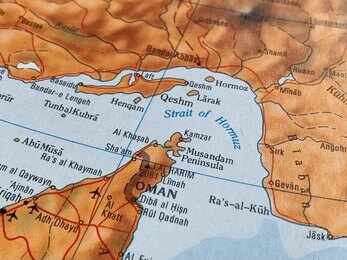
IRGC gunboats fired on the Indian-flagged motor tanker Sanmar Herald and the tanker Jag Arnav on April 18 near Qeshm and Larak islands, approximately 37 kilometers northeast of Oman. The Sanmar Herald, carrying crude oil, had received clearance to transit when Iranian vessels suddenly reversed course and opened fire. Audio released by maritime monitoring organization TankerTrackers captured crew members pleading with IRGC forces to allow them to turn back. The U.K. Maritime Trade Operations confirmed the firing occurred without radio warning, though both vessels and their crews escaped unharmed after retreating from the strait.
Global Oil Artery Shut Down Amid Escalating U.S.-Iran Standoff
The IRGC declared the Strait of Hormuz closed until the United States lifts its blockade on Iranian ports, warning that any vessel attempting transit would be considered an “enemy collaborator” and targeted accordingly. The strait, positioned between Iran and Oman, serves as the conduit for roughly one-fifth of the world’s oil supply according to the U.S. Energy Information Administration. Iran had briefly reopened the waterway just days earlier following negotiations, but reversed its decision after President Trump announced the U.S. naval blockade would remain “in full force” until a nuclear deal is reached. The closure stranded hundreds of commercial tankers on both sides of the strait.
Thousands of Sailors Trapped as Shipping Crisis Unfolds
Shipping companies scrambled to respond as thousands of crew members found themselves stranded aboard vessels unable to transit the closed strait. German shipping giant Hapag-Lloyd activated its crisis team to address the safety and welfare of trapped sailors facing what officials described as “traumatic experiences.” Maritime tracking data indicated approximately ten ships turned back immediately following the IRGC’s closure announcement and gunfire incidents. India summoned Iran’s ambassador to lodge a formal protest after two of its flagged vessels came under fire, demanding the immediate resumption of safe passage through what is recognized under the United Nations Convention on the Law of the Sea as an international waterway with guaranteed transit passage rights.
Economic Shockwaves Threaten Energy Markets Again
The closure threatens to reignite volatility in global energy markets that had previously spiked during an earlier two-month Hormuz shutdown. The strait’s control over one-fifth of worldwide oil shipments makes its closure an immediate concern for energy importers and consumers already facing elevated prices. Several India-bound tankers carrying crude oil and urea were forced to turn back, disrupting critical supply chains. The crisis comes as the U.S. maintains its blockade on Iranian ports to pressure Tehran on nuclear negotiations, creating a dangerous tit-for-tat standoff between two powers unwilling to back down. The confusion over whether the strait was open or closed exposed commercial vessels to heightened risks, with crews caught in the crossfire of escalating geopolitical tensions.
Distress call captures tanker under fire, Iran shuts Hormuz trapping thousands of sailorshttps://t.co/aLIXPg6qNV
— chuck johnson (@chuckjohns7282) April 20, 2026
This latest incident echoes previous tensions in the strait, including 2019 IRGC-linked tanker seizures and attacks, as well as the 1980s “Tanker War” during the Iran-Iraq conflict. The current crisis underscores how quickly international waterways can become flashpoints when powerful governments prioritize their strategic interests over the safety of commercial shipping and the thousands of ordinary sailors whose livelihoods depend on open sea lanes. While one Indian tanker, the Desh Garima, reportedly crossed successfully, the broader pattern reveals a dangerous game where merchant mariners become pawns in conflicts between nations, raising fundamental questions about who truly controls critical global infrastructure and at what cost to working people trapped in the middle.
Sources:
Distress call captures tanker under fire, Iran shuts Hormuz trapping thousands of sailors – Fox News
2 Iranian Gunboats Fire On Tanker In Hormuz, Crew Safe: UK Body – NDTV
Two Indian Oil Tankers Come Under Fire as Iran Closes Strait of Hormuz Again – The Quint
Iran-US tensions live: Trump in crisis talks after Hormuz closure – The Independent
Strait of Hormuz: Iran fires on Indian vessels – The Independent