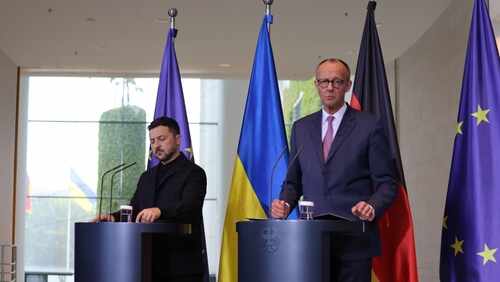
Germany’s new push to shape Ukraine peace talks is turning Berlin into a power center that could box in U.S. leverage and lock taxpayers into long-term security guarantees.
Quick Take
- German Chancellor Friedrich Merz hosted Ukrainian President Volodymyr Zelenskyy in Berlin for high-level talks tied to peace negotiations, military aid, and European security coordination.
- Merz argued the moment creates a “chance to achieve a genuine peace process,” while insisting any ceasefire must be backed by strong legal and material security guarantees.
- Zelenskyy stressed that Ukraine alone must decide any territorial concessions, signaling Kyiv’s red lines as negotiations intensify.
- Germany highlighted continued pressure on Russia through sanctions and support for Ukraine’s air defense, including additional Patriot systems and missiles.
Berlin’s Ukraine Summit Signals Europe’s Bid to Lead the Negotiating Table
German Chancellor Friedrich Merz received Ukrainian President Volodymyr Zelenskyy in Berlin for talks that Germany framed as central to coordinating Ukraine, Europe, and U.S. positions on peace negotiations with Russia. The latest widely documented meeting took place in December 2025, following an earlier round of discussions in August 2025 tied to broader diplomatic planning. German and Ukrainian readouts emphasized security guarantees, military support, and sustaining Western unity as the diplomatic pace accelerates.
Merz’s public messaging focused on creating a structured path toward negotiations without relaxing pressure on Moscow. German government statements indicated Berlin’s view that a ceasefire framework must be credible and enforceable, rather than a temporary pause that rewards stalling tactics. For conservatives watching from the U.S., the key issue is not rhetoric but incentives: when European leaders take the lead, Washington can face added expectations to bankroll guarantees that Congress and taxpayers may not want open-ended.
Security Guarantees and Patriots: The Concrete Deliverables Under Discussion
Ukrainian and German statements pointed to expanded defense cooperation, including air defense support. Ukraine’s presidential office highlighted coordination on strengthening Ukrainian defense capabilities and referenced two additional Patriot systems and missiles as part of the support picture discussed publicly. The same Ukrainian account placed the meeting within a broader agenda that includes European security coordination and long-term architecture. The immediate reality is simple: air defense and ammunition remain decisive as long as the war continues.
Merz also underscored a sanctions track, including European Union work on a 20th sanctions package and measures targeting Russia’s so-called “shadow fleet,” reflecting Europe’s intent to maintain economic pressure. That approach aligns with a familiar Western playbook: sanctions, military aid, and diplomatic isolation while searching for a negotiation window. The unanswered question, based on available public detail, is enforcement and duration—sanctions packages can multiply, but voters on both sides of the Atlantic increasingly demand measurable outcomes.
Territory, Ceasefire Sequencing, and Kyiv’s Red Lines
Zelenskyy used the Berlin setting to reinforce a core negotiating position: Ukraine must be the decision-maker on any territorial arrangements. Public remarks captured in press coverage emphasized that Ukrainians, not outside powers, decide whether to cede territory to Russia. German messaging added a sequencing concept: a ceasefire should precede territorial negotiations and be secured by strong international guarantees. Those positions are compatible on paper, but they tighten the box for negotiators trying to trade land for peace.
Some proposals discussed publicly in Europe reference current contact lines as a possible baseline for talks, but specifics remain limited because key sessions were described as confidential. That lack of detail matters for U.S. observers. In practice, “security guarantees” can range from political promises to binding commitments that create future obligations—exactly the kind of murky language that fuels public distrust in institutions. With limited disclosed terms, citizens are left reading between the lines instead of evaluating a clear deal.
Why This Matters for Americans Watching a “Deep State” Foreign Policy Machine
Merz’s role as a mediator between Ukraine, European allies, and U.S. negotiators highlights a wider trend: major decisions can migrate into multinational processes that feel insulated from democratic accountability. Conservatives frustrated by globalism hear “guarantees” and think “blank check,” while many liberals hear “Ukraine support” and fear any restraint equals abandonment. The shared frustration is institutional: voters suspect professionalized foreign-policy networks can outlast elections and steer outcomes regardless of public consent.
LIVE: Chancellor Merz meets Ukraine’s Zelenskyy in Germany #AssociatedPress https://t.co/AolfAzQTFk
— #TuckFrump (@realTuckFrumper) April 14, 2026
The Berlin talks also show the strategic tension inside the West’s coalition. Europe wants a central seat in shaping an endgame on its continent; the U.S. wants leverage without inheriting Europe’s security liabilities indefinitely. It publicly confirms high-level engagement and stated principles—pressure on Russia, support for Ukraine, and stronger coordination—but it does not provide detailed negotiation text or binding commitments. Until those specifics are transparent, skepticism from both right and left is likely to grow.
Sources:
A meeting between Volodymyr Zelenskyy and Friedrich Merz took place in Berlin