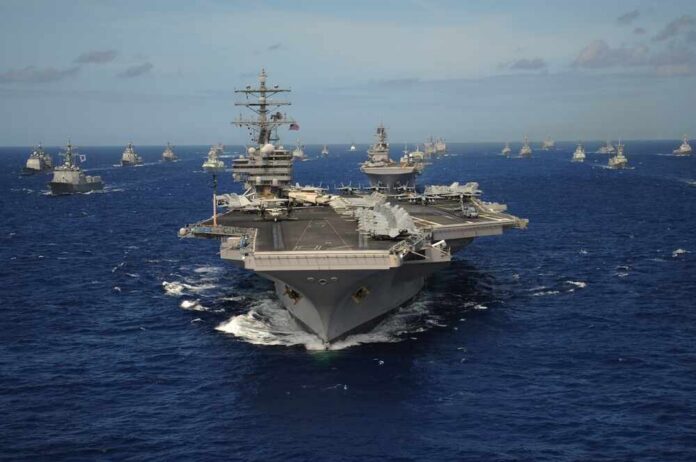
President Trump just ordered a naval blockade of Iranian ports through the Strait of Hormuz after peace talks collapsed, escalating a war that has already disrupted one-fifth of the world’s oil supply and sent energy prices soaring.
Story Snapshot
- Trump announces U.S. Navy blockade of Iranian ports effective April 13, 2026, following failed ceasefire negotiations in Pakistan
- Blockade targets Iran’s economic leverage after Tehran closed the Strait of Hormuz, which previously handled 20% of global oil shipments
- Marathon 21-hour talks between VP JD Vance and Iranian officials collapsed over uranium enrichment, proxy funding, and strait access demands
- U.S. warships cleared mines and entered the strait for the first time since the war began on February 28, 2026
- CBS poll shows 64% of Americans disapprove of Trump’s war handling, with 66% saying goals remain unclear
Blockade Enforcement Begins After Diplomatic Failure
President Trump announced on April 12, 2026, that U.S. Central Command will enforce a naval blockade against all vessels entering or leaving Iranian ports through the Strait of Hormuz, beginning April 13 at 10 a.m. EDT. The blockade follows the breakdown of high-level ceasefire negotiations in Islamabad, Pakistan, where Vice President JD Vance and Special Envoy Jared Kushner spent 21 hours attempting to broker peace with Iranian leadership. The talks marked the highest-level direct U.S.-Iran contact since the 1979 Islamic Revolution but ended without agreement on critical issues including Iran’s uranium enrichment program, funding for proxy forces like Hezbollah, and reopening the strait without Iranian tolls.
Strategic Chokepoint Becomes Economic Weapon
The Strait of Hormuz, a 21-mile-wide passage between Iran and Oman, served as the conduit for approximately 20% of global oil supplies before Iran mined and closed it following the February 28 U.S.-Israel military strikes that initiated the current conflict. Trump’s blockade strategy aims to neutralize what he described as Iran’s “key leverage” by preventing Iranian oil exports while allowing commercial shipping between non-Iranian ports to continue. U.S. warships entered the strait on April 12 to clear mines, marking the first American naval transit through the waterway since hostilities began seven weeks earlier. CENTCOM confirmed the blockade will be enforced impartially against vessels of all nations attempting to access Iranian ports.
Domestic Opposition Grows as Costs Mount
The escalating conflict faces growing skepticism from the American public despite Republican control of Congress and the White House. A CBS News poll revealed that 64% of Americans disapprove of Trump’s handling of the Iran war, with 66% stating the administration’s goals remain unclear. The president acknowledged that energy prices may climb higher as a result of the blockade but emphasized that pressuring Iran takes priority. Congressional Republicans have largely supported the military action, focusing on the threat posed by Iran’s nuclear ambitions, while the administration prepares a supplemental war funding request to add to the existing $1.5 trillion defense budget. The fragile ceasefire, brokered by Pakistan around March 29, remains in effect until April 22, though no further diplomatic talks have been scheduled.
Regional Stability Hangs in Balance
The blockade raises immediate concerns about renewed full-scale combat if the ceasefire collapses before its April 22 deadline. Vice President Vance described the failed negotiations as “substantive” but suggested the outcome represents “bad news for Iran much more” than for Washington, signaling confidence in America’s ability to sustain economic pressure. However, the move risks broader regional instability and threatens global energy markets already reeling from the loss of Iranian oil exports. Iran’s refusal to dismantle its nuclear infrastructure, cease support for regional proxies, or reopen the strait without conditions demonstrates Tehran’s willingness to absorb economic pain rather than accept what it views as capitulation to American demands.
Government Accountability Questions Surface
The war’s unclear objectives and mounting costs underscore broader frustrations with government leadership on both sides of the political divide. While conservatives support confronting Iran’s nuclear threat and regional aggression as necessary to protect American interests and allies like Israel, the lack of transparent goals and exit strategy feeds concerns that Washington elites prioritize power projection over the economic wellbeing of ordinary Americans facing higher gas prices. Similarly, critics across the political spectrum question whether a conflict that disrupts global commerce and drains the treasury serves the American people or merely extends the influence of defense contractors and foreign policy establishments disconnected from Main Street realities. The administration’s struggle to articulate measurable success criteria, combined with low public approval, suggests deep skepticism about whether this military engagement advances genuine national security or perpetuates endless Middle East entanglements.