Top Trump officials just unveiled a sweeping crackdown on far-left “enemies of civilization,” using new powers that reach deep into banks, visas, and even tax-exempt charities.
Story Snapshot
- NSPM-7 orders agencies to disrupt and debank far-left political terrorists and their financiers.
- Four violent far-left groups are now foreign terrorist organizations, cut off from the U.S. financial system.
- New visa rules block foreign nationals who fund or enable far-left extremism from entering the United States.
- Critics warn the directive can reach peaceful dissent and label “anti-American” views as terrorism.
Trump’s NSPM-7: Turning the Tools of the State on Far-Left Violence
President Trump’s National Security Presidential Memorandum 7, or NSPM-7, is now the backbone of a federal drive against far-left political terrorism. The memo, issued in 2025, tells the Justice Department, the Federal Bureau of Investigation, and other agencies to work together to “disrupt, identify, defund, debank, arrest and prosecute” political terrorists and the networks behind them. It directs Joint Terrorism Task Forces to build a national strategy to dismantle organizations tied to riots, intimidation, and organized political violence.
Under NSPM-7, the Treasury Secretary and the Internal Revenue Service Commissioner must attack the money pipelines that keep far-left extremists alive. They are instructed to track and disrupt financial networks that fund “domestic terror and political violence,” and to make sure no tax-exempt nonprofit is directly or indirectly paying for political violence. This means foundations and charities that quietly fund radical activism now face intense scrutiny, with the threat of losing tax status if they cross into backing violent actions.
Rubio, Miller, and Bessent Take the Fight Global
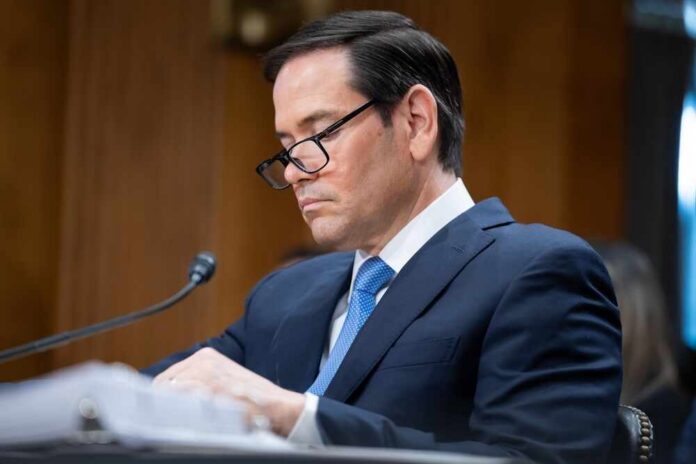
At a major State Department summit, Secretary of State Marco Rubio and senior adviser Stephen Miller laid out how this new policy reaches beyond America’s borders. Rubio highlighted that, in November 2025, the State Department designated four far-left European groups as foreign terrorist organizations, cutting them off from the U.S. banking system and triggering global financial pressure. He also referenced a $10 million “Rewards for Justice” offer for information on how these groups are funded, underscoring that money is the key battlefield.
Rubio and Miller told diplomats from more than 60 countries that far-left extremists are not just local agitators but part of a transnational web using encrypted chats, safe houses, and cross-border cash. Miller cited a dramatic rise in attacks and assaults on immigration officers as proof that these networks now target American sovereignty and border enforcement. Treasury Secretary Scott Bessent added that his department is ramping up efforts to catch organizations abusing charity laws and nonprofit status to channel money into far-left terrorism.
Visa Bans, Expanded “Pre-Crime” Powers, and Fears for Free Speech
As part of the new push, the State Department announced visa restrictions aimed at foreign nationals who finance, recruit for, incite, or otherwise enable far-left terrorist networks and aligned groups. These rules can block entry not only for direct attackers but also for organizers and funders who help plan economic sabotage or violent demonstrations. Supporters say this closes loopholes that let foreign radicals treat the United States as a safe operating base while coordinating chaos abroad and at home.
NSPM-7 also reaches into more controversial territory by defining broad “indicators of extremism” and embracing what scholars call a “pre-crime” model. The directive links beliefs labeled “anti-Christian,” “anti-capitalism,” or “anti-American” with potential domestic terrorism, and urges agencies to disrupt groups before violent acts occur. Civil liberties advocates and some legal experts warn that this approach can blur the line between violence and simple political dissent, raising alarms about surveillance of protests and campus speech.
Conservative Stakes: Security Gains vs. Constitutional Guardrails
For many conservatives, Rubio and Miller’s campaign feels like long overdue recognition that far-left extremists can be just as dangerous as jihadis or neo-Nazis, especially when they target Christians, police, and border officers. Data from recent years shows a clear uptick in far-left plots and attacks from a low base, even as right-wing incidents remain more frequent and deadly overall, sharpening the debate over which threat demands priority. NSPM-7 tries to answer that by putting radical anti-fascist and anarchist movements squarely on the terror map.
At the same time, the directive’s sweeping language means patriots must watch closely to ensure real terrorists are the target, not neighbors with unpopular views. When “anti-American” or “anti-capitalist” opinions become official warning signs, there is a risk that future administrations less friendly to the Constitution could use the same tools against gun owners, Christians, or any movement they dislike. The Trump team’s message is clear: far-left political violence is a rising threat, and they intend to crush it—while the long-term test will be whether these powers stay focused on criminals, not citizens exercising their First Amendment rights.
Sources:
military.com, cubacenter.org, reuters.com, youtube.com, washingtonpost.com, npr.org, lemkininstitute.com, en.cibercuba.com, abcnews.com, ibtimes.co.uk, nbcnews.com, cubaheadlines.com, lowyinstitute.org, opb.org