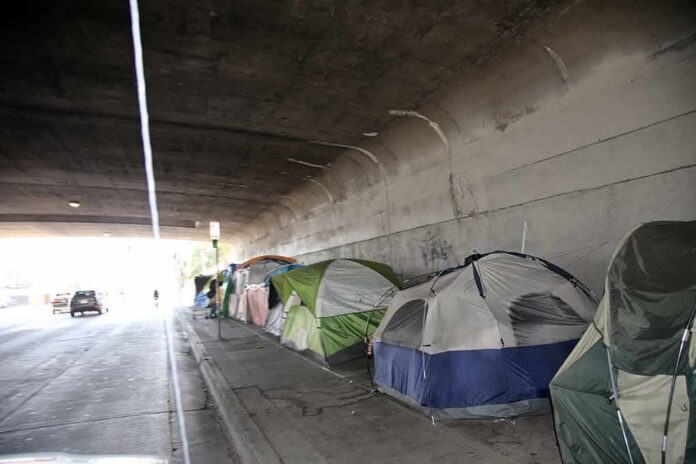
Santa Ana’s unanimous ban on public encampments is reshaping street life and putting Los Angeles Mayor Karen Bass’s no-crackdown stance under a harsh spotlight.
Story Highlights
- Santa Ana leaders advanced strict rules against camping, sleeping on benches, and storing property in public.
- The council backed enforcement citywide after the Supreme Court cleared the way for anti-camping laws.
- County leaders also approved fines and jail time on some lands, aligning regional policy.
- Advocates and Human Rights Watch oppose “criminalizing” survival behaviors, urging different tactics.
Santa Ana Moves From Proposal To Full Public-Space Rules
Santa Ana officials proposed and advanced an ordinance to tighten rules on public camping, property storage, and sleeping on benches or in restrooms, citing safety and sanitation. Local reporting shows Mayor Valerie Amezcua tied the move to community cleanliness and protecting families, while detailing specific prohibitions in public spaces. A separate account described a unanimous council vote to ban encampments and bar sleeping in public rights-of-way, with penalties that can include citations or charges under local code.
Coverage linked the policy shift to visible encampments near transit corridors and civic areas. City leaders pointed to long-running complaints from residents and businesses about trash, open drug use, and blocked sidewalks. The proposal targets conduct in defined areas and times, such as bus benches during service hours, to keep access clear for riders and workers. City staff also highlighted ongoing outreach and shelter efforts, framing enforcement as one part of a larger plan to reduce disorder while offering beds and treatment.
Legal Landscape After Grants Pass Opened The Door
A Supreme Court ruling in City of Grants Pass v. Johnson allowed cities to enforce generally applicable anti-camping laws, shifting the legal ground across the West Coast. Reporting noted Orange County communities began updating codes and stepping up enforcement once that decision arrived, and Santa Ana’s proposal fits that pattern. County supervisors separately approved authority to fine or arrest people camping on county property like flood channels and parks, signaling a unified push for public order tools.
Regional actions added muscle to city efforts. Cleanups along key corridors expanded, and local officials described more frequent operations to remove tents and debris. Supporters argue these steps restore park access, protect small businesses, and keep sidewalks open for seniors and children. Critics warn enforcement can push people into neighboring blocks or cities, creating a shell game unless shelters, detox beds, and mental health care scale alongside these rules.
Competing Playbooks: Enforcement Plus Services Vs. “No-Criminalization”
Santa Ana points to a four-point homelessness strategy that includes cleaning public spaces, persistent outreach, and service coordination. The city emphasizes partnerships for shelter placement, reunification with family, and treatment, while saying criminalization alone is not a solution. Leaders argue clear rules are needed so sidewalks, benches, and restrooms remain usable for everyone, and they pair that with beds and casework when available.
Advocacy groups counter that bans on sitting, sleeping, or camping punish survival behaviors and do not reduce homelessness. A policy institute review said arrests may cut visibility but do not fix the core problem and can break trust with police and providers. Human Rights Watch urged leaders to avoid laws that “criminalize existing in public spaces,” pressing state and local officials to protect a right to rest and to expand housing and services instead. Those critics frame Santa Ana’s approach as displacement, not resolution.
Why Santa Ana’s Push Resonates Beyond Orange County
The public is watching two rival models in real time. Santa Ana is enforcing order in shared spaces while keeping services in the mix, and Los Angeles Mayor Karen Bass faces renewed scrutiny from residents who want stronger rules. The gap matters to shopkeepers, commuters, and parents tired of dodging needles and blocked doorways. When one city restores basic standards and a neighbor does not, the contrast fuels regional anger and migration of encampments.
Santa Ana mayor's homelessness crackdown goes viral as Karen Bass called out https://t.co/4jy8OdzgwL pic.twitter.com/RWmWgKF7pp
— New York Post (@nypost) August 14, 2026
For conservative readers, the stakes are simple: public space must be safe, clean, and open to all. Santa Ana’s leaders are using the legal tools the Supreme Court affirmed, while also funding shelter and treatment lanes. Advocates raise fair cautions about unintended harm. But families and small businesses deserve sidewalks they can use today. Policy success will hinge on two measures: fewer tents in shared spaces and more placements into real beds. Voters will judge both.
Sources:
nypost.com, voiceofoc.org, nbclosangeles.com, santanero.org, santa-ana.org, ktla.com, laist.com, newsantaana.com