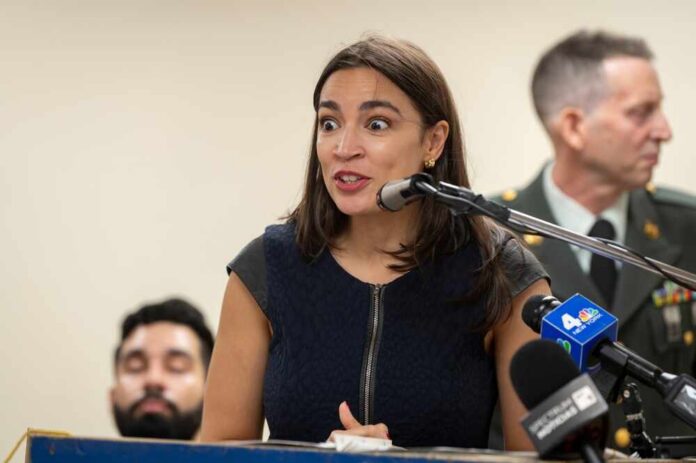
Fifty-three House Democrats just refused to reaffirm that Iran is a state sponsor of terrorism, exposing how far the left will go to undermine Trump’s efforts to protect America.
Story Snapshot
- House passes a resolution 372-53 reaffirming Iran as the world’s leading state sponsor of terrorism.
- All 53 “no” votes came from Democrats, including prominent Squad members like AOC and Ilhan Omar.
- Democrats overwhelmingly backed a nearly identical measure under Biden in 2023 but reversed course under Trump.
- The vote highlights deep partisan divisions over national security, terrorism, and presidential war powers.
Democrats Flip On Iran Terror Designation Once Trump Is Back In Charge
On March 6, 2026, the House of Representatives voted on Resolution 1099, a non-binding measure that simply reaffirmed what has been U.S. policy for decades: Iran remains the world’s leading state sponsor of terrorism. The resolution passed by an overwhelming 372-53 margin, with two members voting “present” and three not voting, but every single “no” came from the Democratic side of the aisle, including several high-profile progressive lawmakers.
What makes this vote so striking for many conservatives is how dramatically Democrats have shifted in just three years. In January 2023, the House adopted a similar resolution condemning Iran by a lopsided 420-1 vote, with every Democrat then in Congress supporting it. The only dissenting lawmaker was Republican Rep. Thomas Massie, underscoring how broad the bipartisan consensus once was that Iran’s terror designation was beyond dispute.
Iran’s Long Record As A State Sponsor Of Terrorism
The United States has formally designated Iran as the world’s leading state sponsor of terrorism since 1984, based on a long trail of support for terror groups and attacks against American interests. Over the years, Iran has harbored senior al-Qaeda leaders, providing sanctuary and space to raise funds and coordinate operations. When the United States invaded Afghanistan after 9/11, several top al-Qaeda figures fled east into Iran, where they found relative safety instead of facing justice.
Iran’s backing for terrorism has gone far beyond harboring extremists. American officials and analysts have documented Tehran’s role in attacks on U.S. bases, kidnappings of diplomats, targeting of American citizens abroad, and plots that resulted in the deaths of Americans. Those realities are why the terrorism designation has remained consistent across Republican and Democratic administrations. For many on the right, any retreat from that clarity looks less like nuance and more like willful blindness to a deadly threat.
Squad Leadership Of The Opposition And The War Powers Debate
Among the 53 Democrats voting no were well-known members of the progressive “Squad,” including Reps. Alexandria Ocasio-Cortez, Ilhan Omar, Rashida Tlaib, and others who have repeatedly criticized Israel and U.S. military action in the Middle East. They were joined by several moderates who typically take a tougher line on Iran but now face pressure from restive primary electorates. These lawmakers argued that certain clauses in the resolution could be used by President Trump as a legal pretext for further military action.
At the heart of their stated concern is the 2001 Authorization for Use of Military Force, which allows presidents to target nations that aided or harbored those responsible for the 9/11 attacks. Some Democrats warned that language about Iran harboring al-Qaeda and posing a “direct and persistent threat” to the United States might be read as extending that authority. They claimed this could bolster Trump’s constitutional powers to strike Iran without new, explicit congressional authorization.
Republican Response And Constitutional Stakes For Voters
Republican leaders blasted the Democratic defections as proof that hatred of Trump now overrides basic national security judgment on the left. They noted that if Iran was a terror sponsor under Biden in 2023, nothing about its behavior has improved enough to justify backing away from that label in 2026. From their perspective, the only major change is that a president committed to stronger action against Tehran now sits in the Oval Office, making Democrats suddenly skittish.
For many conservative voters, the episode underscores deeper concerns about consistency, constitutional authority, and America’s willingness to confront hostile regimes. The failed war powers resolutions in both chambers suggest Congress will not move to formally restrict Trump’s actions against Iran, leaving him to operate under existing authorizations and his Article II powers. At the same time, the Democratic split reveals a party increasingly divided over how, or whether, to project American strength abroad.
Looking ahead, the 53 “no” votes send a message to activists, foreign adversaries, and U.S. allies alike. Progressives can tell their base they resisted what they portray as a march to war, while Iran’s leaders can point to fractures in Washington’s resolve. For conservatives who endured years of weak borders, globalist accommodation, and apologetic foreign policy, the takeaway is clear: elections do not just change rhetoric; they change whether Congress stands firmly against terror or blinks when it matters.
Sources:
Democrats split over resolution reaffirming Iran as state sponsor of terrorism
Same Democrats, different vote on Iran terror designation – what changed?
Democrats’ war powers vote was an unconstitutional way to halt Iran strikes