The first nonstop U.S.-Venezuela passenger flight in seven years just landed in Caracas—an abrupt reversal after a 2019 security ban and a reminder of how fast Washington can redraw the map when it chooses.
Story Snapshot
- American Airlines subsidiary Envoy Air operated Flight AA3599 from Miami to Caracas on April 30, 2026, restoring a direct route suspended since 2019.
- The 2019 halt was ordered by the Department of Homeland Security over security concerns as U.S.-Venezuela relations collapsed and diplomatic ties were cut.
- Trump administration officials and Venezuela’s newly appointed ambassador to the U.S. flew together on the inaugural trip, signaling an official thaw.
- The restart follows major political changes in Venezuela, including U.S. action against Nicolás Maduro and the U.S. reopening Venezuelan commercial airspace.
A once-frozen route reopens with a high-profile onboard signal
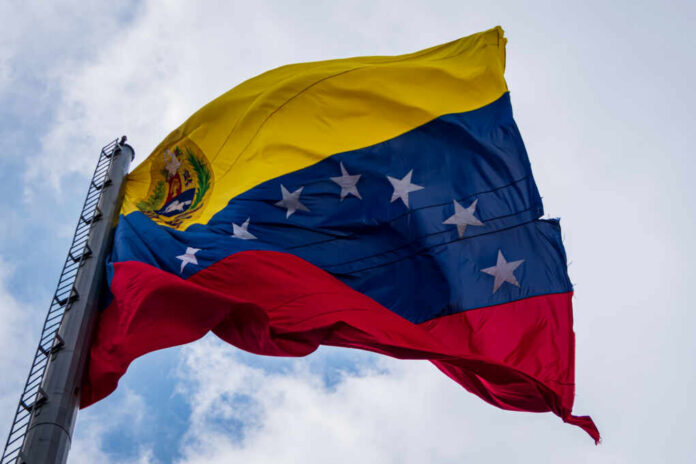
Envoy Air Flight AA3599 departed Miami on April 30, 2026 at 10:16 a.m. and arrived in Caracas roughly three hours later, marking the first direct commercial U.S.-Venezuela flight since the route was cut in 2019. Video from the arrival showed a celebratory moment as the captain waved a Venezuelan flag on landing. The flight returned to Florida the same afternoon, underscoring that this was a restart of regular service, not a one-off charter.
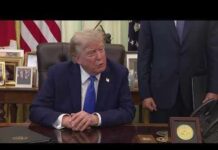
Trump administration officials were aboard, led by National Energy Dominance Council representative Jarrod Agen, alongside Venezuela’s newly appointed ambassador to the United States, Félix Plasencia. Their presence mattered because it turned a travel headline into a diplomatic message: Washington wasn’t just allowing flights again; it was publicly attaching senior personnel to the reopening. For Americans frustrated by opaque “deep state” decision-making, the optics were unusually straightforward—policy change, executed openly, with identifiable officials.
Why DHS shut it down in 2019—and what changed in 2026
The Department of Homeland Security halted direct commercial flights to Venezuela in 2019, citing security concerns, as the broader relationship deteriorated and diplomatic ties were severed. For seven years, travelers typically routed through third countries, turning what should have been a simple Miami-Caracas trip into a time-consuming, more expensive transit chain. That history is why the April 30 landing resonated: it reversed a long-standing restriction tied to safety and geopolitics, not airline economics alone.
The reopening is also tied to the dramatic political shift in Caracas earlier this year. Reporting indicates U.S. forces captured Nicolás Maduro in early January 2026 during a nighttime raid at his Caracas residence, after which Delcy Rodríguez became acting president. Later in January, President Donald Trump informed Rodríguez that the United States was opening all commercial airspace over Venezuela. Two weeks before the April 30 flight, the earlier ban was officially lifted, clearing the way for airlines to sell nonstop seats again.
What direct flights mean for families, business, and U.S. leverage
Direct flights quickly change real life for the Venezuelan diaspora—especially in South Florida—by reducing cost, complexity, and travel time for family visits and urgent personal travel. The restart also helps businesses that rely on predictable scheduling and faster movement of personnel. From a policy standpoint, the move signals U.S. leverage after Maduro’s removal: Washington can turn practical connectivity on or off, and it is choosing “on” while the new Venezuelan leadership is cooperating enough to support normalization steps.
The energy and governance subtext conservatives will notice
The National Energy Dominance Council’s presence on the inaugural flight suggests the administration sees Venezuela through a strategic lens that includes energy and access—not just humanitarian or diplomatic symbolism. That does not prove any specific deal is imminent, and available reporting does not detail formal agreements. Still, placing an energy-focused official at the center of the public rollout indicates priorities: secure conditions, reestablished diplomatic channels, and practical connectivity that can support broader negotiations. For voters tired of unfocused globalism, it looks like a targeted, interest-driven reset.
The first direct US-Venezuela commercial flight in 7 years lands in Caracas https://t.co/fMyjmmTGpD
— O.C. Register (@ocregister) April 30, 2026
American Airlines has indicated the restart is not merely ceremonial. Reports say a second daily Miami-to-Caracas flight is expected to begin May 21, 2026, implying confidence in sustained demand and regulatory stability. What remains unclear, based on currently available information, is how long-term security vetting and airport screening standards will be managed as traffic grows. If the federal government wants public trust, especially among skeptics on both left and right, it will need transparency on the safety rationale for reopening after citing security risks for years.
Sources:
Trump officials on direct commercial flight between U.S. and Venezuela
The first direct US-Venezuela commercial flight in 7 years is to land in Caracas
The first direct US-Venezuela commercial flight in 7 years is to land in Caracas