

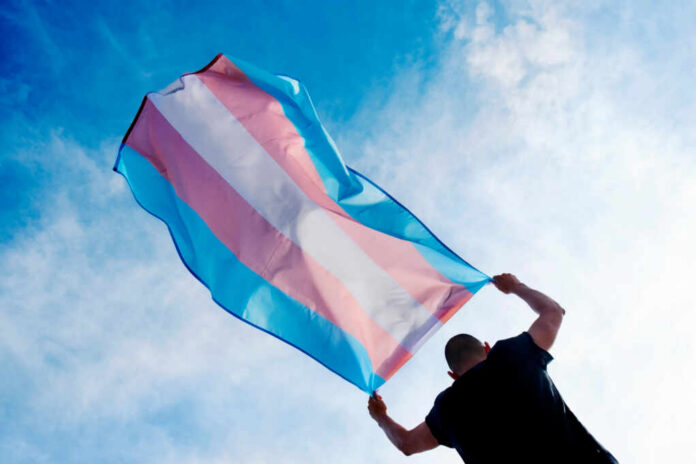
A liberal comic’s blunt warning—“the loony left” is losing Americans over trans policy for kids—has become the latest flashpoint in a culture fight that keeps reshaping U.S. politics.
Story Snapshot
- Bill Maher and David Cross argued on Maher’s “Club Random” podcast over transgender issues involving minors, including a disputed example of a child identifying as trans at age 3.
- Maher stressed electoral consequences, saying Democrats risk driving moderates rightward when they defend youth medical interventions and trans participation in girls’ sports.
- Cross leaned on personal anecdotes and argued that pre-puberty sports concerns differ from post-puberty competition, pushing back on blanket claims.
- Conservative outlets amplified the exchange as evidence of a widening gap between progressive activist priorities and mainstream voter instincts.
A “Club Random” Clash That Turned Into a Political Warning
Bill Maher’s April 30, 2026 episode of “Club Random” featured a tense exchange with comedian David Cross that quickly moved from cultural commentary into electoral strategy. Maher, who identifies as a liberal, criticized what he described as “loony left” positions on transgender issues involving children—especially early self-identification, youth medical interventions such as puberty blockers, and biological males competing in girls’ sports. The clip ended cordially, but the disagreement was sharp.
David Cross defended the need for nuance and leaned on personal experience, referencing trans-identifying youth in his family’s orbit, including a claim involving identification at age 3. Cross also argued that sports questions look different before puberty than after it, implying that some fairness concerns arise later. Maher pushed back with a broader, voter-focused point: when Democratic messaging appears to demand agreement on the most contested edge cases, swing voters and moderate Democrats may conclude the party is no longer aligned with everyday norms.
Why Youth Gender Debates Keep Splitting the Left—And Energizing the Right
The political significance of the Maher-Cross argument is less about two comedians and more about what their disagreement represents: a public fracture inside the broader left coalition. Since the 2010s, debates over youth gender identity, medical pathways for minors, and sports inclusion have intensified, colliding with parental authority, school policy, and women’s athletics. Republicans have repeatedly framed these fights as basic questions of child protection and fairness—issues that cut across class and geography.
Maher’s line of attack follows a pattern in his recent media appearances: he says trans adults deserve respect, but he rejects a cultural and institutional push to treat children’s claims as settled fact and to normalize medical interventions for minors. Cross’s response echoes a common progressive approach, emphasizing lived experience and minimizing some sports concerns at younger ages. The difficulty for Democrats is that elections are won on coalitions, and intraparty disputes broadcast confusion—especially when activists treat dissent as moral failure rather than a legitimate policy disagreement.
The Sports Question: Fairness, Biology, and the Limits of Slogans
Sports remains the most politically potent part of this debate because it forces a concrete tradeoff between inclusion and competitive fairness. Maher argued against biological males competing in girls’ sports, presenting it as a common-sense boundary many voters—especially parents—intuitively support. Cross countered that pre-puberty competition is different, suggesting the issue is not one-size-fits-all. The research provided shows their disagreement stayed largely at the level of principle and anecdote, not specific rule proposals.
That limitation matters because slogans do not substitute for policy. If activists insist all concerns are “hate,” they shut down the kind of practical rulemaking schools and leagues actually need—age brackets, puberty-related standards, and safeguards that protect girls’ athletics while addressing individual circumstances. At the same time, if critics overstate claims or assume every youth case is identical, they lose credibility with Americans who know families facing real confusion and hardship. The political center tends to punish whichever side refuses to acknowledge tradeoffs.
Puberty Blockers and Trust: When Institutions Sound Certain but the Public Isn’t
Maher also argued that puberty blockers are “irreversible,” a claim debated in wider medical and political discourse, and the provided research does not supply clinical evidence either way. What is verifiable here is the political dynamic: public trust drops when cultural institutions, schools, or media figures speak with total certainty on complex medical questions involving children. For many conservatives, that distrust ties into a broader frustration with “expert” class messaging that appears insulated from accountability.
Progressive critics argue Maher reflects “vast ignorance” and that more trans voices should be included in these conversations. That critique may resonate with liberal audiences, but it does not automatically solve the political problem Maher is highlighting: voters often react strongly to anything that appears to bypass parents, blur biological categories in sports, or normalize medical pathways for minors without clear, transparent guardrails. In a country already skeptical of elites, the perception of top-down cultural enforcement can be politically costly.
What This Moment Signals for 2026 Politics
Conservative media coverage framed the Maher-Cross exchange as proof Democrats are “in big trouble,” arguing cultural issues continue to drive defections from the left. The provided materials do not include polling that directly measures the podcast’s effect, so firm claims about electoral impact can’t be verified here. Still, Maher’s warning aligns with a broader pattern: when internal dissenters on the left say out loud what many moderates privately think, it exposes how narrow some activist consensus may be.
Bill Maher and Guest Suggest the Left is Pushing People to Join the Right by Continuing to Embrace Trans Ideology for Kids (VIDEO)
READ: https://t.co/Ph4kzyp62y pic.twitter.com/FVwobGx8wR
— The Gateway Pundit (@gatewaypundit) May 5, 2026
The deeper takeaway is institutional, not personal. Americans across the spectrum increasingly feel governed by status-driven career incentives rather than clear principles and accountable decision-making. When hot-button cultural policies are treated as non-negotiable dogma, it reinforces the sense that “regular people” are being managed by distant professionals—whether in media, education, or politics. That distrust is fuel for realignment, and it helps explain why even a liberal entertainer’s criticism can land like a warning siren in a divided country.
Sources:
Comedian Bill Maher reveals his vast ignorance about trans issues in recent interview