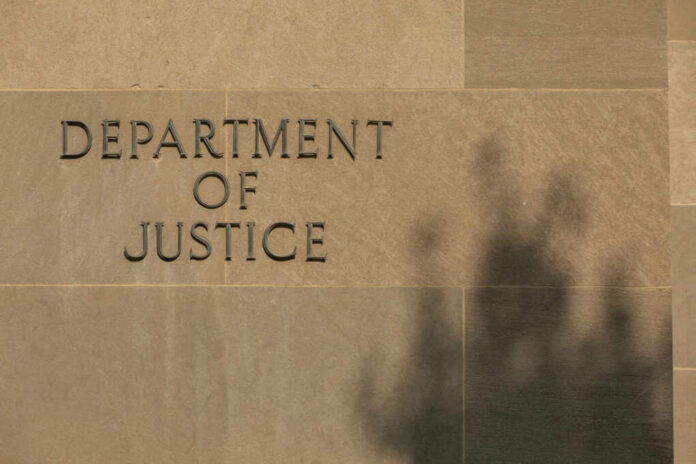
Thirty years after Cuba’s jets killed Americans over open water, the Trump Justice Department is being pressed to do what Washington avoided for decades: indict Raúl Castro for murder.
Story Snapshot
- Four Republican lawmakers urged President Trump to have DOJ consider indicting Raúl Castro over the 1996 shootdown of two Brothers to the Rescue planes.
- The Feb. 24 anniversary is driving renewed attention, with victim families and Cuban-American leaders demanding accountability.
- Reporting indicates DOJ is exploring potential charges, but no public decision or timeline has been announced.
- The push revives a long-running U.S. dispute over whether the planes were downed in international airspace, as U.S. officials and lawmakers maintain.
Lawmakers Push DOJ to Revisit the 1996 Shootdown Case
Four Cuban-American Republican members of Congress asked President Trump to direct the Department of Justice to consider indicting Raúl Castro for his alleged role in the 1996 shootdown of two Brothers to the Rescue planes. The lawmakers cited the deaths of three Americans and one U.S. permanent resident and argued the case involves murder, not merely diplomacy. Public pressure intensified in mid-February, days before the 30th anniversary.
The congressional push centers on Raúl Castro’s position at the time as Cuba’s defense minister under Fidel Castro. Supporters of the indictment effort point to long-standing claims that the attack was ordered at senior levels and note past public reporting that the regime acknowledged responsibility. The Trump administration has not publicly committed to charges, and there has been no confirmed DOJ announcement describing specific statutes or venues being considered.
Why the Anniversary Matters—and What’s Still Unclear
The shootdown occurred on Feb. 24, 1996, when Cuban MiG jets brought down two civilian aircraft associated with Brothers to the Rescue. The U.S. position described in current reporting is that the planes were in international airspace, while Cuba historically claimed airspace violations. The available sources do not provide new flight-path evidence, which leaves the dispute largely dependent on existing records and prior findings rather than fresh disclosures.
The anniversary also revives political memories that many Americans—especially Cuban exiles—never let fade. After the shootdown, Congress passed the Helms-Burton Act in 1996, codifying the U.S. embargo and tying any lifting of sanctions to concrete changes by the Cuban government, including political reforms and the release of prisoners. That legislative history matters because it shows the United States treated the incident as more than an isolated tragedy.
Legal and Political Stakes for the Trump Administration
Indicting a former head of state raises complicated legal questions, but the current discussion is occurring in a political environment that is sharply different from the Obama-Biden era. The lawmakers’ request frames accountability as overdue and argues that advanced age or retirement should not shield a leader from consequences. An administration insider cited in reporting suggested the request is being viewed favorably, reflecting the belief that Raúl Castro still wields influence.
Secretary of State Marco Rubio has publicly signaled that U.S. policy would prefer democratic change in Cuba, while also referencing statutory limits that govern how Washington can shift course. The sources provided do not include a DOJ statement, a White House response, or a charging memo, so the strongest verified fact at this stage is the existence of the lawmakers’ letter and the renewed media campaign—not a final prosecutorial decision.
Regional Pressure Campaign and the “Rule of Law” Question
Supporters of charges describe the moment as part of a broader Western Hemisphere crackdown on entrenched regimes, pointing to recent U.S. action against Venezuela’s Nicolás Maduro as a precedent for pursuing senior figures beyond their borders. That comparison is political, but it underscores a real policy choice: whether the U.S. uses courts to pursue accountability when Americans are killed abroad. Critics will call it escalation; advocates call it equal justice.
For conservative voters frustrated by years of selective enforcement and global double standards, the underlying issue is simple: if U.S. citizens can be hunted down and killed with no courtroom reckoning, deterrence collapses. Still, the current reporting leaves key operational details unresolved, including what precise charges DOJ is evaluating, whether U.S. courts can obtain jurisdiction over a 94-year-old Cuban power broker, and what diplomatic blowback would follow.
Sources:
Scoop: Cuba hardliners ask Trump’s DOJ to indict Raul Castro
Cuban exiles urge new charges against Raul Castro in the U.S.