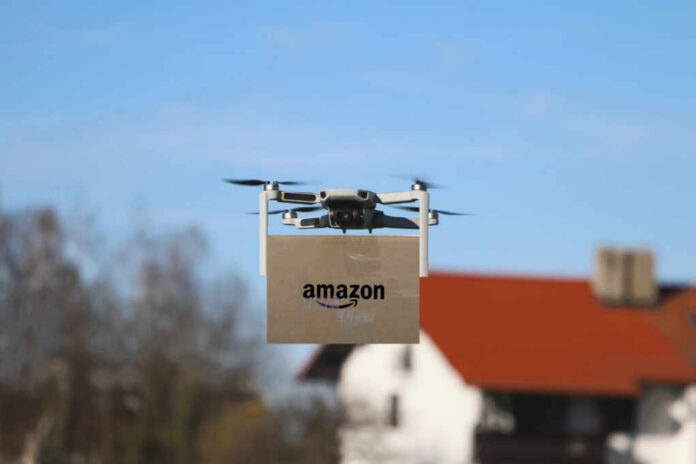
An 80-pound Amazon delivery drone smashed into a Texas apartment building just weeks after the tech giant received federal approval to operate over residential neighborhoods.
Story Snapshot
- Amazon Prime Air MK30 drone crashed into Richardson apartment complex on February 4, 2026, sending debris, smoke, and sparks across residential walkways
- Incident occurred just two months after FAA approved beyond-visual-line-of-sight operations and weeks after testing crashes forced temporary service suspension
- Witness video captured spinning propellers and burning smell near pedestrian areas, highlighting risks residents never consented to in their own neighborhoods
- Amazon’s rapid commercial expansion prioritizes corporate profits over community safety, with minimal accountability when crashes endanger families
Federal Approval Fast-Tracked Corporate Interests Over Safety
Amazon received FAA approval in October 2025 for beyond-visual-line-of-sight drone operations, allowing unmanned aircraft to fly autonomously over populated residential areas. The company launched commercial service in Richardson, Texas, in December 2025, positioning the Dallas suburb as a testing ground for drone delivery competition against Walmart. Just two weeks before the February 4 crash, Amazon temporarily suspended Prime Air operations in Texas and Arizona following multiple testing crashes. The swift resumption and subsequent operational crash into an occupied apartment building suggest regulatory oversight failed to ensure adequate safety protocols before unleashing experimental technology over American families.
Drone Strikes Apartment Building in Residential Area
Around 5 p.m. on February 4, 2026, an Amazon Prime Air MK30 drone—weighing 80 pounds with a five-pound cargo capacity—struck the exterior of an apartment complex on Routh Creek Parkway in Richardson during vertical flight. Witness Cessy Johnson recorded video after hearing unusual noises, capturing the crashed drone emitting smoke and sparks on a pedestrian walkway with propellers still spinning dangerously. Richardson Fire Department responded immediately; firefighters confirmed no fire but found debris scattered across areas where residents walk daily. Two Amazon personnel arrived shortly after, dismantled the destroyed drone, cleaned up evidence, and removed it in a truck. No injuries occurred, but the near-miss underscores risks that apartment dwellers never voted to accept.
Watch:
https://www.youtube.com/shorts/blUiybVgQpE
Corporate Accountability Remains Minimal After Incident
Amazon spokesperson Terrence Clark issued a generic apology stating the company is “actively investigating” and arranging minor building repairs. The vague corporate response offers no explanation for navigation failures that sent an 80-pound object careening into occupied housing. Johnson expressed legitimate fears about what could have happened if pedestrians—especially children—had been walking below during the crash. The burning smell and spinning blades she documented reveal hazards that contradict Amazon’s promises of safe, convenient delivery. This undermines trust in autonomous technology being imposed on communities without meaningful input from residents who must live with the consequences of corporate experimentation prioritizing speed-to-market over public welfare.
An Amazon Prime Air delivery drone crashed in Richardson, TX, on Wednesday after it apparently hit a building.
The Federal Aviation Administration is investigating, and in a statement to CBS News Amazon said that they "apologize for any inconvenience and are actively… pic.twitter.com/teLrtRzcJn
— CBS News (@CBSNews) February 6, 2026
Scaling Risks Threaten More American Neighborhoods
Amazon and Walmart are racing to expand drone delivery across urban and suburban zones, treating residential areas as laboratories for unproven logistics models. The Richardson crash exposes the dangerous reality behind glossy marketing: heavy machinery flying over homes, schools, and families with insufficient safeguards. Americans value technological progress, but not at the expense of common-sense protections for neighborhoods. If systemic flaws in the MK30’s navigation or sensors caused this crash, similar incidents could proliferate as Amazon scales operations nationwide.
The investigation remains ongoing with no timeline for results or transparency about corrective measures. Richardson residents deserve answers about whether drone deliveries will continue over their homes and what safeguards exist to prevent future crashes. Limited government means protecting communities from hazards, not rubber-stamping experimental technology that crashes into apartment buildings while residents go about their daily lives.
Sources:
Video: Amazon delivery drone crashes in Texas
Amazon Prime Air drone crashes into Texas apartment building
Amazon delivery drone crashes into apartment building in Texas