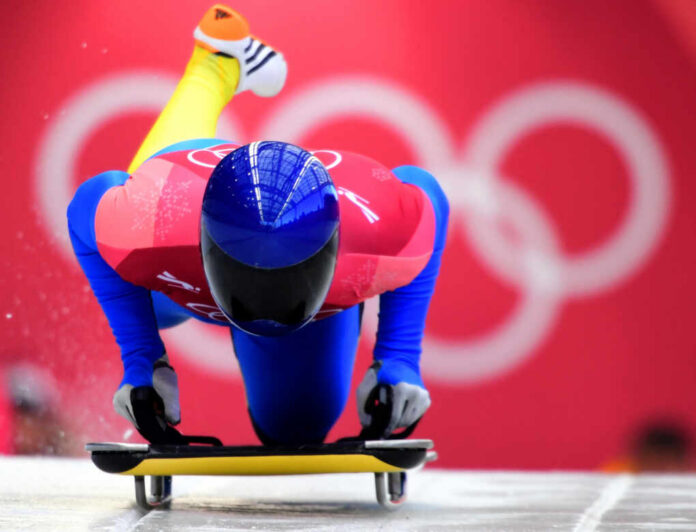
The IOC just proved its “neutrality” rules can be weaponized to silence a simple memorial—while the world watches.
Story Snapshot
- Ukrainian skeleton racer Vladyslav Heraskevych was disqualified at the 2026 Milano Cortina Olympics after refusing to swap a helmet honoring more than 20 Ukrainian sports figures killed in the Russia-Ukraine war.
- The IOC and the International Bobsled and Skeleton Federation cited Olympic Charter restrictions on political statements “on the field of play,” even though the helmet had been allowed in training.
- IOC President Kirsty Coventry met privately with Heraskevych on Feb. 12, but no compromise was reached; the disqualification notice arrived about 45 minutes before the start.
- Heraskevych announced an appeal to the Court of Arbitration for Sport, though the event proceeded without him and medals were decided the next day.
A Memorial Helmet Meets the Olympics’ Hard Line
Italian organizers and the Olympic movement faced a predictable collision on Feb. 12 at the Milano Cortina Winter Games: a global rules bureaucracy versus one athlete’s refusal to erase a message. Ukrainian skeleton racer Vladyslav Heraskevych was disqualified from the men’s event after declining to wear any helmet other than one featuring images of more than 20 Ukrainian athletes and coaches killed since Russia’s 2022 invasion. The IBSF delivered the disqualification in writing shortly before race time.
International officials framed the helmet as inconsistent with Olympic Charter limits on political demonstrations during competition, commonly tied to Rule 50-style “field of play” restrictions. According to reporting, the IOC permitted Heraskevych to use the helmet during training sessions, but negotiations intensified roughly three days before the race over whether it could appear in the actual event. Heraskevych rejected alternatives offered by officials, saying any substitute would dilute the memorial and its purpose.
Watch:
https://youtu.be/-8yICSOjkNw?si=LIBPq01e0MzZ1eUg
What Coventry Offered—and Why the Talks Failed
IOC President Kirsty Coventry personally entered the dispute on the morning of Feb. 12, meeting Heraskevych privately at the track for about 10 minutes. Coventry reportedly conveyed sympathy for the underlying message and described the morning as emotional, but she maintained that the competition venue is treated differently than training and mixed zones. Officials suggested compromises such as off-ice displays or gestures like black armbands, options Heraskevych declined. The IOC’s position rested on a familiar argument: if one message is allowed in the run itself, the Games become a rolling billboard for every geopolitical cause.
Consistency Questions After Beijing—and Why This Case Stings
Heraskevych’s supporters point to a complicating precedent: at the 2022 Beijing Olympics, he displayed a “No war in Ukraine” sign and was not punished, with that message treated as non-political or at least permissible. In 2026, he argued the helmet memorial is fundamentally similar—an appeal for remembrance and peace—yet he was removed from the event entirely. Even sources aligned on the core timeline acknowledge the rules have been enforced variably across incidents.
The tougher issue for the IOC isn’t merely what the helmet showed, but how it was shown. Skeleton is a high-speed, headfirst sport where the helmet is a prominent visual. Heraskevych reportedly argued that because riders travel at extreme speeds, smaller gestures would be ineffective, while the helmet is the one place viewers can actually see a tribute. That practical point helps explain why he treated the helmet as non-negotiable and why officials treated it as the focal problem.
Ukraine’s Response: No Boycott, But a Public Fight
Ukrainian officials and athletes rallied around Heraskevych after the disqualification. Ukraine’s Olympic committee backed him while signaling no boycott, keeping the broader team in the Games even as the controversy grew. Public statements from Ukrainian leaders framed the decision as intimidation and a reputational failure for the IOC, while President Volodymyr Zelenskyy praised Heraskevych for reminding the world of the “price” of Ukraine’s struggle. The dispute quickly became symbolic far beyond one medal event.
Ukrainian Racer Disqualified from Winter Olympics for Helmet Honoring Athletes Killed in War With Russia https://t.co/qGcxvmnA8g
— Mediaite (@Mediaite) February 12, 2026
Heraskevych said he would appeal to the Court of Arbitration for Sport, but by the time the panel process could unfold, the race had already moved forward without him and medals were decided Feb. 13. That reality limits what any appeal can fix in practice, even if it clarifies rules for future events. For Americans who value free expression and distrust top-down institutions, the episode reads like a familiar pattern: an elite governing body insisting speech must be “managed” for the public good, even when the message is a memorial.
Sources:
Ukrainian Olympian Disqualified from Winter Games Over Helmet Honoring Fallen Countrymen
Ukrainian skeleton star barred at Games over helmet protest
Ukrainian Skeleton Athlete Vladyslav Heraskevych Barred From Olympics Over Helmet Tribute