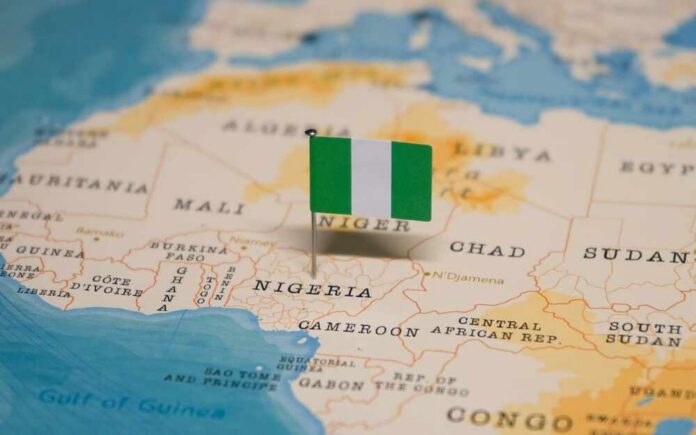
While Americans argue over culture wars at home, jihadist factions in Nigeria are quietly trying to redraw an entire country’s map and legal system in the name of religious rule — with civilians, especially Christians and dissenting Muslims, paying the price.
Story Snapshot
- Violent Islamist groups in northern Nigeria have killed tens of thousands and openly pursue rule based on Islamic law.
- Boko Haram and its offshoots share an Islamist vision but operate through fragmented, competing networks rather than a single command.
- Nigerian and U.S. forces have scored tactical wins, yet jihadist violence continues to spread across border regions.
- The pattern raises familiar questions for Americans about weak states, global jihad, and elites who fail to protect ordinary people.
Jihadist Objectives: Islamizing Politics and Society
United States National Counterterrorism Center reporting describes Boko Haram as a Nigeria-based group that seeks to overthrow the current government and replace it with a regime based on Islamic law, confirming an explicitly Islamist political project rather than mere banditry.[3] Northwestern University’s research guide similarly notes that Boko Haram’s goal is to create a “pure” Islamic state by establishing Islamic law nationwide and eradicating Western influence from Nigerian culture.[4] Academic work on terrorism characterizes the group’s agenda as focused on Nigeria’s Islamization and the creation of a caliphate aligned with global jihadist movements.[5]
The United States Commission on International Religious Freedom factsheet labels Boko Haram, Islamic State’s West Africa Province, and Ansaru among the deadliest violent Islamist groups operating in the world, responsible for more than 37,500 deaths since 2011 in and around northern Nigeria.[2] That same factsheet stresses that these organizations have imposed their own interpretation of Islam in areas they control, targeting people explicitly on the basis of religion or belief.[2] Together, these official and research sources document not just sporadic terrorism, but a sustained attempt to reorder political authority and daily life around hardline religious rule.[2][3][4][5]
Fragmented Networks, Shared Ideology
European Union Agency for Asylum analysis explains that Boko Haram has splintered into factions such as Jama’at Ahl al-Sunna li al-Da’wa wal-Jihad, Islamic State’s West Africa Province, and Ansaru, which operate mainly in Nigeria’s northeast and adjoining regions. These groups share a Sunni jihadist ideology and target Westerners, Christians, local officials, and Muslims they deem impure, yet they do not function as a single unified command. Research on jihadi diffusion in Nigeria highlights how kinship networks, local grievances, and criminal economies allow these factions to expand even while competing with each other tactically.[7]
Conflict-tracking work on the Sahel region shows that jihadist violence is now spreading across borders, reshaping the frontier between Benin, Niger, and Nigeria through attacks on villages, security forces, and trade routes.[8] Analysts note that militant Islamist groups are not only fighting governments but also “Islamizing” preexisting conflicts over land, ethnicity, and resources, reframing local disputes in religious terms to recruit and justify violence.[2][8] This pattern mirrors how other insurgencies worldwide mix ideological messaging with practical control of territory, taxation, smuggling corridors, and parallel courts that slowly displace state authority.[5][7][8]
Targets, Tactics, and the Human Cost
U.S. government, academic, and media reporting consistently document Boko Haram’s and Islamic State’s West Africa Province’s attacks on churches, mosques, schools, markets, and government facilities, often in regions where the state presence is weak.[2][3][4] High-profile incidents like the mass kidnapping of schoolgirls in Chibok drew global attention, but local communities have long endured raids, forced displacement, and extortion as these groups try to enforce their own rules.[3][4] The International Criminal Court’s preliminary investigation found reasonable grounds to believe that war crimes and crimes against humanity have been committed against civilians in northern Nigeria.[2]
Nigerian forces, sometimes in cooperation with the United States and regional partners, have killed several senior Islamic State-linked commanders and retaken territory, yet official and research assessments stress that these militant Islamist groups show “remarkable staying power.”[2][7][8] As fighters shift to new safe havens and exploit porous borders, violence risks spilling further into the wider Sahel and West Africa, threatening already fragile states.[4][8] For Americans watching from afar, the story is uncomfortably familiar: citizens trapped between predatory extremists on one side and often weak, corrupt political elites on the other, while promises of security and rule of law remain largely unfulfilled.[2][4][7][9]
Sources:
[2] Web – Factsheet: Violent Islamist Groups in Northern Nigeria – USCIRF
[3] Web – Boko Haram – National Counterterrorism Center | Groups
[4] YouTube – ‘Deadly strikes’ target Islamic State militants in Nigeria
[5] Web – Violent Extremism in the Sahel | Global Conflict Tracker
[7] Web – Boko Haram – Australian National Security
[8] Web – Country Reports on Terrorism 2022: Nigeria – State Department
[9] YouTube – Nigeria: Who was the targeted Islamic State group leader …