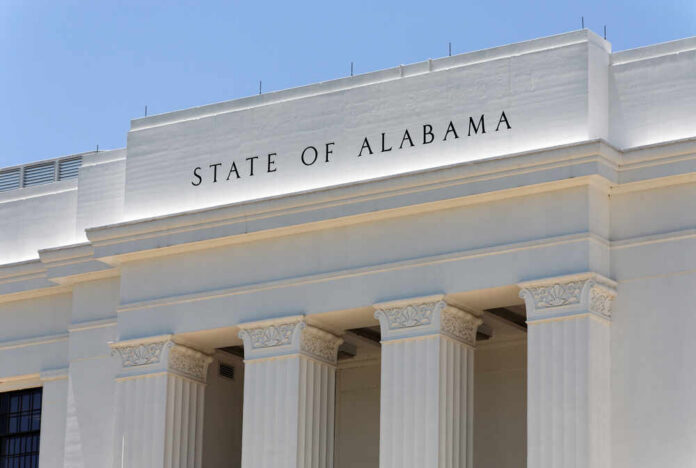
Federal judges just branded Alabama’s new congressional map “tainted by intentional race-based discrimination,” yet shifting rulings from the Supreme Court now decide whether Republicans can secure fair representation or watch courts entrench Democrat advantages for another decade.
Story Snapshot
- Federal judges blocked Alabama’s 2023 congressional map as intentionally discriminatory, but the state is appealing to the Supreme Court.
- The fight centers on whether Alabama must keep two majority-Black districts or can return to a map with only one.
- Civil-rights groups say Republicans are weakening Black voting strength; conservatives argue courts are weaponizing race to lock in Democrat seats.
- South Carolina Republicans also hit resistance as lawmakers rejected a Trump-backed redistricting push.
Federal Judges Target Alabama’s Map as “Intentionally” Racial
A three-judge federal panel in Alabama recently blocked the Republican legislature’s 2023 congressional map, ruling it could not be used for upcoming elections because it was “tainted by intentional race-based discrimination.”[5] Reporting on the order explains that the panel refused to let voters go to the polls in 2026 under lines it concluded would inflict “irreparable harm” on Black voters by dismantling a prior remedy that added a second majority-Black district.[5] The judges instead ordered a special master to draw a new map.
Civil-rights lawyers and allied media framed the ruling as a major victory against what they describe as Republican attempts to weaken Black voting power for partisan gain.[5] Democracy-focused outlets emphasized that Alabama lawmakers had already been told by the Supreme Court to create a second Black opportunity district under earlier litigation, yet their 2023 map maintained only one such seat, prompting the panel’s sharp language.[4][5] These groups now press the narrative that any map with a single majority-Black district is suspect.
Alabama Republicans Push Back and Appeal to the Supreme Court
Alabama officials have not accepted the discrimination label and are using every legal tool they have left, including an appeal to the Supreme Court.[1] Coverage of the case notes that the attorney general’s office publicly announced plans to challenge the panel’s order, arguing that the fight is about how far federal judges can go in dictating the exact racial makeup of congressional districts rather than about overt racism.[1] State defenders see this as a dispute over redistricting policy, not a confession of discriminatory intent.
News reports also stress that the dispute is unfolding in a remedial phase that followed earlier Voting Rights Act decisions, not a fresh admission of wrongdoing by current lawmakers.[4] The original map after the 2020 census was already attacked under Section 2 of the Voting Rights Act for allegedly diluting Black voting strength, and the Supreme Court at that time required Alabama to create a second majority-Black district.[4][5] When the legislature responded with the 2023 map and kept only one, the lower court concluded the state had defied that direction, triggering the current showdown.[5]
Supreme Court Signals a Narrower Path for Race-Based Districts
The legal terrain changed again this spring when the Supreme Court issued a major ruling in a Louisiana case, holding that one majority-Black district there amounted to an unconstitutional racial gerrymander and sharply limiting how the Voting Rights Act can be used to demand race-based districts.[2][4] Alabama officials quickly cited that Louisiana decision as support to use their 2023 map with only one majority-Black district instead of the court-imposed two-district plan.[2]
On April 29, 2026, the Supreme Court significantly narrowed the Voting Rights Act’s reach in such redistricting cases and undercut part of the earlier foundation on which the Alabama panel had relied.[4] Shortly after, the high court halted an order requiring Alabama to keep using a court-drawn map with two largely Black districts, telling the lower court to reconsider in light of the new Louisiana precedent.[2][3] According to the Associated Press and broadcast coverage, that move “set the stage” for Alabama to eliminate one of its two largely Black districts and potentially gain a Republican seat.[2][3]
Media Narratives and the Trump-Era Redistricting Strategy
National coverage has portrayed setbacks in both Alabama and South Carolina as blows to President Trump’s redistricting push and Republican hopes of expanding their majority in the House of Representatives. Reuters and local outlets describe the Alabama ruling and the South Carolina fight together as part of a coordinated effort to redraw maps in conservative states in ways that would convert demographic and political trends into additional GOP seats. These same reports stress that federal courts and some state lawmakers have slowed or blocked those plans.
Trump’s redistricting push suffers setbacks in Alabama and South Carolina – Reuters https://t.co/zxJKUOXl8e
— Alec Marken (@alecmarken) May 27, 2026
In South Carolina, civil-rights advocates and left-leaning commentators celebrated when the state senate rejected a proposal tied to Trump’s call for redistricting, a move that preserved the seat held by Democratic Representative Jim Clyburn and thwarted another potential Republican pickup. Commentators sympathetic to the lawsuits cast both states as examples of “voter suppression” through line-drawing, while conservative voters see a pattern of courts and activist groups using race claims to freeze maps that favor Democrats and limit state-level autonomy over elections.[2][5] With Alabama’s appeal now heading toward the Supreme Court, the final word on how far judges can push race-conscious mapping will likely come from the justices themselves.
Sources:
[1] YouTube – Trump’s redistricting push suffers setbacks in Alabama, S. Carolina
[2] YouTube – Federal judges block Alabama’s congressional map …
[3] Web – U.S. Supreme Court Rejects Unanimous Post-Trial Decision and …
[4] Web – Alabama’s new congressional map blocked by federal judges
[5] Web – Federal court blocks Alabama’s plan for new US House map – WPXI