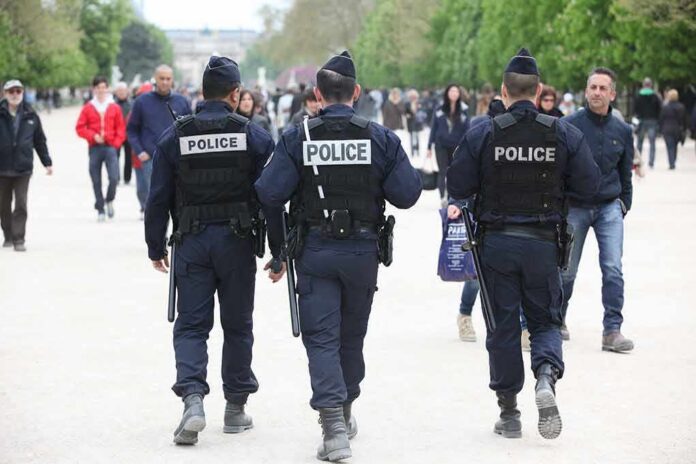
Thousands of French police officers shut down central Paris to demand safer gear, more staff, and real pay for real risk.
Story Snapshot
- Police unions marched in Paris over pay, staffing, equipment, and unsafe conditions.
- Leaders want the risk bonus raised from 28.5% to 35% and cite danger on the job.
- Unions estimate they need 300 to 500 million euros more each year.
- The government points to budget boosts, vehicles, and facility investments.
Union Demands: Pay, Staffing, Equipment, Safety
Alliance Police Nationale led a national march in Paris and centered its message on wages, staffing, equipment, and daily safety. Organizers said officers face rising danger while the special risk allowance has not moved since 2019. The union wants the risk bonus lifted from 28.5 percent to 35 percent, saying the current level does not match real hazards on patrol. Union leaders described bruises and injuries and called for more manpower and better gear to do the job.
Euronews reported that thousands joined the demonstration and that the union’s budget ask runs between 300 and 500 million euros a year. That figure covers improved compensation, staffing, and equipment needs across the force. Marchers began on the Champs-Élysées and moved toward the National Assembly, pressing lawmakers to act. A police representative said officers need equipment, more people on shifts, and recognition in pay, as working conditions keep getting worse.
What Paris Saw: A Systemic Warning, Not a One-Off
Reporters and photographers captured rows of officers and stark images outside the National Assembly. Reuters described mock coffins marked “RIP Police,” a blunt symbol of what officers say they face if the state keeps dragging its feet on gear, staffing, and pay. Visuals framed the protest as an institutional crisis, not a single unit gripe. Coverage across outlets stressed the national scale and the depth of frustration in the ranks.
This unrest fits a long French pattern. In 2019, thousands of officers staged a “march of anger” over poor conditions and morale, after years of intense public order duties and terror threats. The thread is the same today: strained shifts, heavy overtime, and gear that must match street risks. The continuity shows the dispute is not new or narrow. It is a long-running fight over how the state equips the people it sends into danger.
Government Response: More Money, But Is It Meeting Need?
The Interior Ministry points to recent boosts and investments. Officials say the 2026 plan adds about 100 million euros to the police budget, highlights a hiring record since 2017, and cites thousands of new vehicles and improved facilities. A Senate summary also shows the national police program rising by 515 million euros, about 3.72 percent, to commitments over 14 billion euros and payments near 13.9 billion euros in 2026. Some Senate notes caution that new hires were already booked in earlier budgets.
Unions counter that top-line gains still miss the street reality. They argue risk pay is stuck, shifts are thin, and gear cycles lag. Their ask of 300 to 500 million euros more each year aims to close that gap. The current record is heavy on union claims and budget headlines, but light on audited staffing, overtime, and equipment logs. That missing data makes it hard to settle the dispute by the numbers, even as both sides cite big sums and big needs.
Why This Matters to American Readers
What happens in Paris carries lessons for us. When leaders underfund basic security, the costs hit families first. Streets get less safe, crime rises, and morale falls. Risk pay that fails to track real danger is a quiet cut to those who stand between citizens and chaos. That should alarm every taxpayer who believes safe streets are the first duty of government. Budgets must match the mission, not media talking points or political fashion.
https://twitter.com/FredMedforth/status/2100037672420942072
Americans have seen this movie. Years of “defund” talk, soft-on-crime policies, and bloated spending on everything but cops left cities reeling. France shows the same trap: leaders tout totals, but officers count patrol cars, vests, and backup. If numbers on paper do not reach the beat, trust breaks down. The fix is clear. Fund frontline needs, tie risk pay to danger, publish real staffing and gear audits, and hold leaders to timelines that officers and citizens can verify.
Sources:
thegatewaypundit.com, caliber.az, sortiraparis.com, reuters.com, rfi.fr, menafn.com, bbc.co.uk, reutersconnect.com, mtv.com.lb, ground.news