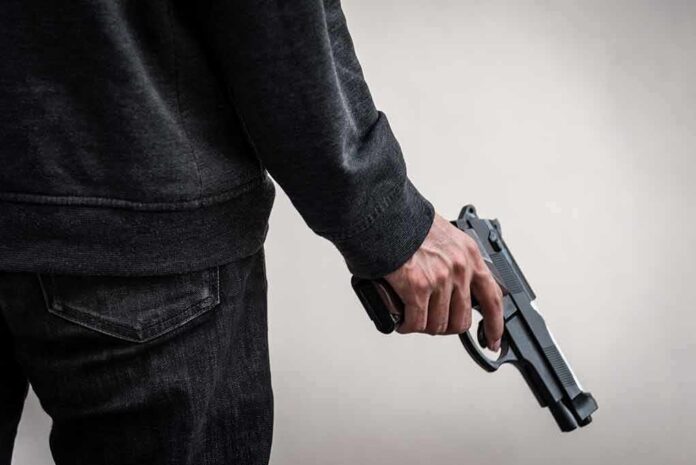
A Michigan judge admitted a teen acted in self-defense to stop a mall gunman—then punished him for carrying the gun anyway.
Story Snapshot
- Prosecutors said Martinez Long acted in self-defense when he stopped a gunman at Fairlane Town Center.
- A judge still gave Long two years of probation for carrying a concealed weapon without a permit.
- The judge called Long’s decision to carry in the mall “poor judgment,” sparking backlash over gun rights.
- Reports say the fight began with a gun pulled during a dispute, and the shooter had already killed one person.
Prosecutors Ruled the Shooting Was Self-Defense
Wayne County prosecutors said nineteen-year-old Martinez Long acted in self-defense when he shot the mall gunman on July 3 in Dearborn, Michigan. Reporting says the gunman had already killed one person and wounded another before Long intervened, ending the attack. Prosecutors declined to charge Long for the shooting itself after reviewing evidence and witness accounts. Their statement marked the use of force as justified under the law, separating it from any weapon possession issues.
Local coverage described a chaotic scene inside Fairlane Town Center. Reports say a weapon used earlier in the fight came from a woman’s purse, and the first victim produced a gun during the dispute. The gunman then fired and killed a man and kept shooting in the mall before Long stopped him. These details support that Long faced an immediate, deadly threat. They also explain why armed defense, at that moment, saved lives and ended the danger.
Judge Acknowledged Self-Defense, Still Imposed Probation
At sentencing, the judge said Long had a valid claim of self-defense or defense of others. The court also criticized Long’s decision to have a gun in the mall, calling it “poor judgment.” The judge asked, “What do you need a gun for protection in a mall, in the first place?” Long received two years of probation, but not for the shooting. The penalty was for carrying a concealed weapon without a permit, a separate offense under Michigan law.
This split outcome—self-defense justified, carry illegal—reflects how courts often treat force and possession as different questions. Many readers see a clear hero who stopped a killer. The court saw a justified shooting but still enforced a permit rule. Reports point out that Michigan does not issue concealed pistol licenses to people under twenty-one, which made lawful carry hard or impossible for Long at nineteen. That age rule shaped the case and sentence.
Why This Case Hits a Nerve for Gun Rights Supporters
Gun owners see a simple truth here: a young man stopped a killer after a man was already dead and another was hurt. The punishment sends a message that even when you save lives, the system may still come after you for how you carried. That feels backward to many Americans who value self-reliance. They ask how courts can praise self-defense, then punish the very tool that made it possible in a crisis.
Facts from open reporting leave limits. The record, as shared by the news, relies on courtroom remarks and prosecutor summaries. There is no full transcript in the public package here. Still, the key points are solid: prosecutors called it self-defense, the judge agreed on that defense, and the sentence was for concealed carry. The debate now is policy, not facts: should age rules and permit laws punish a defender who stops an active shooter and prevents more deaths?
Policy Tension: Stopping Killers vs. Regulating Carry
This case shows the clash between real-world danger and rigid rules. Active attacks move fast. Citizens often act before police can arrive. Some research on gun policy finds mixed effects for age-based carry limits, and the evidence is not clear. But here, the outcome is clear. A nineteen-year-old stopped a murderer, yet walked out with probation and a court lecture. Voters will decide if that balance makes families safer or less secure.
Sources:
redstate.com, fox2detroit.com, bearingarms.com, detroitnews.com, allhiphop.com, cbsnews.com, patch.com