
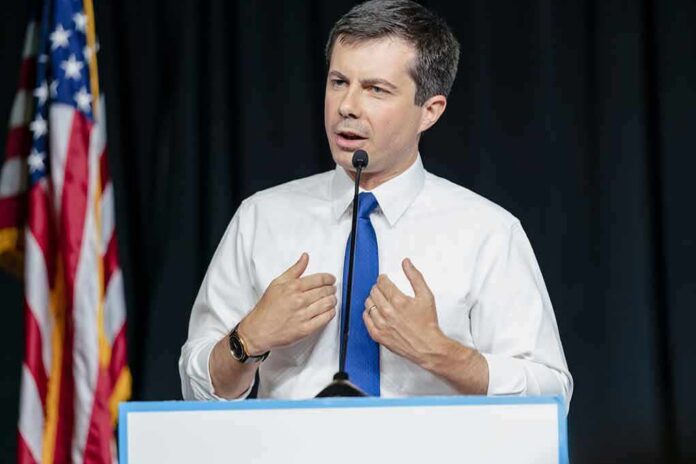
Pete Buttigieg admitted Democrats “overtorqued” on student loans, echoing warnings that broad bailouts shift costs onto working Americans.
Story Highlights
- Buttigieg’s remark revives a core fairness question about who pays for student-loan relief.
- Major studies show blanket or broad forgiveness skews benefits up the income ladder.
- Analysts warned big, universal relief could run into massive costs and regressivity.
- The Supreme Court blocked the 2022 one-time mass cancellation, citing lack of authority.
Buttigieg’s Admission Reignites a Fairness Fight
Pete Buttigieg said Democrats “overtorqued” on student loans, and he has struggled with making non-college workers subsidize degrees that tend to raise earnings. He earlier framed it this way: people who did not go to college should not bankroll people who did and now earn more. His comment lands where many taxpayers live. Families skipped vacations, took extra shifts, or chose trade work to avoid debt. They now ask why Washington keeps pushing them to pay someone else’s bill.
That question has real stakes. The National Bureau of Economic Research found that universal forgiveness would benefit the top income decile about as much as the bottom three combined, calling such plans highly regressive. A Brookings Institution testimony warned that widespread cancellation is “staggeringly expensive” and tilts toward well-educated, higher-income households, diverting dollars from targeted help that fights real hardship. This is not a culture-war hunch. It is the distribution math that budget analysts keep flagging.
What the Supreme Court Already Decided
In 2023, the Supreme Court struck down the Biden-era one-time cancellation plan. The plan aimed to erase up to $10,000 for borrowers under $125,000 in income, and up to $20,000 for prior Pell Grant recipients. The Court ruled the Department of Education lacked authority for a sweeping, hundreds-of-billions decision without Congress. That ruling set a clear line: major fiscal moves need the people’s branch to act, not an agency pen to spend.
The legal point matters for more than process. It guards the Constitution’s power of the purse and checks executive overreach. Conservatives saw the decision as a win for limited government and for workers who would have shouldered the cost. Even some Democrats now hint they went too far, too fast. Buttigieg’s “overtorqued” remark sounds like a late concession that the plan’s scope and method broke public trust as well as legal limits.
Who Benefits and Who Pays
Analysts at the New York Federal Reserve, reported at the time, estimated blanket forgiveness could cost up to $904 billion and often help younger, sometimes affluent borrowers. They found middle-income borrowers would gain most, with high-income borrowers next. An income cap could tilt benefits lower, but costs would still be large. The big picture is plain. When Washington cancels debt, taxpayers cover it. That includes truck drivers, electricians, and parents who already paid tuition in full.
Brookings testimony emphasized another hard truth. Broad giveaways mainly aid those who can and do repay, not those who truly cannot. That misses the real problem areas, like borrowers who never finished a degree but carry debt and lower earnings. When policy rewards blanket groups, it dulls responsibility signals to colleges that raised tuition while taxpayers backstop the risk. Schools get paid either way. Families and the Treasury get the bill.
A Smarter Path: Targeted Relief and Real Reform
Lawmakers who opposed mass cancellation called it a transfer from workers to higher earners and to those who already benefited from college premiums. A better course starts with Congress. Target relief to true distress. Enforce clear income tests. Address predatory programs that leave students with debt and no usable credential. Fix repayment so it is simple and transparent, not a maze of shifting promises that fuel more borrowing and higher tuition over time.
Families deserve stable rules, fair costs, and schools with skin in the game. President Trump’s administration can press for reforms that protect taxpayers and help strivers, not system gamers. Buttigieg’s admission admits what many felt all along. Broad bailouts pick winners who do not need help and send the invoice to neighbors who never asked for a handout. Policy should reward work, demand accountability, and keep the federal thumb off the scale of personal responsibility.
Sources:
facebook.com, supremecourt.gov, mayerbrown.com, constitutioncenter.org, cnbc.com, dlapiper.com