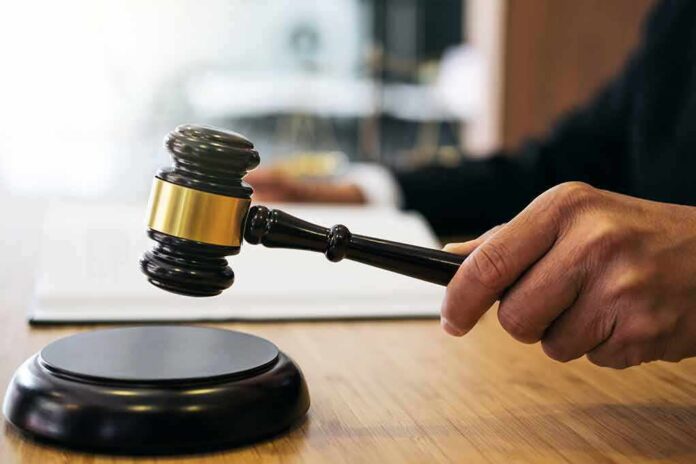
A federal judge’s dismissal of a suit over masked occupiers’ alleged antisemitic attacks now faces sharp pushback at the U.S. Court of Appeals for the Second Circuit.
Story Highlights
- Columbia janitors say masked occupiers assaulted and trapped them during the Hamilton Hall takeover.
- The complaint cites slurs like “Jew-lover” and “you work for the Jews,” aimed at the workers.
- Amicus briefs argue political motives do not excuse antisemitic violence or conspiracy under federal law.
- The appeal asks the court to revive claims under the Civil Rights Act of 1871, known as the Klan Act.
Appeal Centers On Alleged Antisemitic Assault During Building Takeover
Two Columbia University janitors, Mariano Torres and Lester Wilson, appealed after a federal district judge dismissed their lawsuit tied to the April 2024 Hamilton Hall occupation. The workers say masked occupiers shoved, surrounded, and held them, while hurling anti-Jewish slurs and calling them “Zionist” or “Jew-lover” as they tried to work the overnight shift. The complaint frames the actions as targeted hostility, not mere protest speech, and says the men were prevented from leaving the building safely.
Reports describing the complaint say occupiers used force and barricades as they seized the building. The filing and summaries contend participants arrived masked and prepared to block movement and restrain people. Legal analysis covering the case notes allegations that tools and restraint items were part of the takeover, supporting the view that this was organized mob action rather than heated debate on a sidewalk. The workers argue that words and acts together show discriminatory intent paired with coercion, which federal law forbids.
Judge’s Ruling Treated Some Chants As Political Speech, Not Discrimination
The district court dismissed the case in June, according to coverage of the ruling. The judge reportedly described certain chants as “pure political speech” and viewed the slurs as statements by individuals, not proof that the group’s goal was to interfere with rights of Jews or perceived Jewish allies. That framing lowered the legal weight of the slurs and the crowd’s actions. The decision left the workers without a federal civil rights remedy, spurring the current appeal to the Second Circuit.
Amicus briefs now filed with the Second Circuit push back on that approach. One scholar’s brief argues that discrimination can be paired with politics, and political motives do not erase anti-Jewish animus when violence or restraint occurs. Another brief from the Manhattan Institute says the Civil Rights Act of 1871 protects victims who are not members of the targeted group, so non-Jewish workers harmed in an anti-Jewish conspiracy may still sue. The briefs ask the court to restore the claims and allow fact development.
What The Plaintiffs Say The Law Requires, And Why It Matters
The workers’ appeal turns on the Civil Rights Act of 1871, often called the Klan Act. They argue that a conspiracy aimed at Jews and perceived Jewish allies violates the statute when it uses force to block movement and intimidate targets. They further argue that the law does not require them to be Jewish to seek relief. The Manhattan Institute brief compares their situation to a bystander harmed during a Ku Klux Klan attack on a Black polling place, who is still protected by the statute.
Legal scholars also highlight a core point: insults like “Zionist” can function as code for Jew in the context of violence or coercion. Their brief states that people who discriminate often cite politics while acting on bias, and courts should not give a pass to slurs or attacks simply because a protest also had political aims. They ask the Second Circuit to correct what they view as an error that weakens civil rights protections on campus when mobs target Jews or their perceived supporters.
Rising Campus Conflict Forms The Backdrop, But The Case Stands On Specific Acts
The appeal lands amid a surge of campus incidents tied to the Israel–Hamas war era. National reporting and advocacy tracking describe sharp increases in campus hostility and protests. That climate is the backdrop, but the Second Circuit will focus on the complaint’s concrete acts and words, and on whether the law covers non-Jewish workers caught in alleged antisemitic mob action. A news summary of the ruling notes that the district court discounted that link; the appeal argues the opposite.
What Comes Next For The Janitors’ Case
The Second Circuit will weigh the briefs and decide if the workers can proceed. If the court revives the complaint, discovery could test who did what, which words were used, and how movement was blocked inside Hamilton Hall. If the court affirms the dismissal, the ruling would reinforce a boundary that treats parts of the takeover as political speech. For many readers, the stakes are simple: mob action that singles out Jews or their allies crosses a bright legal line, politics or not.
Sources:
reason.com, nycourts.gov, columbusjewishnews.com, jns.org, clevelandjewishnews.com