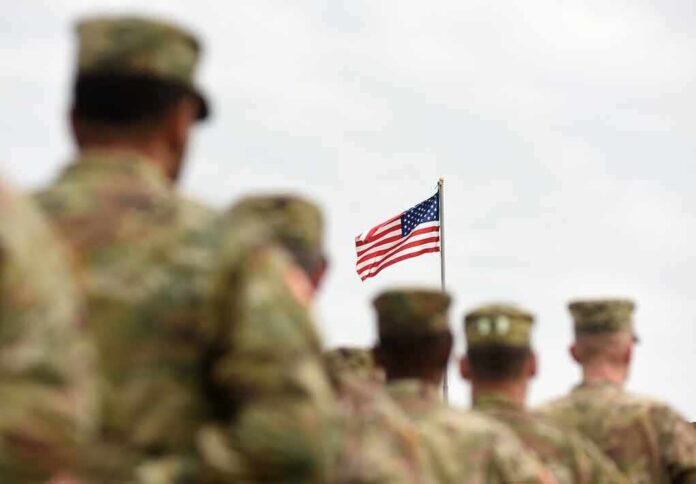
Federal agents confirmed an active probe into a decorated Marine Corps hero tied to his time as a high school Junior Reserve Officers’ Training Corps instructor.
Story Snapshot
- Naval Criminal Investigative Service confirmed an active investigation involving retired Sergeant Major Bradley Kasal tied to his civilian Junior Reserve Officers’ Training Corps job.
- The Marine Corps said the allegations arose while Kasal worked at Basic Academy of International Studies, a public high school in Henderson, Nevada.
- Reporting cites accounts from former cadets about off-campus contact and time alone with a student; no criminal charge has been filed publicly.
- Wider reviews show documented oversight problems in Junior Reserve Officers’ Training Corps programs nationwide.
NCIS and Marine Corps Confirm Active Investigation
Naval Criminal Investigative Service confirmed its Camp Pendleton field office is running an active investigation involving retired Sergeant Major Bradley Kasal, a Navy Cross recipient known for valor in Iraq. The Marine Corps said the matter involves allegations from Kasal’s employment as a civilian Junior Reserve Officers’ Training Corps instructor at the Basic Academy of International Studies in Henderson, Nevada. Clark County School District officials said Kasal resigned in August 2025, but did not state a reason for the departure. No public charging document has been filed to date.
CBS News reported that Naval Criminal Investigative Service does not typically confirm open probes, which makes this acknowledgement unusual and ensures public attention. The report noted that federal authorities, the Marine Corps, and the school system confirmed the basic contours of the inquiry’s scope and location. Officials did not identify a suspected statute or provide an offense description. The term “felony-level” refers to the category of cases Naval Criminal Investigative Service leads, not a filed charge or conviction.
What Allegations Have Been Reported So Far
News accounts describe interviews with former Junior Reserve Officers’ Training Corps cadets who alleged rides home, Starbucks visits, and time with Kasal outside school events. One account referenced being alone with a cadet in a room. These reports, as described, help explain why investigators are interviewing a defined set of students and staff. However, authorities have not released a charge, named a victim, or described a specific criminal element in public records. CBS News said nearly 40 people were interviewed for its story.
The limited information from officials leaves two firm facts: the investigation exists, and it centers on conduct during a known time and place at a public high school program. Without public charging papers, the legal theory remains unknown. That distinction matters. An investigation signals that authorities are gathering facts, not that a crime has been proven. Federal agents can, and often do, close cases with no charges if evidence does not support prosecution.
How This Fits Into National Junior ROTC Oversight Gaps
Congressional and oversight records show broader concerns with Junior Reserve Officers’ Training Corps oversight across the country. A 2023 Senate letter pressed the Government Accountability Office to evaluate how the Department of Defense and the Department of Education monitor these programs, citing 60 allegations over five years, with 58 described as substantiated after investigations. These national figures do not decide any single case, but they explain why investigators take school-based claims seriously.
The oversight picture underscores two conservative priorities: protect students and demand clear, accountable processes. Lawmakers asked for better training, faster reporting, and more consistent rules to prevent abuse in youth programs. Parents deserve to know that instructors meet high standards. Teachers and veterans deserve fair treatment and due process. Strong oversight can deliver both: swift action on credible risks and careful, fact-driven case reviews that avoid trial by rumor.
What Happens Next Under Standard Procedures
Naval Criminal Investigative Service will interview witnesses, collect records, and consult prosecutors as needed. School records, program logs, and communications may help confirm timelines and contact outside approved activities. If agents establish probable cause for a crime, prosecutors can seek charges. If evidence does not meet that bar, the case can be closed with no action. Authorities have not announced a timeline or referral status in this matter.
Exclusive: Retired Marine Sgt. Maj. Bradley Kasal, whose heroism during the Iraq War earned him the nation's second-highest award for combat valor, is the subject of a criminal investigation over allegations stemming from his tenure as a high school instructor for a JROTC program…
— Jim LaPorta (@JimLaPorta) November 20, 2026
Parents should expect clear boundaries in every school program: two-adult rules when possible, transparent schedules, and fast reporting channels. Instructors should get clear guidance and training that prevent boundary mistakes and protect students and staff. Lawmakers and school boards can insist on these guardrails without smearing service members or weakening due process. The aim is simple and shared: protect kids, honor the innocent, and punish real offenders after solid proof, not headlines.