A blue-state governor’s photo-op at a controversial mosque is colliding with Americans’ growing skepticism about who our leaders choose to legitimize while the nation fights yet another Middle East war.
Story Snapshot
- New Jersey Gov. Mikie Sherrill attended a Ramadan/Eid al-Fitr event at the Islamic Center of Passaic County in Paterson on March 20, 2026, and posted photos from the visit.
- The visit drew criticism because the mosque’s imam, Mohammad Qatanani, has been accused in past federal filings of Hamas ties and previously chanted for a “new intifada” at a 2017 rally.
- Qatanani disputes key allegations, and a 2025 Third Circuit ruling (2-1) upheld his permanent resident status after years of deportation efforts.
- The controversy lands amid a broader national debate on Israel, counterterror vetting, and “endless war” fatigue that is now dividing parts of the MAGA base.
Sherrill’s Paterson visit becomes a political flashpoint
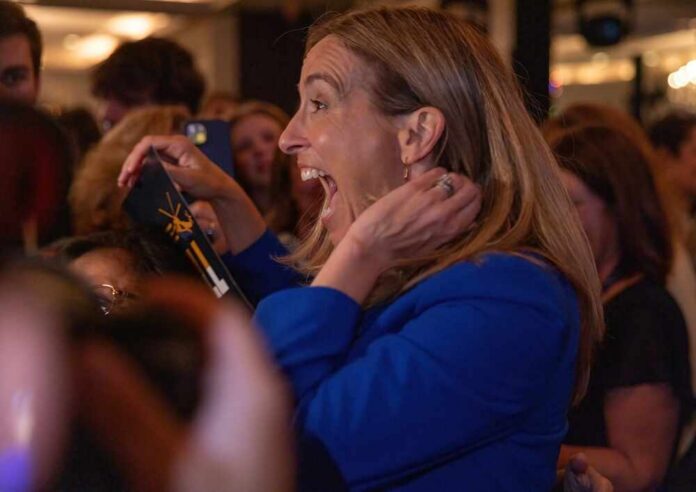
Gov. Mikie Sherrill visited the Islamic Center of Passaic County in Paterson, New Jersey, on Friday, March 20, 2026, during Ramadan/Eid al-Fitr events and later posted photos showing her meeting Imam Mohammad Qatanani and wearing a hijab. In the posts, she wished Muslims a “safe, joyous, and peaceful Eid al-Fitr” and praised the community’s “good works.” Conservative outlets surfaced the visit on March 24, framing it as incompatible with her “moderate” branding.
Paterson’s setting matters. The city has New Jersey’s largest Muslim population and regularly hosts public Ramadan observances that emphasize community cohesion, including annual events led by local officials. That broader civic context makes it easy for politicians to treat a mosque visit like routine constituent outreach. The problem, critics argue, is that the specific venue and its leadership have a long paper trail of controversy that changes how a governor’s appearance is interpreted.
What the reporting says about Qatanani and the mosque’s history
Reporting highlighted a series of allegations and documented episodes tied to Imam Mohammad Qatanani and the Islamic Center’s network. Federal filings have described Qatanani as having been arrested and convicted in Israel in 1993 for Hamas membership, an assertion he disputes by saying he was detained but not convicted. Reporting also referenced a 1999 visa-related issue involving nondisclosure of Israeli detention. Separately, Qatanani drew attention in 2017 after chanting at a Times Square rally, “No peace process… We have to start a new intifada.”
The mosque itself has faced scrutiny dating back decades. One co-founder, Mohammad El-Mezain, was convicted in 2009 in the Holy Land Foundation case, described as the largest U.S. terror-financing prosecution, for funneling money to Hamas through a charity network. Another figure associated with the mosque, former imam Mohammed Al-Hanooti, was reported to have raised significant funds for Hamas. Those details are central to why critics insist public officials should treat appearances at the Islamic Center differently than generic interfaith events elsewhere.
Courts, due process, and what is (and isn’t) settled
One fact that complicates the political narrative is that Qatanani remains in the United States after repeated deportation attempts, and reporting cited a 2025 Third Circuit ruling (2-1) that upheld his permanent resident status, concluding the Department of Homeland Security lacked authority to revoke it. That outcome does not, by itself, resolve every disputed allegation in the public debate, but it does establish that the government’s removal effort failed on legal grounds under current interpretations.
For constitutional conservatives, this is where two principles collide. Due process and fair courts matter, especially when government power is used to target individuals. At the same time, voters expect elected leaders to apply common-sense judgment about associations—particularly when prior rhetoric includes calls for violence and when past court and DHS records have been part of the public record for years. The reporting provides pieces of both arguments, but it does not include independent expert analysis beyond the court history and cited filings.
Why the timing resonates during the Iran war and a divided right
The Sherrill controversy is landing at a moment when the country is on edge: energy costs are high, the public is fatigued from decades of interventionism, and the U.S. is now at war with Iran under President Trump’s second term. That national backdrop is sharpening scrutiny of anything tied to Middle East politics, counterterror policy, and the Israel debate. MAGA voters who feel betrayed by “forever wars” are also paying closer attention to whether U.S. leaders draw clear moral lines—or blur them for domestic coalition politics.
'Moderate' Mikie Sherrill Attends Ramadan Services With Imam Who Faced Deportation Proceedings Over Alleged Ties to Hamas and Calls for 'New Intifada' via @ChuckRossDC @freebeacon – https://t.co/pkc1j0vofb
— Eliana Johnson (@elianayjohnson) March 24, 2026
So the core issue for many conservatives is less about a governor visiting a Muslim community in general and more about standards of vetting, clarity, and accountability. The reporting shows Sherrill praised “good works” at an institution whose leadership has been linked—through allegations, filings, and past public statements—to extremist-adjacent controversy. With limited data on Sherrill’s follow-up explanation beyond the original social-media messaging, voters are left to judge whether this was simple outreach, a preventable staff-level failure, or a deliberate signal in a volatile political moment.
Sources:
Mikie Sherrill visits Hamas-linked mosque in Paterson for Ramadan
Gov. Mikie Sherrill attends mosque led by imam with alleged Hamas ties