A rare bipartisan housing bill to tackle high housing costs just became law without President Trump’s signature, after he refused to sign it while demanding action on voter ID.
Story Snapshot
- A major bipartisan housing affordability bill passed Congress by veto-proof margins and is now law without Trump’s signature.
- The 21st Century ROAD to Housing Act targets high housing costs by boosting supply, cutting red tape, and helping veterans and rural families.
- President Trump refused to sign the bill to pressure Congress to pass his SAVE America Act voter ID plan, but he also refused to veto it.
- The law reins in big Wall Street-style housing investors and gives more power to local communities and smaller banks.
Landmark Housing Bill Becomes Law Without Trump’s Signature
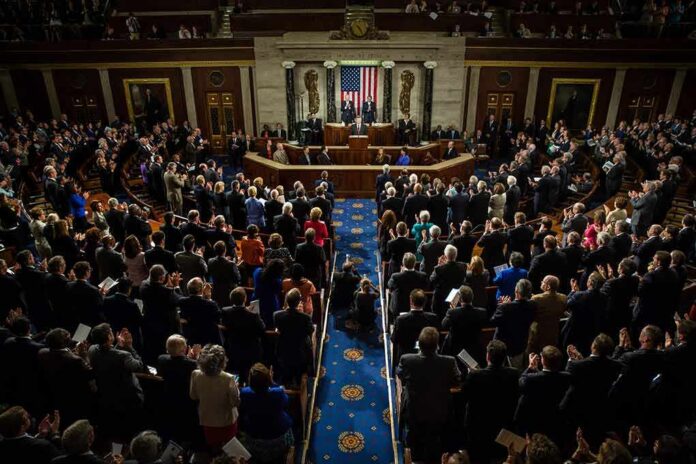
Congress passed the **21st Century ROAD to Housing Act** with overwhelming support from both Republicans and Democrats in the House and Senate, a rare moment of unity in today’s Washington. The bill’s goal is simple but urgent: increase the supply of homes, bring down prices, and ease the pressure on working families and seniors who are squeezed by rent and mortgage costs. Because the votes were strong enough to override a veto, the measure was guaranteed a path to becoming law.
President Donald Trump chose not to sign the bill and canceled a planned signing ceremony, saying he would not put his name on it until Congress passed his preferred voter ID measure, the SAVE America Act. Under the United States Constitution, the president has ten days, not counting Sundays, to sign or veto a bill; if he does neither, it automatically becomes law. Trump let the clock run, leaving the housing bill to take effect without his signature while avoiding a direct veto fight with his own party.
What the 21st Century ROAD to Housing Act Actually Does
The 21st Century ROAD to Housing Act is a large housing package with more than forty separate provisions aimed at housing supply, financing, homelessness, veterans’ housing, and disaster recovery. A major part of the law goes after large institutional investors that own hundreds of single-family homes, limiting their ability to keep buying up starter houses that would otherwise go to families. Supporters argue this will open more homes to regular buyers and slow down the trend of Wall Street-style firms turning neighborhoods into rental empires.
Beyond investor rules, the law cuts federal red tape that has slowed building for years, especially for projects that use Department of Housing and Urban Development (HUD) funding. It streamlines environmental reviews in certain programs, lets HUD delegate more reviews to states and cities, and allows faster inspections so landlords and builders are not stuck waiting months for bureaucratic sign-offs. The law also modernizes older housing programs so they better match today’s market, including updating income rules and giving communities more flexible ways to use federal housing dollars.
Help for Veterans, Rural Families, and Local Communities
The law includes targeted help for veterans who are homeless or at risk of losing their housing. One key change tells HUD not to count veterans’ disability benefits when deciding if they qualify for housing support, which should make it easier for disabled veterans to get vouchers and supportive housing. It also improves information for homebuyers by enhancing Federal Housing Administration (FHA) mortgage disclosures so veterans can compare Department of Veterans Affairs (VA) home loan options more clearly alongside other loans.
Rural communities, which often get left behind in housing debates, gain from reforms to the Department of Agriculture’s Rural Housing Service. These changes help preserve affordable rentals in small towns by keeping assistance in place even when older government-backed mortgages expire, protecting housing for hundreds of thousands of rural families. In cities and suburbs, the law gives local governments more flexibility with Community Development Block Grant funds, allowing up to twenty percent to be used for new affordable housing construction and rewarding communities that increase housing supply.
Trump’s Leverage Play on Voter ID and What It Means for Conservatives
President Trump’s refusal to sign the housing bill was not about the core of the housing policy itself; he has called the package “comprehensive” and “consequential” in the past. His move was aimed at forcing Congress to act on his SAVE America Act, a voter ID proposal that has stalled in the Senate and is central to his push for stricter election security. By withholding his signature but not vetoing, Trump turned a bipartisan win on housing into leverage on election reform while keeping the housing relief intact.
Senator Elizabeth Warren announces the 21st Century ROAD to Housing Act became law automatically after President Trump refused to sign it within the 10-day window, despite its strong bipartisan passage in Congress with veto-proof margins.
The bill, the largest housing… https://t.co/Hzj5gGiIwK
— Ignatius van Zyl (@naasvzyl) July 11, 2026
For constitutional conservatives, this episode highlights both sides of the separation of powers. On one hand, Congress asserted itself by passing a major law with wide support and enough votes to stand even without the president’s signature. On the other hand, the president used the narrow tools the Constitution gives him to send a clear message on voter ID without directly blocking a bill meant to ease a real economic burden on families. The law’s investor limits and expanded federal role in housing will need close watch to ensure they do not grow into new forms of government overreach.
Sources:
youtube.com, cnbc.com, pappas.house.gov, facebook.com, abcnews.com, virginiamercury.com, thetexan.news, bipartisanpolicy.org, congress.gov, podcasts.happyscribe.com