A knife-wielding woman fatally stabbed a bystander in Times Square before police shot her, and officials say it was a random, non-terror incident.
Story Highlights
- NYPD officials say the attack appeared random and unprovoked.
- The suspect stabbed two people; one victim died, a man survived with wounds.
- Officers tried less-lethal force before firing and stopping the threat.
- Mayor Zohran Mamdani said there is no evidence of terrorism at this time.
What Happened In Times Square
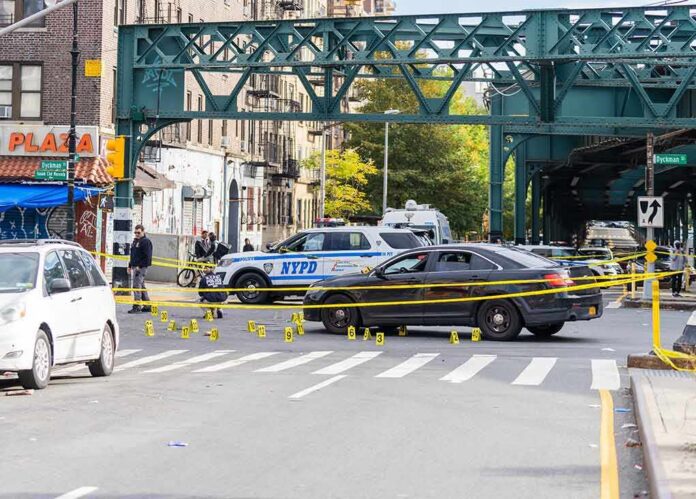
Police say a woman armed with two knives stabbed two people near Seventh Avenue and West 42nd Street on Monday afternoon. A 32-year-old woman died from her wounds. A 68-year-old man suffered stab wounds but was listed in stable condition. Officers confronted the suspect at the scene and fatally shot her after attempts to stop the rampage. The quick response ended the attack in a crowded area filled with tourists and workers.
New York City officials identified the woman who died as a Bank of America employee, and later reports named her as a vice president at the bank. The suspect was identified as a 49-year-old woman from Queens. Reporters and police described the assault as happening in broad daylight, in the middle of heavy foot traffic. The shock to passersby and families was immediate, as police tried to secure the block and rush victims to care.
Officials: Random, Not Terrorism Based On Evidence So Far
New York Police Department Commissioner Jessica Tisch said the attack “appeared to be random and unprovoked.” The New York Police Department also said the male victim was in stable condition. Mayor Zohran Mamdani stated there is no current reason to treat the case as terrorism. He said investigators have not found signs of ideology, planning, or a network, which are often required to make a terror determination under New York law.
Labeling matters because the legal threshold for terrorism requires intent to intimidate or coerce a population, not only visible violence. Officials often face pressure to define attacks fast, but the standard relies on evidence of motive and design. In this case, authorities focused on the safety threat and the need to stop an active attacker with knives. That approach matches how urban knife attacks are usually handled by first responders.
Police Response And Use Of Force
Mayor Mamdani said officers used a taser before firing their weapons to stop the assailant. That detail shows police tried less-lethal options as the situation unfolded in seconds. Courts and training stress that a knife at close range can be deadly. Officers must act to protect lives when a suspect will not drop a weapon and keeps moving toward victims. The standard asks what a reasonable officer would do with the threat in front of them.
Times Square Stabbing Leaves Woman Dead, Suspect Killed in Police Shooting https://t.co/bk9VBS0INM pic.twitter.com/5PcxBfvUvH
— Newsxposure (@newsxposure) September 2, 2026
Media reports said the woman shot by police had a history of mental health incidents. That point, shared by officials after the attack, fits a pattern in many public assaults where mental health crisis, not ideology, drives sudden violence. The facts released so far back the department’s framing of a random, unprovoked attack. As always, police say the investigation continues, but the public guidance today is focused on vigilance and timely tips if people see suspicious behavior.
Why This Matters To Public Safety
Times Square is one of the most watched blocks in America, yet a small blade still took a life before police could intervene. Quick, decisive action by trained officers ended the threat, likely saving others. Clear rules of engagement and support for rank-and-file police are vital in crowded cities. New York law also encourages citizens to report suspicious behavior, which can help stop the next attack before it begins, whether or not it meets a terrorism standard.
Sources:
twitchy.com, bbc.com, abc7news.com, police1.com, youtube.com, aljazeera.com, reuters.com, today.com, facebook.com