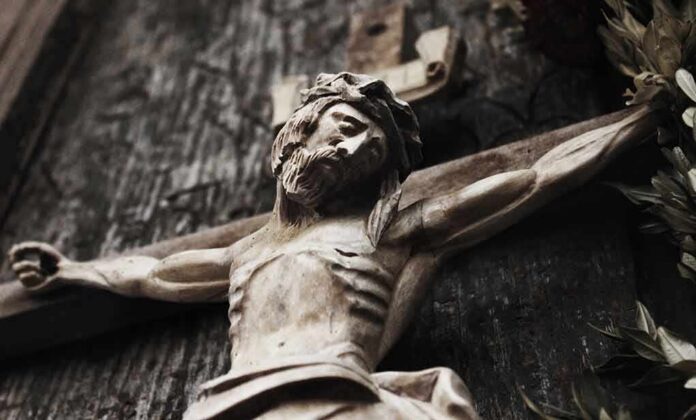
Security cameras captured a crucifix statue of Jesus being carried and then shattered after it was taken from Vilnius’s Divine Mercy church, prompting a police probe and public outrage.
Story Highlights
- Police opened an investigation after a Jesus statue at the Divine Mercy site was broken.
- Video reportedly shows the statue handled in public before its arms snapped and it shattered.
- Reports link the theft to the Shrine of Divine Mercy, a historic 15th-century church.
- Authorities said they identified and questioned a suspect days after the incident.
Police Confirm Damage And Launch Investigation
Vilnius police said that on November 11, 2026, around 9 p.m., an unidentified person broke a golden sculpture of Jesus hanging on a wooden cross in a courtyard on Dominikonų Street. Officers opened a pre-trial case under Lithuania’s Criminal Code Article 284, which covers public order offenses. Police stated the full damage review was still under way at the time. That official notice set the legal response in motion and framed this as a criminal act against church property.
Reports described closed-circuit video that appears to show a man walking with the statue, after which the arms snapped, the figure fell, and fragments scattered. Coverage said the men seen near the statue fled afterward. While the video is described in detail, it is the police record that confirms the broken crucifix and the criminal probe. Together, those elements show both the act and the response from authorities on the ground.
Historic Site And Religious Significance
The incident is tied to the Shrine of Divine Mercy, a 15th-century church in Vilnius. The site holds the original 1934 Divine Mercy image by Eugeniusz Kazimirowski, a work that draws pilgrims from around the world. That history helps explain the strong reaction from believers and local leaders. Damage at such a place is more than property loss. It strikes at faith, tradition, and community identity linked to the sacred art and the message of mercy honored there.
Police and media accounts differ on where each stage happened, with the official notice placing the breakage in the church courtyard and other reports recounting a street scene. That difference does not change the verified facts that a crucifix figure was broken and a criminal investigation began. For many Christians, the symbol of Christ on the cross is central. Seeing it destroyed, whether inside a courtyard or on a nearby street, lands as a deep insult to their faith and shared heritage.
Suspect Identified And Questioned
Follow-up reporting said police identified one suspect believed to be in the video and questioned him on November 14. Outlets also repeated claims that the men were foreign tourists, but nationalities and motives were not confirmed by police in the material cited. The key development remains the identification and interrogation of a suspect. That step suggests progress toward charges and possible restitution if prosecutors find the evidence meets the standard for court.
Lithuanian authorities are searching for a British tourist after a statue of the crucified Jesus Christ was removed from a wooden cross and shattered outside the Divine Mercy Shrine in Vilnius. Footage of the incident has drawn widespread attention online, reaching 8.5 million… pic.twitter.com/fGGgyClhru
— Peanut Gallery Media Network (@PGMNOfficial) November 17, 2026
The case highlights a wider risk to churches and religious art. Researchers note that holy sites mix public access with valuable or symbolic objects, which can invite vandalism or theft if security is thin. Simple steps like better lighting, alarms, and trained volunteers can help. Yet even strong safeguards cannot remove all risk. What communities can demand is swift law enforcement action, fair penalties, and respect for the rights of believers to worship without fear of desecration.
Why It Matters To People Of Faith
What happened in Vilnius is not only a local crime story. It is a reminder that faith symbols are frequent targets. When a crucifix is broken, it hits every churchgoer who prays under one. Many of our readers know this pain from attacks on nativity scenes or crosses back home. The answer is not rage but resolve: defend churches, support police, and teach respect for sacred places. That stance protects liberty, property, and the dignity of worship for all.
Sources:
lifesitenews.com, cbsaustin.com, independent.co.uk, traveltomorrow.com, eeas.europa.eu