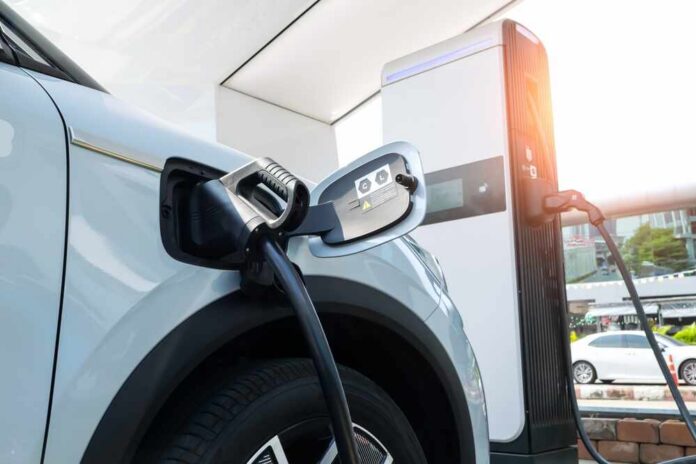
After Washington yanked the EV tax credit, $4 gas is doing what federal subsidies couldn’t—pushing Americans back to electric cars, at least in online shopping.
Quick Take
- EV interest is rising again as national gas prices climb above $4 per gallon, but sales remain stuck around 6–7% market share.
- The “Great EV Slowdown” followed the abrupt end of the $7,500 federal tax credit in fall 2025, leaving consumers to face real costs without a government cushion.
- Car shopping data shows a surge in EV searches and listing views, yet multiple analysts say sustained high fuel prices—not a brief spike—would be needed to move the market.
- Used EVs look more attractive as prices fall year over year, but upfront costs, charging concerns, and infrastructure gaps still hold many buyers back.
Gas Shock Revives Interest, but Not a Full Market Rebound
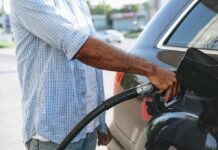
American drivers are reacting to another jolt at the pump, with national gasoline prices averaging above $4 a gallon in early 2026. Market trackers say that sticker shock is translating into renewed EV curiosity, especially online, where many shoppers start before committing to a purchase. March data showed EV listing views jumping sharply on major auto sites, a sign analysts treat as an early indicator rather than a final verdict on sales.
Actual purchases, however, are lagging behind the surge in clicks. Analysts at the New York International Auto Show in early April described a market that appears stabilized but still low, with EVs holding roughly a 6–7% share after a steep post-subsidy drop. That gap between “interest” and “buying” matters because it signals caution: many households are price-sensitive, but they are also wary of making a long-term vehicle decision based on what could be a short-term fuel spike.
The Post-Credit Reality Check Exposed How Dependent Demand Had Become
The current moment is inseparable from a policy turning point: the $7,500 federal EV tax credit ended abruptly in fall 2025. Sales that had been pulled forward by the incentive fell sharply afterward, and manufacturers reportedly dialed back production and even pulled some EV models. For conservatives who have long questioned subsidy-driven markets, the slowdown offered a clear lesson: when government steps away, “green” demand often looks less like a movement and more like a math problem.
That math is now being recalculated under new conditions. Higher fuel costs can make electricity look comparatively cheap, particularly for commuters and high-mileage drivers. But analysts also point out a key complication: many new-car buyers sit in higher income brackets and purchase larger vehicles, which can blunt the immediate pressure of rising gasoline prices. As a result, a price spike may trigger research behavior without quickly changing what people actually drive off the lot.
Used EVs Are the New Battleground, and the Data Is Mixed
The strongest near-term action may be in the used market, where lower prices reduce the biggest barrier to entry: the upfront cost. It shows used EV prices down year over year, which can expand the pool of potential buyers. Some tracking firms reported used EV sales accelerating and wholesale auction prices holding up well, suggesting a pocket of demand among shoppers who see savings over time and can live with charging routines.
At the same time, not all datasets point in the same direction. One group’s “acceleration” can look like “no shift” to another, and March numbers also collided with tax refund season, when all vehicle shopping tends to rise. That uncertainty is important for readers trying to separate trend from noise. The most defensible takeaway is narrower: Americans are clearly shopping EVs more, but evidence of a broad, sustained sales rebound is still incomplete.
What This Says About Energy Policy, Consumer Trust, and Government Competence
Politics sits just beneath the surface of the EV conversation because energy costs are never only about consumer choice. In this cycle, fuel prices rose amid geopolitical turmoil and supply stress, and Americans reportedly drove more miles even as costs climbed—an uncomfortable reminder that daily life doesn’t pause for Washington talking points. For many families, higher gas is not an “incentive” to go electric; it is a tax on work, school, and caregiving.
It also reflects a broader, bipartisan frustration: institutions can’t deliver stable, affordable basics. Conservatives see a cautionary tale in subsidy cliffs, oversold technology promises, and the risk of policies that pick winners rather than unleash competition. Many liberals see a market failing to transition quickly enough. Both sides, increasingly, see a federal system that lurches between programs and reversals, leaving consumers stuck managing the consequences with fewer reliable options.
For now, the EV market looks less like a revolution and more like a tug-of-war between household budgets and practical constraints. Analysts quoted in recent reports argue that sustained high gasoline prices—rather than a temporary spike—would be more likely to push shoppers from curiosity into action. Until then, the story is simple: Americans are searching for relief, and the fact they’re doing it car by car underscores how little confidence many have that government can deliver it.
Sources:
https://www.jalopnik.com/2142122/high-prices-reconsidering-ev/
https://www.autoblog.com/news/rising-gas-prices-are-pushing-more-u-s-car-shoppers-toward-evs