

A convicted felon opened fire on Secret Service agents just moments after Vice President JD Vance’s motorcade passed by the Washington Monument, triggering a chaotic shootout on the National Mall that left a teenage bystander wounded and exposed alarming security vulnerabilities in one of America’s most protected zones.
Story Snapshot
- Michael Marx, 45, from Midland fired at Uniformed Secret Service officers near the Washington Monument on May 4, 2026, minutes after VP Vance’s motorcade passed through
- A civilian juvenile was shot in the leg during the exchange; Marx was struck three times by return fire and hospitalized
- Federal charges include assaulting federal officers with a dangerous weapon, discharging a firearm during a crime of violence, and unlawful firearm possession by a felon
- Secret Service Deputy Director Matt Quinn confirmed no indication the motorcade was targeted, though Marx walked along the motorcade path with a visible firearm
- The incident triggered a brief White House lockdown and raises questions about protecting high-profile officials in open public spaces
Chaos Erupts Steps From the White House
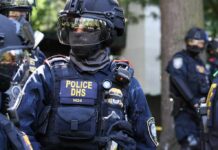
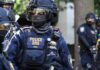
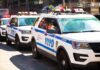
The afternoon of May 4, 2026, started routinely enough for tourists strolling the National Mall. Vice President JD Vance’s motorcade had just passed the Washington Monument when Uniformed Secret Service officers responded to shooting reports in the area. They spotted Marx, a 45-year-old Midland resident, along the motorcade path with a visible firearm print. What happened next unfolded with terrifying speed. Marx fled toward civilians crossing the street, pulled his weapon on the sidewalk, and turned to fire at pursuing officers.
A Teenage Bystander Pays the Price
The gunfire struck a juvenile civilian in the leg as Marx fired at the officers. Secret Service agents returned fire, hitting Marx in the hand, left arm, and upper abdomen. The suspect was rushed to George Washington University Hospital while the wounded teen received treatment for non-life-threatening injuries. The White House complex went into brief lockdown as authorities secured the area. The proximity to one of the nation’s most iconic landmarks, combined with the timing just after the vice president’s passage, transformed what might have been a routine D.C. police matter into a federal case with national security implications.
Federal Charges Stack Against Convicted Felon
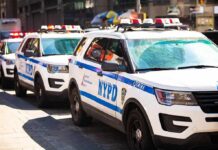
Federal prosecutors filed charges in U.S. District Court for the District of Columbia. Marx faces three serious counts: assaulting federal officers with a dangerous weapon, discharging a firearm during a crime of violence, and unlawful firearm possession by a felon. That last charge reveals Marx’s criminal history already barred him from possessing any firearm. His hospitalization has delayed arraignment proceedings, leaving no trial date set. The Metropolitan Police Department launched an independent use-of-force investigation, standard procedure when officers discharge weapons, though precedent suggests the officers’ response will likely be deemed justified given the bystander danger.
No Political Target, But Troubling Questions Remain
Secret Service Deputy Director Matt Quinn made clear in press briefings that investigators found no indication Marx intended to target the vice president’s motorcade. The timing appears coincidental, with Marx spotted along the motorcade path shortly after Vance passed. Yet the incident exposes vulnerabilities that security experts cannot ignore. The National Mall remains a high-traffic tourist destination with open access, creating unavoidable overlaps between civilian activity and federal motorcade routes. This contrasts sharply with the layered perimeters Secret Service employs elsewhere. The 2024 Trump rally shooting in Pennsylvania already prompted agency-wide reviews of protection protocols.
Marx’s motive remains unknown, complicating risk assessments. Was this a random act by an armed felon who panicked when confronted? A planned attack with unrelated timing? The absence of political motivation, while reassuring in one sense, offers no comfort to those questioning how a convicted felon carrying a visible firearm could position himself along a vice presidential motorcade path undetected until shots were fired. Plainclothes agents reportedly spotted the firearm print before uniformed officers engaged, suggesting surveillance worked, but the civilian injury demonstrates the razor-thin margins for error in protecting officials in open urban environments.
Echoes of Past Threats Near Federal Power Centers
This incident joins a troubling catalog of armed encounters near the White House and National Mall. In 2011, Oscar Ramiro Ortega-Hernandez fired at the White House residence itself. The 2024 Pennsylvania rally shooting exposed Secret Service failures that led to congressional hearings and internal reforms. Routine armed encounters occur regularly in D.C. near federal sites, but overlaps with active motorcades remain rare. Each incident forces a reckoning: how much security is enough without turning the nation’s capital into a fortress inaccessible to the public it serves?
The Secret Service expanded VP Vance’s detail amid heightened political tensions following the 2024 election cycle. Those precautions may have saved lives on May 4. The rapid response by uniformed officers, the coordination with plainclothes surveillance, and the immediate lockdown protocols all functioned as designed. Yet an innocent teenager still took a bullet. Marx, a convicted felon prohibited from firearm possession, still managed to arm himself and position near a vice presidential route. These realities demand answers beyond declaring the system worked because the outcome wasn’t worse.
What Comes Next for Security and Justice
Marx remains hospitalized with undisclosed condition details. Federal prosecutors will eventually bring him before a judge to face charges carrying substantial prison time. The Metropolitan Police investigation into officer conduct will proceed independently, though the circumstances, captured on dashcam footage and witnessed by multiple parties, appear to support the officers’ split-second decision to return fire. Long-term implications may reshape Secret Service motorcade protocols, particularly regarding sweep procedures along public routes. The incident could also fuel broader debates about felon firearm possession enforcement and urban gun violence near federal sites.
For D.C. residents and tourists, the shooting serves as a jarring reminder that the nation’s capital, despite its symbolic importance and heavy security presence, cannot eliminate all risks. For Vice President Vance’s security detail, it reinforces the constant threat calculations that accompany every movement. For Marx, if convicted on all counts, the consequences will be severe. And for one teenage bystander, the physical wound will heal faster than the psychological scars from a spring afternoon that turned into a war zone steps from the Washington Monument.