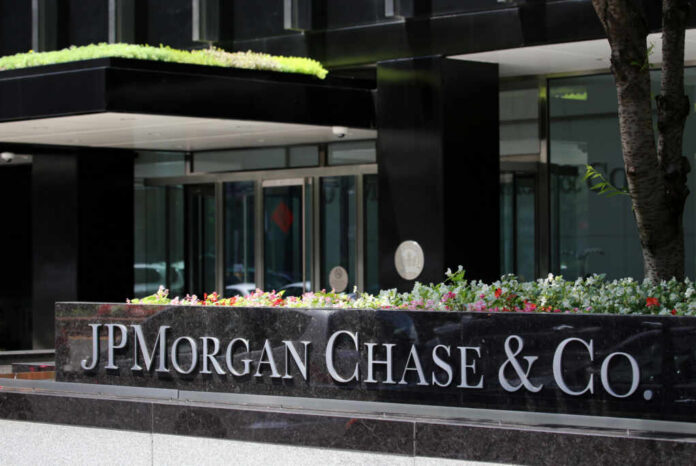
One of America’s biggest banks just admitted it shut down President Trump’s accounts right after Jan. 6—raising fresh questions about whether “debanking” is being used to punish political enemies.
Story Snapshot
- JPMorgan confirmed in a court filing that it closed Trump-affiliated accounts in early 2021, with terminations taking effect in April 2021.
- The admission comes amid President Trump’s $5 billion lawsuit alleging political discrimination tied to “debanking.”
- Bank letters reportedly gave no specific reason for ending the relationship, while JPMorgan points to standard account terms allowing closures with notice.
- Trump’s legal team argues the timing reflects ideology-driven “blacklisting,” while JPMorgan and CEO Jamie Dimon have denied political debanking claims.
What JPMorgan Admitted, and Why It Matters
JPMorgan Chase acknowledged in a court filing that it closed accounts connected to Donald Trump and Trump Organization entities shortly after the January 6, 2021, Capitol breach. The bank’s notices were dated February 19, 2021, and the closures became effective April 19, 2021, after Trump entities moved hundreds of millions of dollars elsewhere. The filing arrived as the bank responds to President Trump’s more recent lawsuit seeking $5 billion in damages.
The basic fact pattern is not complicated: a decades-long banking relationship ended in the political firestorm that followed Jan. 6. What complicates it is the scale and influence involved. When a major institution cuts off services to a high-profile figure—especially a sitting president now back in office—it puts a spotlight on how much power private banks can exercise over economic life, even when customers are otherwise able to meet financial obligations.
The Timeline and the Paper Trail in the Lawsuit
According to the reporting, JPMorgan’s letters told Trump-related entities that the relationships “no longer served” the bank, without laying out a specific alleged violation in the text of the notices. The bank’s chief administrative officer for global banking, Dan Wilkening, confirmed the closures in the court filing and said the transfers out of the bank occurred smoothly. JPMorgan has emphasized that its account agreements permit unilateral closure with 30 days’ notice, with or without cause.
This is where the dispute turns from a business breakup into a legal and political fight. President Trump’s lawsuit in Miami state court claims political discrimination and frames the action as “debanking,” arguing the decision was ideologically motivated. JPMorgan’s posture, based on the information provided, is closer to a contract-and-compliance defense: the bank had the right to end the relationship under its terms, and it managed the wind-down in an orderly way.
JPMorgan admits closing Trump-affiliated bank accounts after Jan 6 Capitol riot amid $5B lawsuit https://t.co/29NYR2r8ez
— FOX Business (@FoxBusiness) February 22, 2026
?s=20
Competing Claims: “Debanking” Allegations vs. Bank Denials
The sources presented include two realities that can be true at the same time. First, JPMorgan had contractual discretion to close accounts with notice. Second, the timing—weeks after Jan. 6—naturally fuels suspicion that politics, reputational risk, or external pressure played a role, even if the letters did not spell out a rationale. Jamie Dimon previously denied the idea that the bank engages in political “debanking,” but Trump’s attorneys have called the closures reckless and politically driven.
Based on the available research, there is no independently confirmed “blacklist” document produced in public, and the reporting notes that evidence for that specific claim is not established beyond the allegation. That limitation matters for readers who want airtight proof. At the same time, conservatives who watched corporations embrace ideological enforcement over the last decade will recognize the pattern: when institutions refuse service without clear explanation, it can function as punishment without due process or transparency.
Constitutional-Style Problem in a Private Action?
Banks are not the government, and the First Amendment directly restrains state power. When access to core financial services can be withdrawn quickly, the practical effect can resemble a soft form of coercion. The Trump case tests whether courts will treat these closures as routine contract decisions or as potentially discriminatory conduct.
The broader context in the research points to additional disputes involving Trump-related accounts, including litigation against Capital One over the closure of more than 300 accounts in 2021. The reporting also notes that Bank of America allegedly refused large deposits tied to Trump after the JPMorgan move, though the details provided here are limited. In 2026, with the country still debating corporate ideology, this lawsuit is likely to become a bellwether for where the financial sector’s discretion ends and viewpoint neutrality begins.
Sources:
JPMorgan admits closing Trump-affiliated bank accounts after Jan 6 Capitol riot amid $5B lawsuit