President Trump defiantly raised global tariffs to 15% after the Supreme Court struck down his previous trade protections, demonstrating that no judicial overreach will stop him from defending American workers and industries.
Story Snapshot
- Trump invoked Section 122 of the Trade Act to implement a 15% global tariff after SCOTUS invalidated his prior tariffs on Friday, February 20, 2026
- The President signed a 10% tariff order Friday evening, then raised it to the legal maximum of 15% Saturday morning, promising even more protections ahead
- Trump blasted the Supreme Court ruling as “ridiculous, poorly written, and extraordinarily anti-American,” refusing to let unelected judges undermine economic sovereignty
- The new uniform tariffs override special deals with countries like the UK, EU, and Japan, applying equal protection across all trading partners starting February 24, 2026
Trump’s Swift Response to Judicial Activism
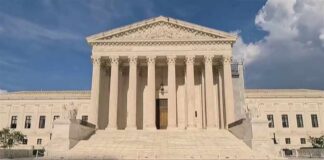
President Trump moved decisively hours after the Supreme Court struck down his International Emergency Economic Powers Act tariffs on February 20, 2026. The ruling invalidated broad trade protections Trump implemented to shield American manufacturers from unfair foreign competition. Rather than accepting this constraint on executive authority to protect workers, Trump signed a new executive order Friday evening establishing a 10% global tariff effective February 24. By Saturday morning, he announced via social media that he was raising the rate to 15%, the maximum allowed under Section 122 of the Trade Act of 1974, which permits temporary balance-of-payments tariffs for up to 150-180 days.
Legal Foundation and Strategic Pivot
Section 122 provides a solid legal foundation that addresses the Court’s concerns while maintaining robust trade protections. Unlike the IEEPA authority the Court questioned, Section 122 explicitly grants presidents power to impose uniform tariffs up to 15% to address balance-of-payments issues. Trump’s approach applies equally across all trading partners, eliminating the country-specific variations that complicated his previous framework. The White House confirmed coverage includes the UK, India, Japan, and EU, with exemptions mirroring prior arrangements. Trump also extended suspension of the de minimis exemption, maintaining a 10% tariff on low-value imports under $800, targeting Chinese e-commerce platforms like Shein and Temu that have flooded American markets.
Overriding Unfavorable Trade Deals
The uniform 15% rate effectively overrides bilateral agreements negotiated under Trump’s previous tariff structure, including a concessionary 10% deal with UK Prime Minister Keir Starmer. While some analysts characterized this as undermining diplomatic arrangements, it actually restores fairness by ensuring no foreign government receives preferential treatment over American interests. Countries that secured lower rates through negotiation now face the same protections as everyone else. This levels the playing field and prevents foreign leaders from exploiting loopholes. Trump’s approach prioritizes revenue generation and domestic manufacturing over diplomatic niceties, exactly what voters elected him to do when they rejected globalist trade policies in 2024.
Building Toward Stronger Protections
Trump made clear the 15% tariff serves as a temporary bridge while his administration prepares more comprehensive trade actions. The White House announced plans to initiate Section 301 investigations into unfair trade practices and Section 232 probes for national security concerns, processes requiring two to three months. These investigations will enable product-specific and country-specific tariffs potentially higher than 15%, particularly targeting China’s predatory trade practices. Trump promised on social media that “new and legally permissible Tariffs” would be “GREATER THAN EVER BEFORE.” Economists project eventual average rates of 9-10% through these targeted measures, though specific sectors like steel and technology could see substantially higher protection against dumping and intellectual property theft.
Economic Impact and Consumer Considerations
Critics from establishment think tanks like the Tax Foundation claim the tariffs will cost households approximately $700 annually, but this narrow analysis ignores the devastating costs of inaction. Decades of globalist trade policies hollowed out American manufacturing, destroyed communities, and made the nation dangerously dependent on hostile foreign powers. The temporary price adjustments consumers may experience pale compared to the long-term benefits of revitalized domestic production, secure supply chains, and good-paying jobs. Furthermore, tariff revenue flows directly to the U.S. Treasury, offsetting other taxes and reducing dependence on deficit spending. The effective tariff rate will rise from 12.5% to approximately 14.5%, restoring protections closer to historical norms before globalists dismantled America’s industrial base.
Constitutional Authority and Judicial Limits
The Supreme Court’s Friday ruling reflects concerning judicial overreach into executive trade authority that the Constitution and Congress explicitly grant. Trump correctly identified the decision as “anti-American” because it hamstrings the president’s ability to respond swiftly to economic threats. For over two centuries, presidents have used tariff authority to protect national interests, generate revenue, and counter unfair foreign practices. The Court’s second-guessing of emergency determinations sets a dangerous precedent of unelected judges micromanaging trade policy they lack expertise to evaluate. Trump’s pivot to Section 122 demonstrates his commitment to working within legal frameworks while refusing to abandon American workers. His call for Congress to grant permanent tariff authority recognizes the proper constitutional remedy when judicial activism constrains executive power.
Looking Ahead to Comprehensive Trade Reform
The 15% tariff represents just the opening move in Trump’s comprehensive strategy to restore American economic sovereignty. Section 301 and 232 investigations will identify specific unfair practices and security vulnerabilities that justify targeted actions beyond the temporary uniform rate. China faces particular scrutiny given its systematic theft of intellectual property, currency manipulation, and weaponization of trade dependence. Agricultural exporters already face Chinese retaliation with 15% tariffs on U.S. products since March 2025, demonstrating Beijing’s economic warfare tactics. Trump’s approach creates leverage to negotiate from strength rather than the weakness that characterized previous administrations. The next 150 days will determine whether Congress acts to provide permanent authority or whether additional legal tools prove necessary to defend American prosperity against globalist courts and foreign adversaries alike.
Sources:
Trump outlines new plan for tariffs after ‘deeply disappointing’ Supreme Court ruling – ABC News
Trump tariff hike to 15% is an ‘eff you’ to UK trade deal with Keir Starmer – Fortune
Trump 2.0 Tariff Tracker – Trade Compliance Resource Hub