

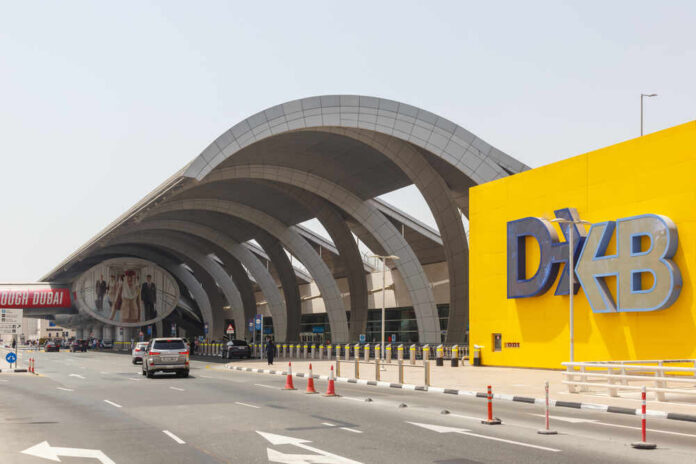
As Tehran–Dubai flights restart, Iran fires drones and missiles around the Gulf, raising hard questions about what “normal” really means for American security and allies.[10]
Story Snapshot
- Iran’s Civil Aviation Authority says Tehran–Dubai flights will resume July 1 after months of war-related shutdowns.[1]
- Iran and the United Arab Emirates aviation agencies issued fresh permits and completed route approvals, but capacity will start limited.[1]
- The move follows a Swiss-brokered ceasefire framework between the United States and Iran, even as both sides claim ongoing violations.[4]
- Iranian drones and missiles have struck Kuwait’s main airport and other regional targets, keeping Gulf airspace tense and partially closed.[10]
Iran And UAE Reopen A Key Air Link Under A Fragile Ceasefire
Iran’s Civil Aviation Authority announced that commercial flights between Tehran and Dubai will restart on July 1, reopening one of the country’s main regional routes after months of conflict-related disruption.[1] Iranian and United Arab Emirates civil aviation officials say they have issued the needed permits for this route and completed operational approvals to allow carriers to sell tickets and plan schedules again.[2] This restart fits a wider pattern where air travel is often the first sector used to signal lower tensions, even before deeper political deals are clear.[1]
Officials in Iran’s Civil Aviation Organization say Tehran–Dubai flights will begin with limited capacity and then grow as they judge security to be improving.[4] For now, only Iranian airlines will fly the route, with other carriers expected later once more reviews are done by regulators in both countries.[1] Aviation authorities also mention talks to bring back flights between Iran and other United Arab Emirates hubs like Abu Dhabi and Sharjah, which together form one of the busiest travel corridors in the Gulf.[4]
Ceasefire Framework And Ongoing Military Strikes Create Mixed Signals
Media reports link the decision to resume flights with a ceasefire framework brokered in Switzerland that aims to cool direct hostilities between the United States and Iran after serious clashes last month.[4] That framework has helped reopen some air routes, but Washington and Tehran still accuse each other of breaking the truce, which shows how thin the calm remains.[4] This gap between aviation news and battlefield claims should alert American readers that commercial steps do not always match real progress on ending violence.
Regional coverage from outlets such as France 24 shows how unstable the situation remains, despite these new flight plans.[10] Iranian drones and missiles have hit Kuwait International Airport, causing damage and injuries, as both the United States and Iran continue trading fire and threats across the region.[10] Travel experts note that large parts of Middle East airspace are still restricted or closed, with some countries, including Kuwait and Bahrain, not fully accessible for normal passenger flights.[13] These facts point to a ceasefire that is partial at best and underline why airlines and governments stay cautious.
Airlines, Airspace Restrictions, And What It Means For U.S. Allies
International airline leaders are not acting as if peace has truly taken hold, even as the Tehran–Dubai route reopens.[11] An Emirates spokesperson said the company will keep flying through Dubai for now but is “ready to really move quickly if it goes south,” showing that major carriers still expect conditions to possibly worsen again.[11] Safe Airspace tracking reports say Iran only partly reopened the Tehran flight information region in June, with western sections still closed, forcing airlines to route planes carefully around danger zones.[12]
Broader travel reporting explains that many Middle Eastern skies remain heavily restricted thanks to the same conflict that shut the Tehran–Dubai route in the first place.[13] A Condé Nast Traveler analysis describes how key parts of Saudi Arabian airspace stay closed and some nearby states are still off-limits, even as limited flights begin to return on specific routes.[13] For American conservatives, these uneven steps matter because they show that our allies and our own forces still operate in a risky environment, while Iran gains headlines for “normalization” without clearly changing its aggressive behavior.
Why Conservative Readers Should Watch “Aviation-Led De‑Escalation” With Caution
Experts note a recurring pattern in Middle East conflicts where commercial aviation acts as an early “first mover” to suggest calm, long before solid treaties or real accountability measures are in place.[1] After past crises, governments sometimes restored flights to signal goodwill while keeping missile programs, proxy militias, and drone campaigns running behind the scenes.[16] The current Tehran–Dubai restart fits that mold, arriving while Iranian missiles hit airports and Gulf states weigh how to protect their people and infrastructure.[10] It is a diplomatic gesture, but not yet firm proof of lasting peace.
For Constitution-minded Americans who care about national strength and clear-eyed foreign policy, the lesson is simple: watch what Iran does, not just what its aviation regulators say.[15] The Swiss-brokered ceasefire framework is still secret in many details, and there is no public long-term bilateral agreement between Iran and the United Arab Emirates spelling out strict security commitments.[1] Until we see transparent documents, independent monitoring, and a real drop in attacks on U.S. partners, reopening one route between Tehran and Dubai should be treated as a cautious test, not a guarantee that the region — or our interests — are truly safer.[4]
Sources:
[1] Web – Tehran-Dubai flights are resuming Monday: Iran media
[2] Web – Iran to resume Tehran-Dubai flights from July 1 | Dunya News
[4] YouTube – Iran, UAE Take Step Toward Normalcy With Commercial …
[10] Web – TEHRAN-DUBAI FLIGHTS TO RESUME FROM JULY 1 – CGTN
[11] Web – Summary – Safe Airspace
[12] Web – 2026 Iran war | Deal, Explained, United States, Israel, Strait of …
[13] Web – There is a two-week ceasefire. Will airlines operate normally now?
[15] Web – What the US-Iran Ceasefire Means for Travel in the Middle East
[16] Web – Amid a fragile truce between the US and Iran, the aviation sector …