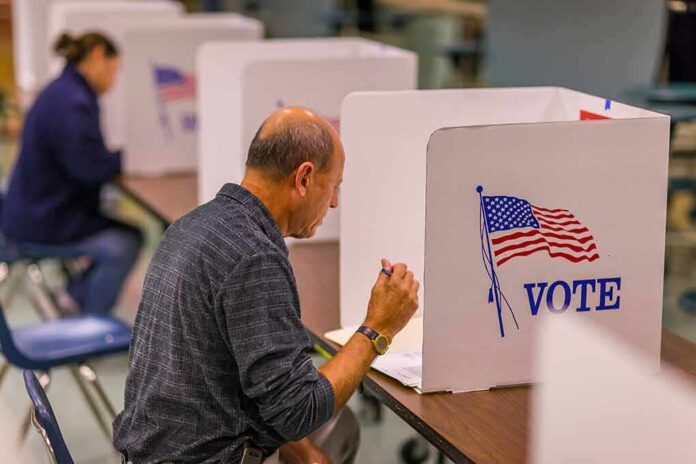
Michigan’s top election office admits non-citizens reached the voter rolls and even cast ballots, while rejecting deeper federal scrutiny of its data.
Story Snapshot
- Michigan confirmed non-citizen registrations and votes in recent cycles, with charges filed in 2024 cases.
- State review said such cases are “extremely rare,” yet hundreds of registrations were canceled or rejected over citizenship issues.
- Auditors warned the state’s citizenship data system is unreliable for confirming who is a citizen.
- A federal court blocked the U.S. Department of Justice from obtaining unredacted voter rolls for further review.
What Michigan Officials Have Confirmed
Michigan’s Attorney General reported investigations into 38 suspected non-citizen voting or related conduct since 2009, with six cases now charged. The office stated that voter registrations tied to every identified non-citizen voter have been canceled. In 2024, state officials announced charges against a non-United States citizen who allegedly registered and voted, underscoring the gap between legal rules and on-the-ground controls. These actions show the issue exists, even if not widespread, and that fixes came after problems appeared.
The Michigan Department of State ran a 2025 review that compared driver and state identification data with the statewide voter file. Officials said they found 15 apparent non-citizen votes in the 2024 general election and referred most cases for possible charges, stressing such incidents are extremely rare. Rarity does not erase risk, though. Even a small number can swing close local races. Citizens expect clean lists and firm checks that stop ineligible voting before ballots are cast, not after.
Audit Findings Raise Red Flags on Data Quality
The Michigan Auditor General reported that 403 registrations were canceled or rejected for citizenship reasons over the review period. The audit also noted tens of thousands of mismatches between the voter file and a separate state system, which is updated only when people renew licenses or change status. Auditors warned that the driver and identification database alone does not prove citizenship and should not be the sole basis for removals or confirmations. That means the state’s core verification tools are not enough on their own.
State law is clear: only United States citizens may register and vote in Michigan. When the systems that track this basic requirement lag or conflict, trust suffers. The audit confirms the citizenship field in the driver and identification system is not a reliable test of who can vote. The takeaway is simple. Michigan needs a stronger, routine, and documented process to verify citizenship in the Qualified Voter File before ballots go out and before votes get counted.
Clash Over Transparency and Next Steps
A federal appeals court held that Michigan did not need to hand over its unredacted voter file to the United States Department of Justice. The ruling limited a deeper federal review the Trump administration sought ahead of the 2026 midterms. Michigan leaders called it a win for privacy and election security, but many voters will see a system that confirms problems exist while restricting outside checks. Confidence grows when independent eyes can verify the fix.
Lawmakers proposed a proof-of-citizenship measure to require documentary evidence, like a birth certificate or passport, and to mark verified citizenship in the statewide file. The proposal also set structured timelines to remove ineligible records, with safeguards near federal elections. Supporters argue this meets a common-sense standard: verify once, flag it in the file, and audit yearly. Opponents say cases are rare and warn of paperwork burdens. The facts show both risk and remedy. Michigan can protect every lawful vote and stop the rest.
Sources:
redstate.com, michigan.gov, mlive.com, votebeat.org, audgen.michigan.gov, 9and10news.com, legislature.mi.gov, legalnews.com