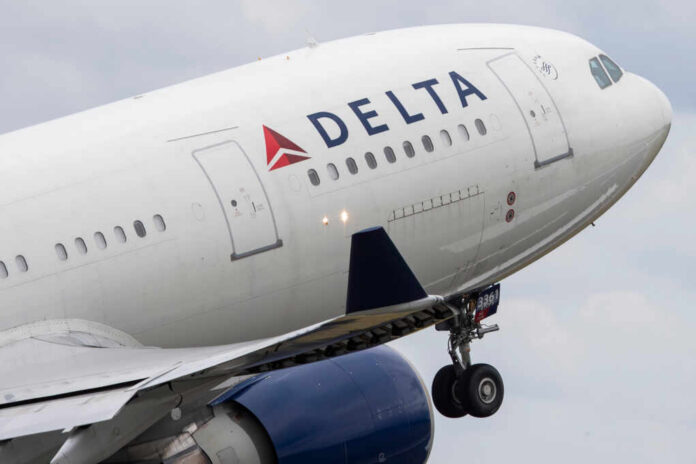
Delta’s latest earnings message is blunt: the travelers still spending big are the ones least affected by Washington’s turmoil, global conflict, and the inflation squeeze hitting everyone else.
Quick Take
- Delta reinstated its full-year profit outlook after beating Q2 expectations, driven by premium cabins and loyalty revenue.
- CEO Ed Bastian described demand as steady even amid trade disputes and geopolitical tensions, suggesting consumers have grown “numb” to constant disruption.
- Premium products now make up a majority of Delta’s sales, while economy demand softens and business travel remains structurally lower than pre-COVID.
- Middle East tensions increased fuel costs, but Delta still reported record sales days after the conflict flare-up, underscoring how pricing power is shifting.
Delta’s rebound is powered by premium spending, not broad-based growth
Delta reported better-than-expected second-quarter results and reinstated a full-year profit outlook of $5.25 to $6.25 per share, after previously pulling guidance when tariff-related uncertainty rattled markets. Management tied the improved outlook to premium ticket sales and loyalty program strength, including the airline’s credit-card partnership model. Delta also posted flat revenue in the quarter while delivering $2.10 in adjusted earnings per share, a sign that mix and pricing—not volume—did much of the work.
Delta’s numbers also point to a wider economic pattern that many households have felt for years: a two-speed recovery. The airline said premium segments account for about 59% of sales, while demand in the main cabin has been softer, especially in off-peak travel periods. That divide matters because it suggests higher earners can absorb higher fares and fees, while middle-income families become more price sensitive, reducing the “everybody wins” story politicians often sell.
“Stable” demand amid trade fights and conflict highlights consumer fatigue
Ed Bastian described the environment as “incredibly stable,” arguing that travelers have become “a little numb” to recurring trade disputes and geopolitical tension. That framing fits the post-2020 reality: constant crisis coverage can dull consumer reaction, especially for those with savings, flexible work, and access to credit. For conservatives who argue Washington’s chaos has become normalized, the takeaway is less about one airline and more about how markets adapt when government signals remain unpredictable.
At the same time, Bastian criticized tariffs as harmful to U.S. companies, highlighting a persistent friction in Republican economics: America First trade enforcement versus corporate concerns about higher costs and retaliatory pressure. It does not show Delta making a political threat or policy demand; it shows a CEO describing what investors care about—predictability. In practical terms, airlines price risk through fuel hedges, capacity changes, and fare strategy, while households without that flexibility simply cut discretionary travel.
Geopolitical shocks raised fuel costs, yet airlines still lifted forecasts
Middle East turmoil added significant fuel-cost pressure across the industry, with reporting citing roughly $400 million in Iran-related fuel impacts. Despite that, Delta logged a record sales surge—including five of its best sales days ever after the conflict outbreak—an outcome that seems counterintuitive until you look at who is buying. When premium demand holds, airlines can protect margins through fare segmentation, fees, and international network strength, even when costs spike.
Delta was not alone. Reports said other carriers, including American, raised revenue expectations as well, suggesting the sector believes demand can absorb higher prices. That may reassure investors, but it also reinforces a political point many voters across parties now share: official economic narratives rarely match lived experience. If airlines can pass through shocks while families cut back, the “K-shaped” divide becomes visible in everyday choices—who flies upfront, who stays home, and who goes into debt.
What this signals for 2026: loyalty economics, inequality, and policy tradeoffs
Delta’s longer-term strategy has been to “premium-ize” the product and monetize loyalty, a model the company has reinforced publicly as business travel remains 15% to 20% below pre-pandemic levels. That structural shift matters politically because it mirrors the broader economy: more revenue is coming from high-value customers rather than mass affordability. Limited government advocates often prefer markets over mandates, but markets can still produce outcomes—like reduced access—that fuel populist anger on right and left.
The open question is whether policymakers respond by chasing headlines or by restoring fundamentals that make middle-class life easier: stable prices, cheaper energy, and predictable rules for businesses and workers. It supports the core point that Delta’s performance is being insulated by affluent demand and loyalty economics, not by a universal travel boom. If government keeps lurching from crisis to crisis, companies that can target the top end will cope, while everyone else faces tougher tradeoffs.
Sources:
Delta Air Lines defies Middle East turmoil as it logs record sales surge
Delta CEO Doubles Down on Industry’s Premium Makeover
Delta CEO Ed Bastian on luxury air travel and the industry’s disruption
War $400 Million Fuel Hits Can’t Stop Delta & American ReRevenue Surge