As Democrats push a sweeping “reparative justice” agenda tied to H.R. 40, they may be handing America First conservatives the midterm issue of their dreams.
Story Snapshot
- Rep. Ayanna Pressley is now the House lead on H.R. 40, a federal reparations commission bill.[2][6][7]
- Her June 2026 “reparative justice agenda” press event framed reparations as compensation owed, not charity.[1][2]
- The bill itself only creates a study commission, with no clear cost, payout formula, or limit on remedies.[2][4][6][7]
- Democrats are betting this racial redistribution fight helps them, but many in the MAGA base are eager to run against it.
Pressley Pushes Reparations Framing As “Debt,” Not Debate
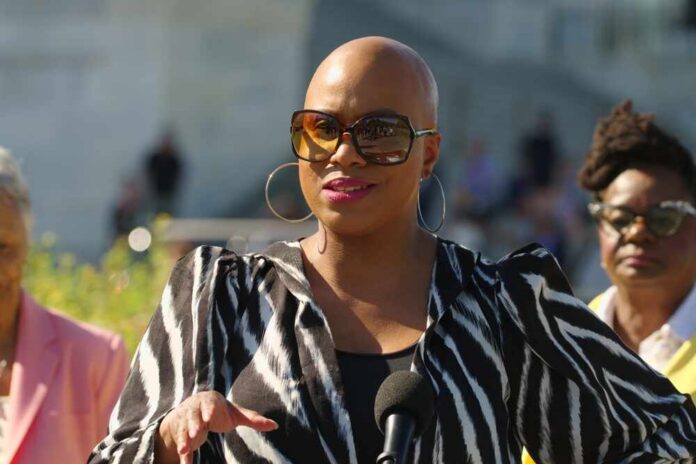
At a June 11, 2026 Capitol Hill event, Massachusetts Democrat Ayanna Pressley stood with activist allies and called for a “transformative reparative justice agenda” ahead of America’s 250th birthday.[1][2] She said this is “not a movement or an appeal for benevolence or charity” but a demand “to compensate for the harm and loss that we have experienced.”[1] Her office promoted the event with the Why We Can’t Wait Reparations Network and other groups, showing a coordinated push, not a one-off speech.[2][4]
Pressley has moved from vague rhetoric to owning the core legislative vehicle: she is now the House lead on H.R. 40, the Commission to Study and Develop Reparation Proposals for African Americans Act.[2][6][7] Her office calls it a “racial justice, economic justice, and moral imperative bill” to address “the harmful legacy of slavery.”[2] She has also praised a United Nations resolution on reparations and described H.R. 40 as a “pathway toward truth, reconciliation, and accountability.”[1][6]
What H.R. 40 Actually Does – And What It Hides
Despite the fiery moral language, the current bill is not a direct payment program but a commission to study and recommend proposals.[2][4][6][7] The 15-member federal body would examine the “lasting legacy of slavery, systemic racism, and racial discrimination” and then suggest reparative measures to Congress.[4][6] The commission would hold hearings, gather testimony, and operate on an 18‑month deadline, but there is no public payout formula, cost estimate, or clear limit on what it might propose.[4][6][7]
Pressley and allies openly link the commission to cash-style “redress” and “compensation,” yet the record they offer is heavy on grievance and light on math.[1][2][4] None of the cited material provides a damages model, eligibility rules, or a budget ceiling for what could become a massive race-based federal transfer.[2][4][7] That gap lets Democrats sell the moral story now while hiding the true bill for later, if they ever get the votes. It also gives conservatives a clean opening to demand hard numbers and concrete limits.[2][4][7]
Election-Year Calculus: Why MAGA Voters Are Not Afraid Of This Fight
Pressley’s timing is not accidental. She and Senator Cory Booker reintroduced H.R. 40 during Black History Month in 2025, casting it as a direct response to President Trump’s rollback of diversity, equity, and inclusion programs.[2][6] Her office described the bill as a “powerful counterweight” to the Trump administration and a call to address “systemic oppression.”[6] Now, as she renews the reparations push ahead of the semiquincentennial, she insists that “the United States government owes us a debt and we need reparations now.”[3][5]
For many conservative and America First voters, that message lands as a threat to basic fairness, fiscal sanity, and national unity, not as “healing.” Pressley’s framework suggests that people who never owned slaves must pay people who were never enslaved, through a federal mechanism that is still undefined and potentially open-ended.[1][2][4] The lack of bipartisan support or clear committee progress underscores how radical the idea remains; H.R. 40 keeps getting reintroduced but has not become law.[3][7] That stalled record signals a deep divide between activist wish lists and what most Americans will accept.[3][4][7]
Constitution, Taxpayers, And The Slippery Scope Of “Reparative Justice”
Pressley ties her agenda to a long list of alleged government harms, including redlining, appraisal bias, and exclusion from benefits like housing programs.[1][2][5] Yet the supporting documents in this record do not supply the underlying data, program audits, or legal analysis needed to prove each claim and tie it clearly to specific modern remedies.[1][2][4][5] Instead, the agenda leans on broad language about “structural injustices” and “systemic inequities” that can justify almost any policy a future commission might favor.[1][2][4]
The attacks are coming fast — and Black women in Congress are standing firm.
Congresswoman Ayanna Pressley joins our Sunday Call straight from the frontlines of Capitol Hill. From the gutting of federal agencies, to the assault on voting rights, to … pic.twitter.com/6MndFjZ09l
— Ayanna Pressley (@ayannapressfvjj) June 10, 2026
That is where constitutional and budget concerns collide. A federal commission empowered to recommend race-based payments or preferences would raise serious equal protection questions, while any large-scale compensation scheme would compete with Social Security, Medicare, veterans’ care, and basic defense spending. Yet none of that trade-off appears in Pressley’s sales pitch.[2][4][6][7] For a Trump-era conservative movement focused on secure borders, energy affordability, and stopping runaway debt, this reparations push is not just bad policy; it is an election-year gift.
Sources:
[1] Web – Debt Wish: Dem Ayanna Pressley Wants Reparations and MAGA Is Begging …
[2] YouTube – Pressley, Advocates Call Congress to Advance Transformative …
[3] Web – VIDEO: Ahead of America’s 250th, Pressley, Advocates Call On …
[4] Web – Sen. Cory Booker, Rep. Ayanna Pressley, Rep. Summer Lee, Rep …
[5] Web – Press Release: Pressley and Advocates Urge Congress to Support …
[6] Web – [PDF] The People’s Justice Guarantee – Ayanna Pressley
[7] YouTube – Pressley, Advocates to Host Equity Week Press Conference on …