Sen. John Fetterman just dared Washington’s media-and his own party—to explain why anyone would mourn the elimination of Iran’s top tyrant.
Quick Take
- Sen. John Fetterman publicly defended U.S.-Israeli strikes that reportedly killed Iran’s Supreme Leader Ayatollah Ali Khamenei and dozens of senior regime figures.
- Fetterman blasted critics as “Ayatollah’s apologists” and signaled he will oppose War Powers efforts aimed at curbing President Trump’s operation.
- Democratic leaders demanded evidence of an “imminent threat,” while the Trump administration briefed Congress and argued the action was necessary.
- Congress is preparing votes on war-powers resolutions as the operation continues and energy-market jitters raise fresh inflation concerns.
Fetterman’s blunt defense exposes a Democratic split on Iran
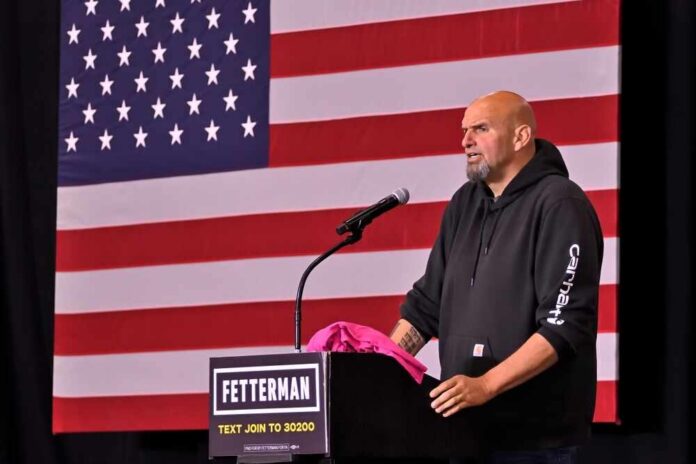
Sen. John Fetterman (D-PA) responded to backlash over the U.S.-Israeli strikes on Iran by attacking the critics rather than softening his language. In public comments and social media posts, Fetterman defended the reported killing of Ayatollah Ali Khamenei and other senior regime leaders, arguing the strike removed a uniquely evil figure and weakened a nuclear-threatening regime. His posture set him apart from prominent Democrats calling the operation reckless.
Fetterman’s line was simple: the Iranian regime’s leadership has earned zero sympathy. He mocked the political and media outrage, framing it as performative grief for a government accused of severe abuses and regional aggression. That framing matters because it forces a clearer question for voters: are lawmakers debating tactics and constitutional process, or are they minimizing what the Iranian theocracy represents? The available reporting shows Fetterman squarely chose the first argument without conceding the second.
War Powers fight turns into a test of Congress’ role in modern conflict
Sen. Tim Kaine (D-VA) renewed calls for a War Powers vote after the strike, with other lawmakers pushing similar measures in both chambers. Fetterman said he would vote “hard no,” and he also argued in a TV interview that the action was not yet a War Powers violation under the standard timelines discussed in public coverage. The administration briefed congressional leaders, and full briefings were scheduled as the week progressed.
The unresolved problem is evidence. Democratic leaders, including Senate and House leadership, pressed for proof of an “imminent threat,” while administration officials asserted that threat in briefings. Public reporting reflects that the administration’s case has not been fully laid out to voters, at least not in detail. For constitutional conservatives, that gap cuts both ways: Congress has oversight obligations, but commanders in chief also need operational flexibility—especially when no U.S. ground troops are being deployed.
Trump-Netanyahu coordination, and why “peace through strength” is back
The strike was described as a joint U.S.-Israeli operation launched after intelligence indicated Iran’s top leadership was co-located, with an operation that could extend for weeks. Supporters portrayed the action as a decisive preemption against Iran’s nuclear ambitions and regional aggression. Fetterman praised President Trump and Prime Minister Netanyahu, arguing strength—not endless diplomatic “off-ramps”—is what forces hostile regimes to recalibrate. That argument aligns with the administration’s broader posture since returning to office.
Critics countered with worries about escalation and questioned the strategic endgame. Some Republicans also showed discomfort on war-powers grounds, reflecting an “America First” strain that wants tighter limits on foreign entanglements even when the target is a hostile regime. The facts available here support a clear political reality: the old bipartisan consensus on Middle East strikes is gone, replaced by shifting alliances that can flip depending on the president, the target, and the perceived immediacy of the threat.
Economic and security stakes: oil shocks, retaliation risk, and domestic strain
Even without U.S. boots on the ground, Americans can feel spillover quickly through energy markets. The live reporting pointed to rising oil prices and broader concerns about knock-on inflation pressures—exactly the kind of kitchen-table hit that frustrates older voters who lived through years of fiscal mismanagement and price spikes. Security concerns also rose alongside the operation, with public discussion linking domestic preparedness and terrorism risk to broader political fights unfolding in Washington.
Fetterman Calls Out Reporters After Iran Strike: ‘One of the Most Evil People Was Erased’https://t.co/LSbxkBPZYh
— RedState (@RedState) March 4, 2026
At this stage, key limitations remain. Public reporting confirms the strike, the political backlash, and the scheduled votes and briefings, but it also indicates the administration’s “imminent threat” rationale has not been fully aired in public detail. That keeps the debate centered on trust: trust in Trump’s national security team, trust in congressional oversight, and trust that America can strike hard without getting dragged into open-ended war—an outcome most voters, across parties, want to avoid.
Sources:
Fetterman needles Democrats over Iran strikes opposition
Fetterman blasts Iran strike critics