A Tennessee university’s six-figure payout to a professor it rushed to fire after the assassination of conservative activist Charlie Kirk exposes a collision between campus politics and due process. The case shows how quickly institutions can act under public pressure, the high cost of violating established tenure procedures, and how taxpayers ultimately cover the expense of such politically charged administrative mistakes.
Story Highlights
- Austin Peay State University fired theatre professor Darren Michael days after he reposted a Charlie Kirk headline following Kirk’s assassination.
- The public university later admitted it violated its own tenure-termination procedures and reversed course.
- Michael was fully reinstated with tenure and awarded $500,000 plus counseling reimbursement under a settlement.
- The case highlights tensions between campus speech rules, political pressure, and constitutional-style due process protections.
Rapid Firing After Charlie Kirk Assassination Sparks National Uproar
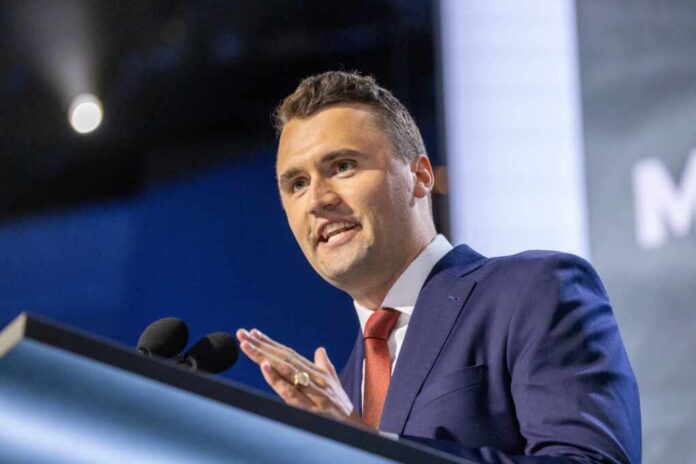
In September 2025, just days after conservative activist Charlie Kirk was assassinated during a Turning Point USA event at Utah Valley University, Austin Peay State University in Clarksville, Tennessee, abruptly terminated tenured theatre professor Darren Michael. His offense was resharing a screenshot of a 2023 Newsweek headline quoting Kirk as saying that gun deaths were “unfortunately” worth it to preserve Second Amendment rights, a post critics claimed was insensitive in the wake of the shooting.
The repost, drawn from Kirk’s own earlier comments, circulated quickly on social media. Conservative users highlighted Michael’s name and position, arguing that an educator at a public university should not appear to mock or justify political violence. Tennessee Senator Marsha Blackburn amplified the outrage by sharing a screenshot that included Michael’s photo and APSU affiliation, pointedly asking the school, “What do you say, @austinpeay?” Her post escalated public pressure on the university to respond swiftly.
Darren Michael, a theater professor at Austin Peay State University in Tennessee who was fired in September for his “insensitive” social media post after Charlie Kirk’s assassination is back on the job and will receive a $500,000 settlement. He posted Kirk's own words. pic.twitter.com/rpleexZG1I
— Fly Sistah 🪷 (@Fly_Sistah) January 8, 2026
University Condemns Post, Then Admits It Broke Its Own Rules
APSU President Mike Licari initially labeled Michael’s repost “insensitive” and “disrespectful,” asserting that many interpreted it as justifying Kirk’s unlawful death and saying it conflicted with the institution’s commitment to mutual respect and human dignity. Within two days of the assassination, the university moved to terminate Michael’s tenured appointment outright. That decision bypassed the multi-step dismissal process that typically protects tenured faculty from sudden, politically charged personnel actions.
Within weeks, however, the administration quietly conceded it had not followed its required tenure-termination procedures. Instead of proceeding directly to dismissal, the university reclassified Michael’s status from fired to suspended while it began the formal process it should have used from the start. By late December 2025, Licari emailed the campus community acknowledging that APSU failed to follow the mandated steps and announcing that Michael would be returned to his role as a tenured professor effective December 30.
Reinstatement, $500,000 Settlement, and Counseling Reimbursement
Media reports and documents obtained by local outlets show that APSU’s course correction came with a substantial financial cost. Under a settlement agreement, the public university agreed to pay Michael $500,000 and reimburse him for counseling services related to the fallout from his firing. The deal also required APSU to issue a campus-wide statement expressing regret for not following its own tenure-termination process and to circulate that message through university communication channels.
APSU’s spokesperson confirmed Michael’s reinstatement as of December 30, 2025, and acknowledged the existence of the settlement while citing confidentiality provisions that limit further comment. For a regional public institution, a half‑million dollar payout plus legal and counseling costs represents a serious hit to its budget. For taxpayers and donors, the case is a reminder that rushed decisions in the heat of political controversy can carry long-term financial and reputational consequences.
Free Speech, Due Process, and Political Pressure on Public Campuses
The sequence of events at Austin Peay highlights several issues conservatives have watched closely for years: ideological bias in higher education, the policing of speech, and the erosion of due process when public outrage builds online. Michael did not write a celebratory comment about Kirk’s death; he resurfaced an old headline quoting Kirk’s own words on gun violence. Critics on the right understandably viewed the timing as cruel, yet the university’s obligation as a state institution still included following its own rules before stripping a professor of tenure.
At the same time, the case underscores how elected officials and social media campaigns can influence—or appear to influence—personnel decisions at public universities. Blackburn’s post, seen by a large audience, clearly intensified focus on APSU’s response. The administration’s initial rush to fire, followed by a costly reversal, shows what happens when administrators try to appease public fury without anchoring decisions firmly in established procedures and constitutional-style protections for speech and employment.
What This Means for Conservatives, Taxpayers, and Campus Governance
For conservative readers, this story lands in a complicated place. On one hand, many will sympathize with anger toward any faculty member who seems to trivialize or politicize the assassination of a prominent conservative leader. On the other, this case demonstrates that when institutions ignore due process because of political pressure or viral outrage, they risk undermining the very rule-of-law standards conservatives champion, and they transfer the cost of those mistakes to taxpayers instead of to the decision-makers responsible.
Going forward, this episode will likely be cited by universities and faculty groups as a cautionary tale. Administrators may become more careful before disciplining tenured staff over online speech, especially at public institutions bound by First Amendment principles and contractual protections. For conservatives, the lesson is twofold: continue demanding accountability when campuses appear hostile to right-of-center voices, but also insist that any disciplinary action—no matter who the target is—honors the procedures and liberties that distinguish a constitutional republic from mob rule.
Watch the report: APSU professor paid $500k after wrongful firing
Sources:
- Professor fired over Charlie Kirk post reinstated, awarded $500,000
- Austin Peay has reinstated theatre professor after termination over Charlie Kirk post
- Austin Peay reinstates professor after termination over ‘insensitive’ Charlie Kirk post
- Tennessee professor fired over Charlie Kirk post reinstated, reportedly receives large financial settlement
- Austin Peay reinstates professor fired over Kirk headline