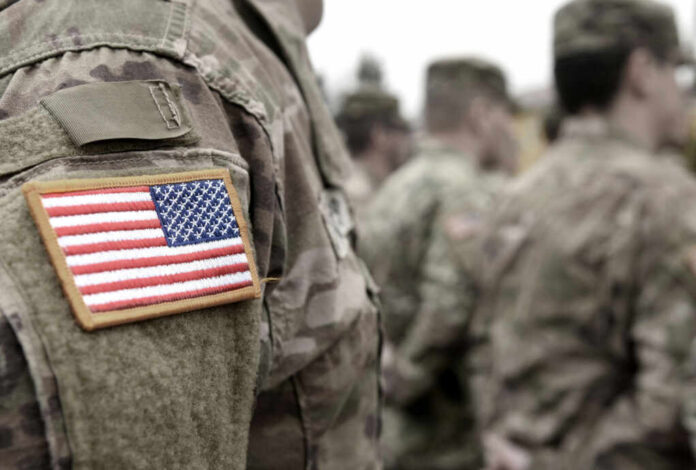
As Americans watch another overseas mission expand under a president who promised “no new wars,” the U.S. quietly shifting drones and troops into Nigeria raises a familiar question: where does “advice and support” end—and open-ended entanglement begin?
Quick Take
- The U.S. has sent roughly 100–200 troops to Nigeria for training and intelligence support, alongside MQ-9 Reaper drones operating from Bauchi State.
- U.S. and Nigerian officials describe the mission as strictly non-combat: surveillance, tracking, and intelligence-sharing—not airstrikes.
- The deployment follows America’s 2024 exit from a major drone base in Niger, signaling a Sahel strategy reset through partner-led operations.
- Recent suicide bombings in Maiduguri killing more than 23 people underscore the security crisis driving Nigeria’s demand for real-time intelligence.
- In a 2026 environment already defined by war with Iran and a base frustrated by interventionism, the administration faces fresh scrutiny over mission creep.
What the U.S. actually deployed—and what officials say it will do
U.S. military trainers arrived in Nigeria in February 2026, with reports placing the contingent at roughly 100 to 200 personnel. Nigerian and U.S. officials describe their role as training and intelligence support against Boko Haram and Islamic State-linked factions, not frontline combat. MQ-9 Reaper drones are now operating from an air base in Bauchi State to provide surveillance and live feeds for detection, tracking, and disruption activities, with no strikes confirmed.
The distinction matters because MQ-9s are capable of carrying weapons, and American voters have seen “temporary” counterterror support evolve into broader military commitments in past conflicts. For now, the reporting emphasizes that Nigeria is leading operations while U.S. assets feed commanders actionable intelligence. The public record still contains gaps—troop totals vary by outlet, and officials have not provided a detailed scope statement—but the consistent theme is non-strike surveillance paired with training.
Why Nigeria—and why now—after the Niger base shutdown
Nigeria’s northern states remain the epicenter of a long-running insurgency that began in 2009, and multiple armed threats overlap there: jihadist factions, kidnappers, bandit networks, and illegal mining operations. The U.S. has provided more than $2 billion in assistance to Nigeria since 2000, yet major attacks and instability persist. In mid-March 2026, suicide bombings in Maiduguri killed more than 23 people and injured over 100, sharpening the urgency for better surveillance.
Washington’s timing also reflects geography and hard lessons from the region. After Niger’s junta forced the U.S. out of a major drone base in Agadez in 2024, America lost a key hub for monitoring wide swaths of the Sahel. Moving surveillance capacity into Nigeria helps reconstitute some of that reach without rebuilding a large U.S.-run base footprint. Analysts cited in reporting frame the shift as fewer troops, more intelligence, and heavier reliance on partner forces.
How the “non-combat” label holds up—and where it can break
Nigerian officials have publicly characterized U.S. participation as “strictly non-combat,” with American partners enabling Nigerian-led operations. That model can reduce direct U.S. casualties and avoid the political and legal complications of open-ended deployments. It also fits a narrower definition of national interest: helping a partner disrupt internationally connected terrorist networks without occupying territory or running counterinsurgency campaigns ourselves. But the durability of that model depends on transparency and discipline over time.
Past U.S. involvement in Nigeria complicates public trust. Reports note prior American strikes in northwest Nigeria in 2025 and controversy around results, including disputes over confirmed militant casualties. Even when Washington intends to keep a mission limited, the combination of strike-capable drones, a fluid terrorist threat, and pressure to “do something” after mass casualty events can change rules of engagement. With the U.S. already fighting Iran in 2026, voters are primed to notice any sign of escalation.
Domestic political reality: war fatigue collides with security priorities
President Trump has criticized Nigeria over violence and raised claims about Christian persecution, which some analysts dispute by pointing to multi-faith targeting. That dispute highlights a broader challenge for American audiences trying to separate verifiable facts from narratives. What is clear is that civilians in northern Nigeria—Christian and Muslim alike—remain vulnerable to terror attacks, and Nigeria’s military wants better intelligence. The U.S. deployment is being framed as a technical fix: persistent surveillance and a fusion-style intelligence partnership.
For conservative voters, the Nigeria mission lands in a combustible moment. Many are already angry about years of globalist spending, inflationary fiscal mismanagement, and border chaos at home, while also feeling betrayed by promises to avoid new foreign wars. The administration’s choice to emphasize “training and intelligence” reads like an attempt to balance both impulses: target jihadists while avoiding another Iraq-style nation-building project. The risk is that limited missions rarely stay limited without public red lines.
The most responsible way to judge this deployment is by measurable boundaries: troop caps, clear mission definitions, congressional oversight where applicable, and truthful reporting on whether drones remain surveillance-only. If the U.S. can help a partner stop mass-casualty attacks without sliding into direct combat, many voters will accept it as prudent counterterrorism. If the mission expands quietly—especially during a major war elsewhere—skepticism will harden, and the base’s patience will thin fast.
Sources:
https://dailypost.ng/2026/03/21/insecurity-us-deploys-drones-troops-to-nigeria/