A 21-mile-wide strip of water is now forcing Washington to choose between escorting commerce and expanding a war.
Story Snapshot
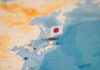
- USS Tripoli and the 31st Marine Expeditionary Unit are deploying from Japan to the Middle East at CENTCOM’s request.
- Iranian attacks on commercial ships in the Strait of Hormuz have disrupted traffic through a route that carries about 20% of global oil.
- The Trump administration is weighing convoy-style naval escorts and further strikes on anti-ship threats, after reported U.S. strikes on military targets near Kharg Island.
- Iran’s leadership publicly pushes the “lever” of blocking the strait, betting economic pain will outrun U.S. resolve.
Why the USS Tripoli Deployment Changes the Temperature
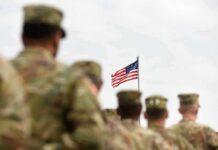
Defense Secretary Pete Hegseth confirmed the movement of the amphibious assault ship USS Tripoli and its attached 31st MEU toward the Middle East as the Strait of Hormuz seizes center stage. A MEU is not a symbolic flag wave; it is a self-contained crisis tool built for raids, evacuations, ship seizures, and quick-hit strikes. Sending it from Japan signals urgency: the U.S. expects this problem to worsen before it improves.
The personnel numbers floating in public reports vary, but the idea stays consistent: several thousand Marines and sailors, forward-deployed, with aviation and logistics to sustain action. Pair that with accompanying warships and you get a familiar American message to any regime playing chicken with sea lanes: you can harass shipping, but you cannot control it. Deterrence only works if it looks expensive to test.
Hormuz: The Chokepoint That Turns Politics into Gas Prices
The Strait of Hormuz is narrow, crowded, and unforgiving. It sits between Iran and Oman, and it funnels a massive share of world oil traffic—often summarized at roughly one-fifth of global supply moving by sea. That’s why even a partial disruption can spike insurance rates, slow tanker schedules, and rattle consumer confidence. The economics hit households fast, and adversaries know that democracies feel pain in real time.
Iran’s playbook has always leaned on that pressure point. Since the 1979 Revolution, Tehran has periodically threatened closure, and history offers precedents such as the 1980s “Tanker War,” when ships became leverage and mines became headlines. This week’s pattern—commercial ships attacked, crews missing, and mine-laying accusations—fits an asymmetric strategy: create fear and uncertainty, then let markets do the coercion for you.
Escorts, Mines, and Missiles: The Ugly Mechanics of Reopening Sea Lanes
Treasury Secretary Scott Bessent cited an $11 billion impact to the U.S. economy and said Navy escorts could come soon. That sounds tidy until you picture the real job. Convoys demand ships, aircraft, intelligence, and rules of engagement that prevent a skirmish from becoming a regional fire. Mines complicate everything, because you don’t need to sink many tankers to paralyze traffic; you only need to make captains doubt the water.
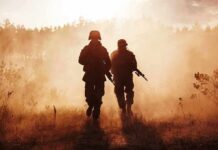
The military logic points toward clearing lanes, neutralizing launch sites, and suppressing coastal threats. Former intelligence and defense voices have framed it bluntly: you may have to “clear” parts of Iran’s coastline long enough for tankers to move. That requirement drives why a MEU matters. Marines can board, seize, secure, and conduct limited operations that a purely naval posture cannot, especially when small boats and hidden launchers blur the line between military and maritime crime.
Kharg Island and the Escalation Ladder Everyone Pretends Isn’t There
Reports describe U.S. strikes on military targets around Iran’s Kharg Island, a place that looms large because it has been tied to the bulk of Iran’s oil exports. The strategic dilemma writes itself: hit too softly and Tehran keeps choking shipping; hit too hard and you risk pushing Iran toward desperate escalation. President Trump’s warnings about oil infrastructure raise the stakes, because energy nodes are not just economic assets—they are national pride and regime lifelines.
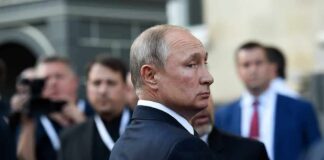
Iran’s new Supreme Leader, Mojtaba Khamenei, publicly leaned into the strait blockade idea, calling it a lever. That is a textbook coercion move: “Pay us by changing your behavior, or we tax the world.” American common sense—and conservative instincts about protecting trade and national credibility—generally reject rewarding that kind of extortion. Still, prudence matters. Open-ended war and nation-building are not conservative priorities either, and the best outcome stays limited: reopen the water, punish attacks, avoid occupation.
The Real Risk: Mission Creep Disguised as “Just Escorts”
Public messaging can say “escorts,” but events at sea rarely stay tidy. An escort mission can become a search-and-rescue, then a retaliatory strike, then a campaign to degrade missile stocks, then raids to remove mine layers before they launch. Add conflicting reports—such as uncertainty over mine placement and varying claims about the condition of Iran’s navy and air force—and you get a recipe for miscalculation. Leaders must prepare for worst-case scenarios while refusing to chase every headline.
The refueling aircraft crash in Iraq that killed 13 U.S. personnel adds another layer of gravity. Losses—even accidental ones—change political oxygen and operational tempo. A grieving country tolerates ambiguity for about five minutes, then demands clarity: What are we doing, what will it cost, and when does it end? Those questions should frame every deployment decision, including this one, because the opponent’s strategy depends on exhausting American attention and patience.
The next few days likely determine whether this stays a maritime security operation or becomes a broader effort to dismantle Iran’s ability to menace shipping at all. The conservative north star here is simple: defend Americans, defend lawful commerce, and avoid writing blank checks in blood and treasure. USS Tripoli’s arrival doesn’t guarantee escalation, but it does signal Washington’s willingness to impose order on the world’s most economically sensitive stretch of water.
Sources:
https://www.axios.com/2026/03/13/marines-middle-east-us-deployment
https://asiatimes.com/2026/03/us-dispatched-marines-to-mideast-feeding-iran-invasion-warnings/
https://www.altoonamirror.com/news/international/2026/03/us-orders-2500-marines-to-mideast/
https://www.military.com/feature/2026/01/29/us-forces-headed-middle-east-tensions-iran-rise.html