A violent attack on a Michigan synagogue left 140 students and staff facing death, but trained security personnel stopped the assailant in just three minutes—raising questions about whether advance warning systems could have prevented the tragedy altogether.
Story Overview
- Temple Israel security guards neutralized attacker Ayman Mohamad Ghazali within minutes, preventing mass casualties among 140 people inside
- Ghazali’s two brothers died in an Israeli airstrike in Lebanon seven days before he launched his revenge attack on March 12, 2026
- FBI-trained security team engaged the attacker in gunfire after he rammed a truck loaded with fireworks and flammable liquids through the synagogue entrance
- All students and staff survived; one security guard was struck by the vehicle and 63 law enforcement officers treated for smoke inhalation
- Investigation revealed no prior criminal record or FBI watchlist presence for the 41-year-old Lebanese-born U.S. citizen
When Personal Tragedy Becomes Political Violence
Ayman Mohamad Ghazali watched from Michigan as Israeli Defense Forces launched a drone strike on March 5, 2026, killing his two brothers in Machghara, Lebanon. Both brothers served in a Hezbollah rocket unit in southern Lebanon. The strike also killed one brother’s child and his sister-in-law’s child. Five days later, Ghazali walked into a Phantom Fireworks store in Livonia and purchased approximately $2,200 worth of explosives. Two days after that purchase, he would transform Temple Israel’s Wednesday morning into a battlefield.
The timeline reveals calculated preparation. Ghazali arrived at Temple Israel in West Bloomfield Township before 12:19 p.m. and waited alone in the parking lot for over two hours. He studied the facility, chose his moment, and at 12:19 p.m. drove his truck through the synagogue’s front entrance. The vehicle struck a security guard immediately. Inside the truck, investigators discovered jugs of flammable liquid alongside the fireworks—evidence suggesting Ghazali planned an inferno that would consume everyone inside.
Three Minutes Between Life and Mass Death
Temple Israel’s security team had completed FBI training just two months earlier in January 2026. That preparation proved decisive. Within three minutes of Ghazali’s initial ram attack, two security officers engaged him in gunfire. His vehicle became jammed in the hallway, trapping him inside as flames erupted. The fire consumed the truck rapidly, producing thick black smoke that would eventually send 63 responding law enforcement officers to hospitals for smoke inhalation treatment. Ghazali died from a self-inflicted gunshot wound at approximately 12:22 p.m.
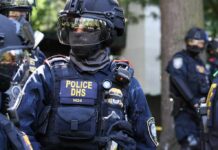
The FBI Detroit Field Office took over the investigation immediately, classifying the incident as a targeted act of violence against the Jewish community. Special Agent Jennifer Runyan led the briefing. Oakland County Sheriff Mike Bouchard coordinated local response. The Department of Homeland Security identified Ghazali and provided background information linking him to the March 5 airstrike victims. President Trump received full briefings and publicly expressed support for Michigan’s Jewish community. Despite extensive investigation, authorities found no criminal record or prior FBI watchlist designation for Ghazali.
The Security Paradox of Modern Worship
Temple Israel represents thousands of American religious institutions now forced to operate like fortified compounds. The Reform synagogue serves a Jewish community in suburban Detroit, a location chosen for its safety and accessibility. Security expert Dave Benson examined how places of worship can enhance protection against potential attacks. His analysis highlighted a fundamental American tragedy: citizens gathering for prayer now require armed guards, vehicle barriers, and tactical response training to survive their spiritual practice.
National security experts had warned about surging antisemitic threats before the Temple Israel attack. The warning proved prophetic but insufficient. The broader context of the 2026 Lebanon war created conditions where international military operations directly triggered domestic terrorism on American soil. Ghazali’s hometown maintains significant Hezbollah presence and influence, connecting his personal loss to a larger geopolitical conflict. This intersection demonstrates how regional wars export violence to diaspora communities, transforming grievances into bloodshed thousands of miles from the original battlefield.
What Preparation Actually Prevents
The Temple Israel security team saved 140 lives through decisive action. Their FBI training enabled rapid threat assessment, coordinated response, and effective engagement under extreme pressure. One security guard absorbed the initial vehicle strike but survived with injuries. Every student and staff member returned home safely. The three-minute response window prevented Ghazali from executing his apparent plan to ignite a catastrophic fire that would have trapped victims inside the building. Training converted potential massacre into contained incident.
Yet preparation carries inherent limitations. Security personnel cannot prevent determined attackers from initiating violence; they can only respond effectively once attacks begin. The investigation revealed Ghazali showed no warning signs that would trigger preventive intervention. He held no criminal record, appeared on no watchlists, and conducted his fireworks purchase legally. His motivation—revenge for family members killed in military operations—emerged only after investigators connected him to the March 5 airstrike. This case exposes the challenge facing security professionals: how to identify threats before they materialize when attackers blend seamlessly into law-abiding society until the moment they strike.
Sources:
Suspect in Michigan synagogue attack lost family in Israeli strike
The FBI says it’s taking over the Michigan synagogue attack investigation
Synagogue shooting Michigan: What we know