
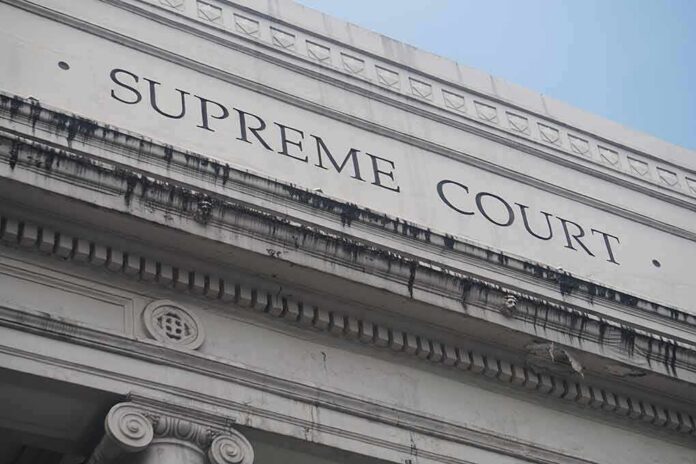
Justice Samuel Alito stepped aside from a high-stakes climate lawsuit after activist pressure over his oil-and-gas investments.
Story Highlights
- Justice Alito recused from a major climate case under scrutiny over energy stocks.
- Reports say he held oil-and-gas shares, but not in the two companies before the Court.
- Left-leaning watchdog groups pressed claims about impartiality and ethics rules.
- The Court’s code says justices should step back when impartiality could be questioned.
What Happened: Alito Recuses From Climate Case
Reuters and the Associated Press reported that Justice Samuel Alito will not take part in a major climate case tied to oil companies, following public scrutiny of his stock holdings in the energy sector. Reports state he owns shares in several fossil-fuel companies, including ConocoPhillips and Phillips 66. They also note he does not own stock in Exxon Mobil or Suncor Energy, the two companies at the center of the case. The recusal shifts the Court’s lineup for a closely watched fight.
SCOTUSblog said a coalition of left-leaning watchdog groups urged an inquiry, arguing Alito’s individual oil-and-gas holdings could undercut public trust in the Court’s fairness. These groups framed the concern as an “appearance of partiality,” not a claim of direct stake in the parties. That argument mirrors a common ethics theme in Supreme Court debates, where even indirect links can draw fire when the outcome could affect a sector’s value or future lawsuits.
Why It Matters: Recusal Rules And Public Confidence
The Supreme Court’s code of conduct says a justice should recuse when a reasonable person could question their impartiality, or when they hold a financial interest in the subject or a party. That standard aims to guard the Court’s integrity. It also gives each justice the duty to judge when to step aside. In practice, that places pressure on disclosure and personal judgment. It is designed to protect rulings from claims of bias while keeping the Court’s work moving.
Consumer Watchdog told reporters that Alito’s energy holdings could yield indirect gains if the industry won in Court. Inside Climate News reported the group also claimed his portfolio tied to firms connected to several climate lawsuits paused around this case’s outcome. Those claims stress optics, not a direct share in Exxon Mobil or Suncor. That key fact was reported by major outlets, which said Alito did not hold shares in the two defendants.
The Bigger Picture: Stocks, Self-Policing, And Calls For Reform
News coverage across outlets connected the recusal to a broader, recurring issue: Supreme Court justices can hold individual stocks, must disclose them, and decide their own recusals. Advocates argue this system invites repeated conflict alarms, even when a justice does not own stock in a party before the Court. Critics say this allows activists to weaponize appearances to sideline justices in hot-button cases. The debate often resurfaces when energy policy and climate lawsuits collide.
Public records and reporting show the disclosure system gives visibility into holdings but relies on self-managed recusals rather than blind trusts or outside enforcement. That structure can leave the Court open to pressure campaigns and constant ethics crossfire. For readers who back energy independence and stable markets, the concern is clear: repeated recusals can tilt the Court’s balance in cases that shape jobs, fuel costs, and state power. Clear rules that prevent true conflicts without inviting gamesmanship serve everyone.
What Conservatives Should Watch Next
Newsrooms reported Alito’s move affected only this one case and did not show a direct stake in the parties. But activists will see a proof of concept. Expect more pressure on justices who own any sector-linked stock when that sector is in court. Lawmakers and ethics groups may push for blind-trust options or tighter stock rules for all justices. Any change should protect both fairness and the Court’s full strength in cases that hit energy, speech, guns, and state rights.
Sources:
zerohedge.com, nbcnews.com, abcnews.com, thehill.com, cnbc.com, cnn.com, yahoo.com, reuters.com, politico.com