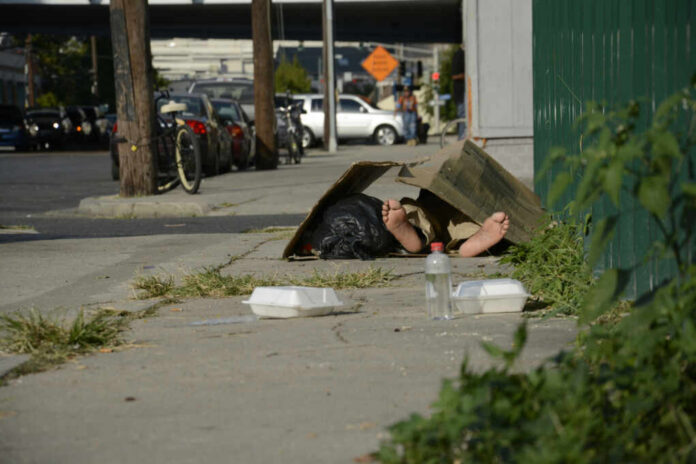
Seattle’s homelessness crisis has reached a breaking point under Mayor Katie Wilson’s leadership, with residents and business owners demanding accountability as drug-ravaged encampments overtake public parks and city streets despite officials pouring millions into failed solutions.
Story Snapshot
- King County’s homeless population surged 26% from 2022 to 2024, reaching 16,868 people despite $118.93 million in city spending
- Mayor Katie Wilson proposes $5 million for 500 tiny homes as frustrated residents claim city leaders refuse accountability for deteriorating conditions
- Open-air drug use and tent encampments now dominate Seattle parks and neighborhoods, forcing sweeps in Beacon Hill while overcrowded shelters turn people away
- Housing costs driving crisis as Seattle rents jumped 41.7% from 2010-2017 compared to 17.6% nationally, with 84% of homeless being local residents who lost housing
Crisis Deepens Despite Massive Spending
Seattle officials allocated $118.93 million to address homelessness in 2024, yet the King County Point-in-Time Count revealed 16,868 homeless individuals that same year, representing a staggering 26% increase from 2022 figures. The Seattle metro area alone accounts for 9,440 of those individuals living on streets, in parks, and under overpasses. Mayor Katie Wilson faces mounting criticism as residents witness firsthand the failure of progressive policies to stem the tide of visible street encampments and open-air drug markets that now characterize entire neighborhoods once considered safe and family-friendly.
Tiny Homes Solution Raises Questions
Wilson’s administration rushed a $5 million proposal through the city council’s Finance Committee to construct 500 tiny homes by June 2026, positioning the initiative as a rapid response to public outcry. The full council vote looms as local grassroots organizations, business owners, and politicians question whether adding temporary shelters addresses root causes or simply relocates the problem. With shelters already overcrowded and turning away those seeking beds, critics argue the city lacks a coherent strategy beyond throwing taxpayer money at band-aid solutions while the underlying drivers of homelessness, addiction, and mental illness remain unaddressed.
Housing Costs and Policy Failures Collide
Research reveals Seattle’s homelessness rate runs five times higher than cities like Chicago or Detroit despite comparable poverty and opioid addiction levels, with the critical difference being housing affordability. Median rents in Seattle skyrocketed 41.7% between 2010 and 2017 compared to the national average of just 17.6%, driven by gentrification and the influx of high-paying tech jobs from companies like Amazon. While the city added 67,000 housing units during that period, losses in affordable rental stock offset those gains. Studies confirm that 84% of Seattle’s homeless population lived locally before losing housing, contradicting narratives that the city attracts transients seeking services.
Encampment Sweeps Spark Controversy
City crews conducted encampment removals at Beacon Hill’s Daejon, Lewis, and Sturgus Parks in early 2026 as residents complained about deteriorating public spaces, discarded needles, human waste, and aggressive behavior from individuals suffering untreated mental illness and addiction. The sweeps generated controversy as advocates argued they simply push vulnerable people from one location to another without providing pathways to stable housing or treatment. Meanwhile, families and business owners counter that elected officials prioritize ideology over common-sense enforcement, allowing public disorder to spiral while claiming compassion. The disconnect between policy pronouncements and lived reality fuels the perception that Seattle’s leadership serves political agendas rather than constituents.
The King County Regional Homelessness Authority assumed control of most city homelessness funding in 2022, creating a regional approach to coordinate services and prevention efforts. However, the bureaucratic reshuffling has not translated into measurable improvements on the ground, as evidenced by the continuing growth in unsheltered populations and the visible chaos documented in recent videos showing Seattle streets lined with tents, tarps, and debris. Racial disparities persist within the homeless population, with African Americans representing 25% and Native Americans 15% of those counted despite comprising far smaller percentages of the general population, pointing to systemic failures in mental health care, criminal justice, and foster care systems that funnel vulnerable communities onto the streets.
Sources:
Seattle Human Services – Addressing Homelessness
The Rise of Socialism: Seattle mayor takes heat
King County Point-in-Time Count Data
King County Regional Homelessness Authority