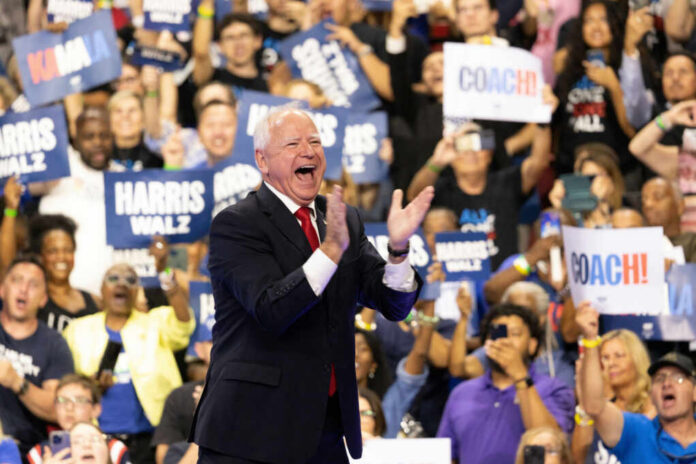
Minnesota Governor Tim Walz traveled to Spain to slam President Trump as “feeble-minded” and “trigger-happy” before a global progressive audience, raising troubling questions about elected officials criticizing American leadership on foreign soil while domestic crises simmer back home.
Story Snapshot
- Governor Walz attacked Trump’s Iran policy at Barcelona conference, calling him mentally unfit and reckless
- Speech came amid ongoing federal-state clash over immigration enforcement following deadly ICE shooting in Minnesota
- Walz accused Trump of plunging America into war with no exit strategy while demanding withdrawal of federal agents from his state
- Inflammatory rhetoric delivered abroad highlights growing partisan divide as federal government battles state resistance
International Stage for Domestic Grievances
Governor Tim Walz addressed the Global Progressive Mobilization conference in Barcelona, Spain, where he launched personal attacks against President Donald Trump and Vice President JD Vance. Walz characterized Trump as a “feeble-minded, trigger-happy president” who plunged the United States into conflict with Iran without an escape route. The speech represented an escalation from Walz’s domestic criticisms, taking grievances about federal policies to an international platform. This choice to air American political disputes before foreign progressive activists raises concerns about undermining U.S. interests abroad while the nation faces genuine security and immigration challenges requiring unified leadership.
Minnesota’s Federal Standoff Intensifies
Walz’s European criticism followed intense conflict with federal immigration authorities operating in Minnesota under Operation Metro Surge. Federal agents shot and killed Alex Pretti during enforcement operations in Minneapolis, one of three shooting incidents that sparked Walz’s demand for Trump to withdraw what he called “3,000 untrained agents” from his state. The governor claimed Trump was “making an example of Minnesota” through aggressive enforcement tactics. Walz accused the administration of defying court orders on evidence and allowing officials like South Dakota Governor Kristi Noem to control narratives by labeling incidents “domestic terrorism.” This federal-state confrontation illustrates the growing divide over immigration enforcement authority.
Pattern of Resistance and Rhetoric
Walz has positioned himself as a leading Democratic voice against Trump’s policies since serving as Kamala Harris’s running mate in 2024. His rhetoric frames Trump’s actions as inducing “fear, violence, and chaos” across Minnesota communities. The governor pledged to “care for the people” during his remaining term while fighting what he characterizes as federal overreach. His Barcelona speech built on domestic press conferences where he demanded agent withdrawals to prevent additional deaths. This pattern reveals how Democratic governors are leveraging state authority to obstruct federal immigration priorities, appealing to progressive bases while claiming defense of state sovereignty and public safety against federal intrusion.
Questions About Leadership Priorities
Walz’s decision to travel internationally for a progressive conference while Minnesota grapples with immigration enforcement tensions and community fear raises legitimate questions about priorities. Many Americans across the political spectrum grow weary of elected officials who seem more focused on partisan grandstanding than solving actual problems. Federal immigration enforcement exists because border security collapsed under previous administrations, creating the illegal immigration crisis Trump campaigned to address. Whether one supports or opposes Trump’s methods, taking domestic disputes to foreign audiences undermines American unity. Citizens frustrated with government dysfunction recognize this pattern: leaders more concerned with political theater and reelection than tackling tough challenges facing working families trying to achieve security and prosperity through honest effort.
The clash between Walz and the Trump administration reflects broader tensions as federal and state governments battle over authority on immigration, foreign policy, and fundamental governance questions. These conflicts will likely intensify heading into the 2026 midterm elections, with Democrats positioning Trump as reckless on both domestic enforcement and international affairs. Meanwhile, Americans watching political elites fight on foreign stages while communities struggle with real consequences of failed policies have every reason to question whose interests their representatives actually serve.