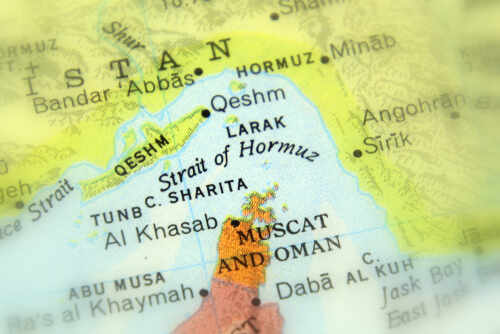
Iran’s latest threat to treat unauthorized ships in the Strait of Hormuz as targets is a direct challenge to global trade, American power, and basic common sense.
Story Snapshot
- Iran’s Revolutionary Guard now demands that all ships crossing Hormuz get its approval or risk “consequences.”[1]
- Tehran claims the only “safe” route hugs Iran’s coast and rejects new international corridors through the strait.[1][3]
- Iranian commanders and state media have warned they could attack or even “set ablaze” ships that ignore their orders.[4][6]
- U.S. officials insist Hormuz is an international waterway, and commercial traffic continues under American watch.[5]
IRGC Tries to Turn a Global Lifeline into Iran’s Personal Toll Road
The Islamic Revolutionary Guard Corps of Iran has warned that any crossing of the Strait of Hormuz without its authorization is “unacceptable and extremely dangerous.”[1] Guard commanders now say the only approved shipping lane is a corridor that runs along Iran’s own coastline, and they attack a proposed new route that would reduce their control over traffic.[1] Iranian media repeat the line that ships must coordinate on maritime radio with the Guard Navy and stay within routes “designated by Iran,” or face enforcement.[2][3] For American readers, this looks less like safety advice and more like a rogue regime trying to turn a shared waterway into its personal toll road.
This hardline message did not appear out of nowhere. During the 2026 Gulf crisis, Guard officials declared the Strait of Hormuz “closed” and bluntly warned they would attack vessels that tried to cross.[4][6] One senior adviser even threatened to “set ships ablaze” and target regional oil pipelines, vowing that no oil would leave the region if Iran’s demands were ignored.[4][6] These are not empty words; over 150 tankers have been reported anchored outside the strait during peak tensions, with about 20 percent of the world’s daily oil supply temporarily stuck.[6] Iran’s top joint command, the Khatam al-Anbiya Central Headquarters, has also publicly ordered closure of the strait and promised further steps if it believes the U.S. or Israel broke ceasefire terms.[6]
Washington Says Hormuz Stays Open — and Moves Oil Anyway
While Tehran talks about closure and “deadly whirlpools” for its enemies, the United States Central Command says the strait is open and operating.[5][9] On one recent day, Central Command data showed about 55 merchant ships crossing Hormuz with roughly 17 million barrels of oil, even as the Guard announced it was shutting the waterway.[5] American destroyers have also transited the strait to reach the Persian Gulf, in missions aimed at clearing sea mines and keeping commerce moving.[8] Military and industry reports note that, even when Iran broadcasts that passages are “not allowed,” a number of tankers still go through under foreign protection.[23][8] In plain language, U.S. Navy presence and allied escorts are the only reason Iran’s threats have not fully strangled world energy flows.
International law backs up this position. Legal scholars point out that the Strait of Hormuz is an international strait covered by the territorial seas of Iran and Oman, but foreign ships enjoy a broad right of “transit passage.”[29] Under the United Nations Convention on the Law of the Sea, coastal states cannot simply suspend or block this transit regime for political reasons.[22][29] Experts warn that a real attempt by Iran to halt all neutral shipping, or to attack tankers that follow lawful routes, would cross the line into an unlawful use of force.[29] This is why many analysts describe the Guard’s effort to assert unilateral control over Hormuz as a direct challenge to the rules that have protected global trade for decades.[22][26]
What Iran’s Power Play Means for America, Energy Prices, and Sovereignty
For conservatives watching oil prices and retirement accounts, the stakes are straightforward. The Strait of Hormuz carries roughly a quarter of the world’s oil flows, and reports show commercial shipping there is increasingly subject to Iranian conditions.[27] Tehran has created new bodies like the Persian Gulf Strait Authority that demand passage permits, Iranian-approved insurance, and strict use of corridors inside its claimed zone — even pushing those claims deep into United Arab Emirates waters and erasing any space labeled “international waters.”[21][24] At the same time, Guard units have fired warning shots at ships that refused to coordinate with Iranian security forces and tried to impose “navigational” and “environmental” fees that look a lot like illegal tolls.[3]
Breaking: Iran’s Revolutionary Guards (IRGC) have warned this morning against any crossings of the Strait of Hormuz without authorisation, saying vessels not complying “will be dealt with” and criticising a new route through the waterway. pic.twitter.com/dNDmGHf2kW
— @ Kelly world brief (@LORRETKELLY4) June 25, 2026
This pattern should sound familiar to anyone tired of globalist games and weak responses. An aggressive regime is testing whether Western nations will defend freedom of navigation or let threats and “service fees” chip away at basic rights. Analysts note that Iran has repeatedly threatened to close Hormuz since the 1980s and now sees control of the strait as leverage against the United States and its allies.[26][29] If Washington blinks, that leverage grows, energy costs climb, and ordinary American families pay the price at the pump and in the grocery store. Under President Trump’s second term, U.S. officials have been clear there will be “NO TOLLS” unless imposed by the United States itself in response to broken deals, and they have highlighted continued record flows of oil through the strait.[5] For readers who value a strong America, limited foreign control, and real consequences for threats, Hormuz is not a distant headline; it is a live test of whether the West will stand firm against yet another attempt to bully the free world.
Sources:
[1] Web – Iran warns against Hormuz crossings without authorisation
[2] YouTube – Iran Issues Chilling Warning, Says Attempt To Undermine …
[3] Web – Iran Warns Ships Against Unauthorized Hormuz Navigation …
[4] Web – Iran fires warning shots at four ships in Strait of Hormuz
[5] Web – Iran Closes Strait of Hormuz, IRGC Threatens Military Action Against …
[6] Web – Strait of Hormuz closing again, IRGC announces – New York Post
[8] Web – IRGC Navy Announces Passage of 25 Vessels Through Strait of …
[9] Web – Iran releases video of warning US warships to leave Strait of …
[21] YouTube – Iran Shuts Strait of Hormuz: IRGC Threatens to “Set Fire” to All …
[22] YouTube – Iran claims authority over Strait of Hormuz with new maritime control …
[23] Web – The Legal Regime of the Strait of Hormuz and Attacks Against Oil …
[26] Web – The Strait of Hormuz – QIL-QDI
[27] Web – Clarifying Freedom of Navigation in the Gulf | The Washington …
[29] Web – [PDF] LIS No. 114 – Iran Maritime Claims