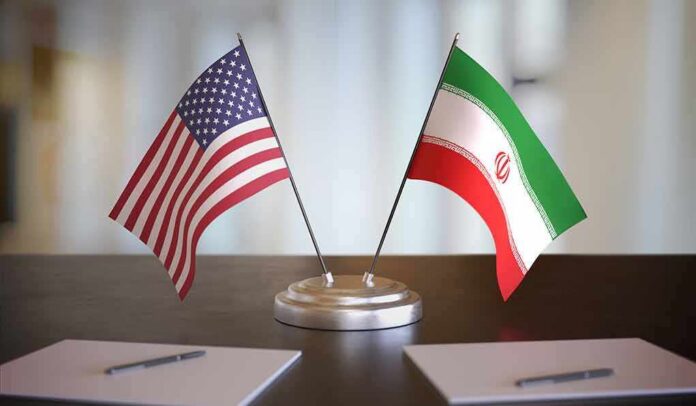
A nuclear-armed Iran is back on the table as Pakistan’s prime minister flies into Swiss peace talks that could decide war, oil prices, and American security for years to come.
Story Snapshot
- Pakistan’s Prime Minister Shehbaz Sharif is now a central mediator in high‑stakes US–Iran talks in Switzerland.
- A new 14‑point Islamabad Memorandum of Understanding links peace, sanctions relief, and Iran’s nuclear promises.
- Talks have already been postponed once, raising doubts about Iran’s intentions and the deal’s strength.
- The outcome could shape Iran’s nuclear path, Strait of Hormuz shipping, and what American drivers pay at the pump.
Pakistan steps onto center stage in Trump-era Iran diplomacy
Pakistani Prime Minister Shehbaz Sharif has moved from the sidelines into the heart of Middle East diplomacy, after formally signing the Islamabad Memorandum of Understanding as mediator between the United States and Iran.[1] The document, also signed by President Donald Trump and Iranian President Masoud Pezeshkian, lays out a framework to end fighting, reopen key trade routes, and start a 60‑day push toward a fuller deal on Iran’s nuclear and regional behavior.[1][4][7] For many American conservatives, this raises a basic question of trust: Can a cash‑strapped Pakistan, long tied to China and friendly with Iran, really safeguard US security interests against a regime that has spent decades chanting “Death to America”? The Trump team appears to be betting that using outside mediators keeps direct US concessions limited while forcing Iran to sign on the dotted line in front of the world.
Sharif’s role is not symbolic. Pakistani outlets report he signed the text “in his capacity as mediator,” and is now traveling to the Swiss resort of Bürgenstock to sit alongside American, Iranian, and Qatari teams for technical talks on how to turn the broad promises into actual steps.[1][4][5][6] Video from his departure shows him leaving Islamabad specifically for these negotiations, which focus on implementing the Islamabad Memorandum of Understanding.[6] That means a foreign leader whose own country has battled terrorism, struggled with debt, and leaned on Gulf bailouts is now helping referee issues that touch directly on American troops, oil prices, and the security of Israel. Supporters of the Trump approach argue this spreads risk and keeps US boots off the ground. Skeptics will watch closely to see whether Pakistan presses Iran on its nuclear work, or mainly pushes for fast sanctions relief that could refill Tehran’s war chest.
Inside the Islamabad memorandum: nuclear pledges and sanctions pressure
The text Sharif signed is not just a ceasefire note; it is a detailed 14‑point roadmap that tries to trade Iran’s behavior for economic breathing room.[1] One key clause states that Iran “reaffirms that it shall not procure or develop nuclear weapons,” a direct written pledge that echoes older deals but now sits in a Trump‑era framework that Republicans say will be tougher on cheating.[1] Another clause says the United States will end all types of sanctions, from United Nations and nuclear‑related penalties to unilateral American measures, on a schedule to be fixed in the final deal.[1] That is a huge carrot for a regime whose economy has been hammered. The memorandum also calls for resolving Iran’s stockpile of enriched uranium through steps like down‑blending under International Atomic Energy Agency supervision, with details to be nailed down in the coming 60 days.[1] For conservative readers burned by the Obama‑Biden nuclear deal, the test is simple: will these paper promises be backed by intrusive inspections, automatic snap‑back of sanctions, and a clear bar on enrichment that could lead to a bomb, or will Iran again pocket cash while keeping its nuclear option alive?
The framework also ties nuclear issues to a wider package that matters at home: energy prices and shipping security. The memorandum aims to reopen the Strait of Hormuz, ease restrictions on Iranian ports, and unwind the American naval blockade that has kept Tehran in check but also strained global markets.[6][7][11][13] In return, Iran is expected to maintain the status quo in its nuclear program during the talks and to stop new military escalation while both sides work toward a permanent peace.[1][7][13] For US families already squeezed by years of inflation driven by reckless spending and green‑energy experiments, any move that stabilizes oil flows without rewarding terrorism will be welcome. But the danger is clear: if sanctions fade faster than Iran disarms, Americans could end up funding the same regime that arms Hezbollah and targets Israel, all while making gas more expensive the next time Tehran rattles the Strait.
Fragile Swiss talks and the risk of another half‑finished Iran deal
Despite the fanfare around the Islamabad memorandum, the Swiss track has already hit bumps that should make conservatives cautious. Switzerland’s foreign ministry confirmed that a first planned round of technical talks at Bürgenstock was called off, even after the memorandum started a 60‑day clock for reaching a final agreement on Iran’s nuclear work and other disputes.[11][13] Reports link the delay to renewed fighting in Lebanon and Iranian demands about Israel, proof that Tehran still uses proxy violence as leverage even while signing peace papers.[2][11][13][15] Pakistani and regional media now say the follow‑up talks have been pushed to Sunday, with Sharif, his army chief, and Qatari officials flying in to relaunch the process.[5][6][10] This pattern fits a long history: Iran agrees in principle, then stalls, escalates somewhere else, and tries to rewrite the deal once the West has relaxed pressure.[18][19][20][23] The Trump administration insists this time is different because sanctions relief and economic benefits only arrive if Iran performs, not just for signing.[11][12][13] For constitutional conservatives, the lesson is to demand full transparency on any side letters, inspection rights, and snap‑back triggers before Washington makes lasting changes in sanctions law or military posture.
Developing: Pakistan playing a key mediation role as US and Iran prepare for new peace talks in Switzerland.
PM Sharif and Field Marshal Munir landed today, and Iran’s team is already in Zurich.
If a deal materializes, it could de-escalate tensions in the Gulf and ease pressure… https://t.co/cap3Sffk61
— 𝕄𝕒𝕤𝕥𝕖𝕣 𝔹𝕒𝕓𝕒 (@MasterBaba) June 21, 2026
Pakistan’s deeper involvement adds both opportunity and risk. On one hand, Sharif has been working this file for months, hosting Iranian parliament speaker Mohammad Bagher Ghalibaf in Islamabad and trying to bridge gaps after earlier talks collapsed over Iran’s uranium enrichment program.[2][5][9] A Pakistani security official has even described Iran’s nuclear work as the “main obstacle,” suggesting Islamabad understands how serious the issue is for the United States.[2] On the other hand, Iran’s Supreme Leader has signaled he does not want negotiators to “discuss the main issue” of the nuclear program unless Iran’s right to enrich is fully recognized or the file is removed “forever” from the agenda.[5] That tension runs straight through the Swiss mountains: American negotiators, backed by Trump, are pushing to stop Iran’s path to a bomb, while Tehran tries to turn a war ceasefire into a sanctions‑relief machine without true nuclear limits. As Sharif steps into Bürgenstock’s conference halls, American readers who care about strong borders, affordable energy, and the safety of our ally Israel should keep their eyes on one simple measure of success: Iran’s centrifuges and missile sites, not diplomatic photo‑ops, will tell us whether this process truly defends US interests and upholds the hard‑won lessons of past failed deals.
Sources:
[1] YouTube – LIVE: Outside the venue of Iran-US talks in Switzerland
[2] Web – US-Iran memorandum of understanding in full – BBC
[4] Web – Memorandum of Understanding between the USA and Iran – the FDFA
[5] YouTube – US and Iran prepare for crucial talks in Switzerland
[6] Web – The US and Iran are expected to formally sign a memorandum of …
[7] Web – US releases official agreement with Iran. Read the 14-point text | CNN
[10] Web – Opening round of US-Iran talks canceled as Tehran said to demand …
[11] Web – US-Iran talks to kick off Sunday in Switzerland, says Pakistan
[12] Web – U.S.-Iran accord hits early snag after Swiss talks fail to proceed as …
[13] YouTube – US-Iran Peace Talks Postponed in Switzerland
[15] Web – Negotiators in Switzerland for Iran-US talks amid Hormuz, Lebanon …
[18] Web – Switzerland gears up for US-Iran nuclear talks after facing …
[19] Web – What Has Impeded Progress in U.S.-Iran Relations?
[23] Web – US-Iran Relations: A Complex History of Conflict and Change