
A new report says American firms sold prized AI training data to Chinese companies tied to Beijing’s military system, exposing a gap in U.S. protections for our technological edge.
Story Highlights
- Vendors that worked with the U.S. military also sold AI data to Chinese buyers linked to the People’s Liberation Army
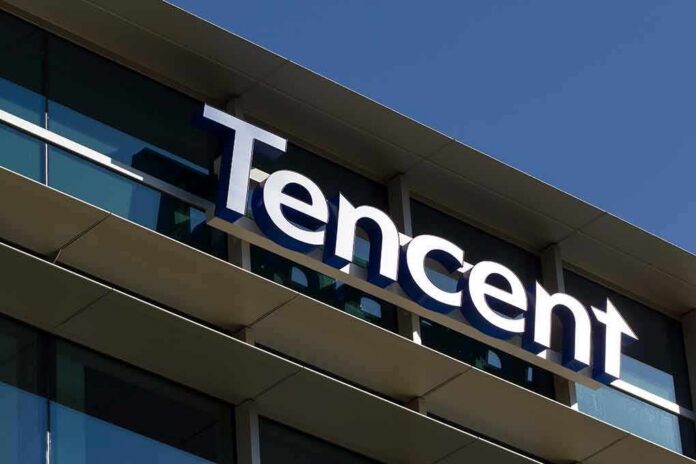
- Tencent, identified by the Pentagon as a Chinese military company in 2025, reportedly received U.S. training data
- Analysts estimate Chinese labs spend about $500 million a year buying U.S. data, a parallel flow to chip exports
- Current export rules focus on chips, while training data sales operate with little clear oversight
Report Flags U.S. AI Data Flow to Chinese Military-Linked Firms
Townhall summarized a new report, “American AI Advantage Is for Sale,” that says U.S. companies sold AI training data to Chinese technology firms the Pentagon has identified as military-linked. The report names Tencent as a recipient and notes the Department of Defense listed Tencent as a Chinese military company in 2025. It adds that the same U.S. data-labeling ecosystem serves frontier U.S. labs, federal projects, and Chinese developers, creating real technology-transfer concerns even without shipping chips.
AI Weekly echoes the picture of a data pipeline that operates beside hardware controls. It highlights vendors like Surge AI, Mercor, and AfterQuery, which reportedly sell expert-annotated datasets to Chinese labs while also supporting top American developers. It cites a Forbes estimate that six major Chinese labs spend about $500 million each year on U.S. data, suggesting a scale large enough to matter for model quality and speed, even if the exact dataset contents are not public.
Surge AI’s U.S. Military Work and Reported China Sales Raise Red Flags
Townhall says Surge AI worked with the U.S. Air Force on an artificial intelligence tool to search and summarize intelligence reports and supported the U.S. Army on data labeling. The outlet adds that Forbes reporting cited by the new report linked Surge to data sales to Tencent, the Pentagon-designated military company. That overlap shows how the same commercial data shops can sit at the crossroads of U.S. defense work and Chinese buyers seeking an edge.
AI Weekly describes how this shared ecosystem packages human-labeled data and expert preferences into reusable training products. Those products can boost a wide range of models, not just one client’s system. The outlet frames expert-annotated data as an “unregulated lever” compared with chips. That means skilled American know-how can be embedded in datasets and shipped abroad without the same export gate that now applies to graphics processors and advanced semiconductors.
Policy Gap: Chips Are Controlled; Training Data Often Is Not
Legal analysis underscores that current export-control law is clearer on hardware and formal technical data than on general training datasets. One review explains that sharing technology subject to the Export Administration Regulations or the International Traffic in Arms Regulations with Chinese systems can constitute an export. But the reporting does not show that the commercial training datasets at issue are controlled items, leaving a gray area that looks like a regulatory gap for policymakers to close.
This gap matters because the United States has focused on cutting off China’s access to high-end chips since 2018. Data and expert labeling now appear to be another path for capability transfer. If Chinese labs can buy American-made instruction data at scale, they can speed training, align models to human preferences, and sharpen performance in sensitive tasks. That leverage can narrow U.S. advantages built on experience, standards, and craft that cannot be cloned overnight.
What We Know, What We Do Not, and Why It Matters Now
The report and coverage establish that U.S. vendors serve both American government and Chinese buyers, that Tencent was designated a Chinese military company in 2025, and that Chinese labs are spending large sums on U.S. data. The available articles do not claim the datasets are classified or that every sale maps straight to a military program. But the linkage to a Pentagon-designated firm, and the scale of the market, make this a clear national-security concern.
For conservative readers, the stakes are simple. America’s edge comes from our people, our data, and our values. When U.S. firms sell expert-crafted training data to Chinese buyers flagged by our own Defense Department, we risk handing over the “secret sauce.” Congress and the administration can act: verify government contracts, audit what was sold, and set bright lines for datasets with strategic value. Protect the builders, but shut the back door that helps our rivals.
Sources:
townhall.com, aiweekly.co, natlawreview.com, linkedin.com