
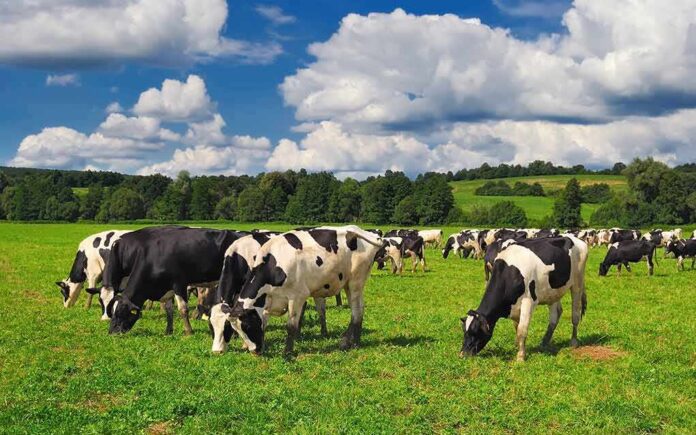
Record-high beef prices are colliding with the smallest U.S. cattle herd in decades, and rebuilding remains slow due to drought and tight supplies.
Story Highlights
- USDA reports widespread drought in key cattle regions, limiting forage and slowing herd growth.
- Processors face losses and plant closures as cattle remain scarce and costly.
- Industry data shows feedlots are tight even as some rebuilding flickers begin.
- History shows cattle cycles take years to recover after major droughts.
Drought Keeps Forage Tight And Herd Growth Slow
United States Department of Agriculture analysts report historically low beef-cow numbers and show drought still grips large cattle areas. In May, about sixty-two percent of the national cattle inventory sat in drought zones, a sharp jump from the prior year. That kind of stress cuts grass and hay, forces herd culling, and delays keeping back young females to grow the herd. The July outlook adds that nearly half of cattle were still in at least moderate drought, underscoring why expansion is tough.
Producers need steady feed and water to retain cows and heifers. Dry pastures raise costs and risk. Many ranchers must sell animals to stay solvent. That slows any rebound, even when prices are strong. The biology also takes time. A heifer kept back today does not produce a market-ready animal for years. These realities explain why sky-high prices do not flip a switch. The supply line is long, fragile, and tied to rain as much as to money.
Pain At The Plant And In The Meat Case
Major processors confirm the squeeze from scarce cattle. Tyson Foods told investors it faces one of the most severe cattle shortages in modern history, with volatile livestock costs crushing margins. News reports detail plant closures and a large adjusted operating loss in Tyson’s beef unit this year, a clear signal that tight supplies are reshaping the sector. Companies are cutting capacity, reworking supply deals, and bracing for another year of turbulence as cattle remain hard to secure.
Public filings and reporting also track signs of a slow turn. A recent forecast from the company framed a wide outcome range for the beef segment next year, reflecting uncertainty but some hope that prior closures could help stability as herds begin to inch upward. Still, shoppers feel the crunch now. Less cattle means higher wholesale and retail prices. Families see that at the checkout line, and small-town meat counters see it in thinner specials and quick sellouts of budget cuts.
Feedlot Tightness And Early Rebuild Signals
Government data show cattle on feed in September were slightly above last year, suggesting feedlots are stretching limited supplies to meet firm demand. That does not fix the core issue. Fewer beef cows mean fewer calves entering the system later. Reuters reporting notes executives see ranchers starting to rebuild after drought, but the process is slow and uneven across states and seasons. New contracts and partnerships aim to steady flows, yet biology and weather still set the pace.
Some processors are striking deals with rancher groups to strengthen domestic supply amid shortages, a move meant to smooth deliveries and share risk as herds recover. That kind of cooperation can help with planning and cash flow. But it cannot make rain fall or hay grow. The path back depends on forage recovery, reliable water, and time for retained heifers to calve. Until then, cattle numbers will stay tight and prices will likely stay high.
What History Teaches About Cattle Cycles
United States Department of Agriculture research describes a long cattle cycle pattern stretching back to the nineteenth century. Herds expand for years, then level off, then decline before the next expansion. Academic work on the last major drought shows the damage lingers. Because of biological lags, drought effects persist well after rains return. Rebuilding begins only when expected returns rise and forage recovers, and even then progress takes several years.
These cycles carry a clear lesson for consumers and policymakers: scarcity lifts prices fast, but supply heals slow. Ranchers need predictable rules, free markets, and room to work their land. Government can help by staying out of the way and by keeping inputs like fuel and transport costs down. Families want affordable protein, and ranchers want to deliver it. With better moisture, stable costs, and time, America can rebuild the herd and ease prices the right way.
Sources:
washingtontimes.com, ers.usda.gov, sec.gov, thestate.com, reuters.com, canadiancattlemen.ca, app.dealroom.co, academic.oup.com, agmanager.info