

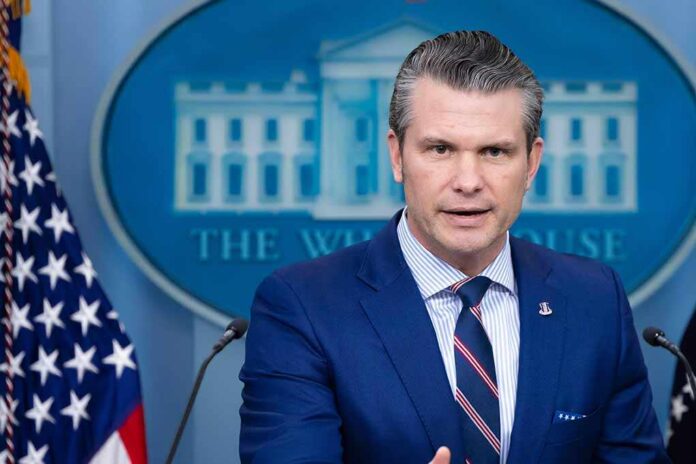
Secretary of War Pete Hegseth restored the Office of Strategic Services name and elevated its leader to cabinet-level parity, tightening America’s special-operations chain of command.
Story Highlights
- War Department memo elevates the special-operations civilian chief to equal footing with Military Department Secretaries.
- Rebranding revives the Office of Strategic Services name and aligns oversight with World War II roots.
- Senator Ted Budd backs changes with an “Office of Strategic Services Act of 2026” to lock in authority and resources.
- Move aims to speed gear buys and cut red tape for elite forces, echoing past reforms of United States Special Operations Command.
Hegseth’s Memo Elevates Special-Operations Oversight
The Department of War said Secretary Pete Hegseth issued a memorandum that raises the Assistant Secretary of War for Special Operations and Low-Intensity Conflict to equal standing with the Military Department Secretaries. The action also restores the Office of Strategic Services name to the special-operations civilian secretariat. The change places direct civilian authority and accountability over missions that demand speed and secrecy. The department released the memo details on November 12, 2026, marking a formal shift in oversight.
Officials and trade reports describe the reorganization as a way to streamline decisions, tighten control of special-operations-unique programs, and honor the legacy of America’s World War II spy and commando service. Coverage notes the memo’s effect on titles and roles, and signals plans to improve acquisition and management. The restoration of the Office of Strategic Services label is symbolic and practical. It couples heritage with a clearer chain of command for today’s fight across land, sea, air, cyber, and space.
Congressional Push to Codify Authority and Funding
Senator Ted Budd introduced legislation to elevate and codify the new structure in law. His Office of Strategic Services bill would formalize the leader’s role and secure staffing and budget to match the mission. The effort aligns Congress with the department’s shift and seeks durable support beyond internal memos. The bill’s backers argue that elite warriors need fast decisions, clear lines, and stable resources to win and to protect Americans at home and abroad.
Past reforms offer a strong precedent for this move. After the failed 1980 Iran hostage rescue, Congress built the United States Special Operations Command with unique authorities, including its own budget line and power to develop and buy special-operations gear. Those steps cut delay and boosted mission focus. Analysts point to that record to explain why tighter, mission-driven oversight can help today’s special operators move faster and smarter against modern threats.
What Changes for Missions, Gear, and Accountability
The elevation places a single civilian boss with status to direct policy, shape priorities, and push urgent needs across the Pentagon. That role is meant to break logjams that slow approvals and specialized purchases. Reports say the Office of Strategic Services label comes with clearer control over special-operations-peculiar requirements. That includes tailored equipment and rapid acquisition paths, where days matter and delays cost lives. Faster decisions can mean better tools in the hands of the right teams sooner.
Sec. Of War Pete Hegseth brought back the Office of Strategic Services (OSS)…https://t.co/bil7PfEaSw
— ABBA (@Foruzjjo) November 23, 2026
The structure connects elite units with a leader who can speak as a peer to Military Department Secretaries. That improves accountability when missions cross boundaries and demand joint solutions. It also supports President Trump’s focus on rebuilding strength, cutting waste, and ending missions designed by committee. The goal is simple: empower those who carry the load, protect civil control, and keep eyes on results. History shows this model can cut bureaucracy and raise performance when backed by clear law.
Why the OSS Legacy Matters to Today’s Fight
The original Office of Strategic Services paired daring missions with quick, flexible support. That model helped defeat tyrants in World War II. The modern return to the name signals a cultural reset toward speed, ingenuity, and mission focus. The department’s change follows a pattern seen in earlier reforms that aimed to fix slow, scattered oversight. When leaders match authority with responsibility, frontline units get what they need without endless turf battles or costly delays.
Analysts stress that the best gains come when Congress locks in roles and resources so momentum does not fade with new leaders. The Hegseth memo starts that process inside the department. The Budd bill aims to anchor it in statute. Together, they seek to give special operators clear backing to buy unique gear, test new tools, and stay ahead of enemies who move fast and fight dirty. That approach protects American lives and keeps faith with those who volunteer to serve.
Sources:
pjmedia.com, budd.senate.gov, thecipherbrief.com, executivegov.com, yahoo.com, legis1.com, smallwarsjournal.com