
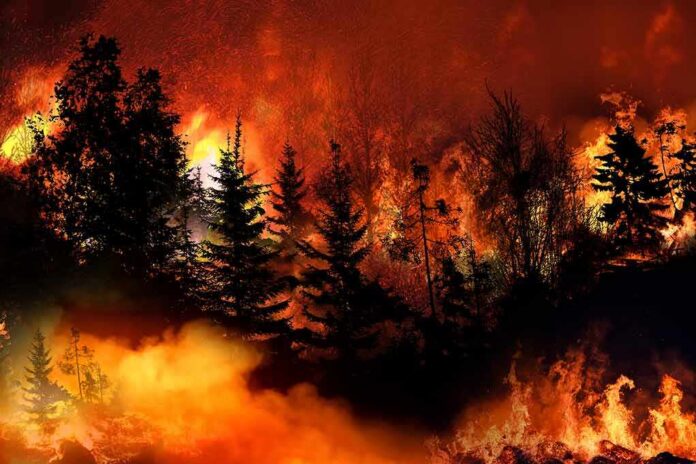
A federal jury convicted Jonathan Rinderknecht of two arson-related felonies tied to the deadly Palisades disaster, after an earlier jury leaned toward acquittal.
Story Highlights
- A second federal jury found Rinderknecht guilty on two narrowed arson counts.
- The first trial ended in a mistrial after a 10–2 split favoring acquittal.
- Prosecutors tied him to the earlier Lachman Fire, days before the Palisades blaze.
- The revised indictment dropped a timber charge and narrowed the theory.
Retrial Verdict Delivers Two Federal Convictions
On November 20, 2026, a federal jury convicted Jonathan Rinderknecht on two arson-related counts linked to fires in Pacific Palisades. Jurors found him guilty of destruction by fire and arson affecting property used in interstate commerce. Prosecutors argued he set the earlier Lachman Fire, which they said connected to the later Palisades Fire. The jury deliberated just over two days before returning unanimous guilty verdicts, closing a closely watched retrial in Los Angeles federal court.
The convictions came after federal prosecutors revised their approach. The superseding indictment dropped an earlier timber-burning charge and narrowed the remaining counts. One count focused on damage from the initial Lachman Fire, while the other addressed property used in interstate commerce. Prosecutors presented a leaner theory than in the first trial. The change signaled a strategic shift in how the government framed causation and the timeline for jurors to consider.
First Trial Deadlocked; Second Jury Reached Unanimity
The first trial ended in a mistrial after jurors split 10–2 in favor of acquittal. That outcome showed the original case failed to persuade a strong majority to convict. The retrial then produced a unanimous guilty verdict on both counts. The second panel weighed a tighter narrative and returned its decision after two days of deliberation. That sequence underscores how charge scope and jury instructions can shape results in complex arson cases.
Prosecutors said the Lachman Fire began on January 1, 2025. The Palisades Fire erupted six days later and caused deadly destruction. The government’s case tied Rinderknecht to the first blaze and, through that theory, to downstream damage. Reporters noted that the revised indictment linked the two events while also focusing proof on the earlier ignition. That approach aimed to meet federal elements tied to property and commerce, not only wildfire scale.
Defense Alternative-Cause Claims and Evidence Gaps
The defense argued that New Year’s Eve fireworks, not Rinderknecht, started the Lachman Fire. A retired fire investigator testified that fireworks were the most likely cause and challenged the government’s origin analysis. Witnesses reported white flashes and loud bangs around midnight near the hillside. The defense also said prosecutors lacked physical proof of a lighter causing the fire. The jury still convicted, but those claims framed a live dispute over origin and intent in the first trial and the retrial.
BREAKING: Man Who Started Deadly Palisades Fire Found Guilty In Retrial | The Post Millennial
A federal jury convicted Jonathan Rinderknecht on Friday of two felony charges connected to the deadly Palisades Fire, reversing the outcome of an earlier trial in which most jurors had… https://t.co/YIlk6UMRHE
— Owen Gregorian (@OwenGregorian) November 22, 2026
Available reports do not detail the exact physical or digital evidence that proved intentional ignition. Public coverage recaps the verdict, the narrowed charges, and the timeline. It does not include the ignition device, laboratory results, cell data, or a direct eyewitness to lighting the blaze. One juror cited Rinderknecht’s interview statements as persuasive, including that he “didn’t smell a fire, didn’t see fireworks” before the blaze grew. That detail suggests credibility and timeline weighed heavily.
What This Means for Accountability and Policy
This verdict shows a jury can convict on a focused federal theory even when the broader disaster spans days and many factors. For readers who value order, property rights, and equal justice, two ideas stand out. First, intentional fire-setting cannot be excused by chaos that follows. Second, tighter indictments and clear jury instructions matter in complex cases. The government delivered a result while avoiding sweeping claims it could not fully prove in the first trial’s broader frame.
Conservatives also see a warning. Major cities must deter arson and enforce basic laws, not chase agendas that ignore public safety. Fireworks use, vagrancy in brush zones, and slow mitigation on public lands raise preventable risk. Federal and local leaders should harden fuel breaks, patrol high-risk nights, and publicize zero-tolerance for illegal ignition sources. President Trump’s administration can press agencies to release non-sensitive investigation records to build trust and help communities prepare smartly for next season.
Limits and Next Steps for Transparency
Because public reporting lacks full exhibits, key technical questions remain. How investigators ruled out fireworks, how they mapped origin, and how they linked the two fires deserve daylight. Agencies can lawfully share redacted origin-and-cause materials after trial. That release would show how science, not emotion, carried the day. It would also help local officials target real risks fast, cut response times, and protect families living near dry hillsides during holiday nights.
Sources:
upi.com, nbclosangeles.com, nbcnews.com, latimes.com