
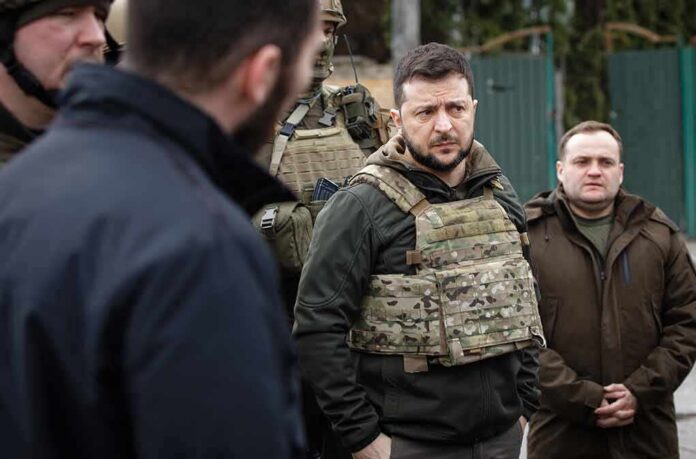
Ukrainian President Volodymyr Zelenskyy likened calling Vladimir Putin a “friend” to calling Adolf Hitler a friend, after President Trump briefly misspoke and said “President Putin” while seated beside Zelenskyy at a NATO event in Ankara.
Story Highlights
- Trump appeared to say “President Putin” while sitting next to Zelenskyy, then corrected himself.
- Zelenskyy called Trump’s use of “friend” for Putin “strange” and warned about pairing with an aggressor.
- Trump said friend-language is leverage to push a peace deal and stop the killing.
- The moment echoes Joe Biden’s 2024 Zelenskyy/Putin name mix-up, showing such slips happen under pressure.
On-Camera Slip and Swift Correction in Ankara
Video from the NATO summit in Ankara shows President Trump asking if there was a question for “President Putin” while seated next to Ukrainian President Volodymyr Zelenskyy. Trump then immediately shifted and referenced Zelenskyy. The incident drew quick attention online and in coverage of the summit. The clip is clear enough to establish the wording of the moment, and that the correction followed right away during the same exchange.
Reporters also noted that during the same round of remarks, Trump used the phrase “Islamic Republic of Japan,” which added to the buzz around verbal slips at a high-stakes event. Those moments handed critics easy talking points. Supporters, meanwhile, pointed to the fast correction and moved to the substance: war, peace, and how to end bloodshed without endless spending from American taxpayers.
Zelenskyy’s Pushback and the “Friend” Label
Volodymyr Zelenskyy called Trump’s use of the word “friend” for Vladimir Putin “strange,” stressing that Putin is an aggressor and a killer. He urged strong pressure on Moscow and questioned the logic of warm language for a hostile leader. His comments followed recent meetings and public remarks where the “friend” phrasing drew global notice. The Ukrainian leader’s message centered on moral clarity during a brutal war and concern about mixed signals to Russia.
Trump responded that using softer language is a tool to make a deal and stop the killing. He argued that harsh words can box leaders in and block talks. He framed the “friend” phrasing as tactical, not ideological, and said the goal is to reach a settlement that ends the war. He added that calling someone “not a friend” might feel good, but it would not help reach real peace or bring stability to the region.
Policy Stakes for U.S. Taxpayers and NATO Security
The United States faces a hard choice between open-ended aid and a push for a negotiated end to the war. Trump’s team casts the “friend” tactic as a way to reduce costs, save lives, and prevent mission creep. The White House has stressed burden sharing and accountability inside the alliance and in Kyiv. That agenda fits a wider conservative view: strong defense, tight oversight, and no blank checks that fuel inflation and drain resources at home.
Zelenskyy wants sharper pressure on Moscow and consistency in signals from Washington and Europe. He warns that any softening could embolden the Kremlin. That stress is real for countries on NATO’s eastern flank. Still, many in the United States want a plan that ends the war without decades of funding and without drawing America into direct conflict. That tension—deterrence versus dealmaking—now shapes every public remark by both leaders.
The Broader Pattern of High-Pressure Verbal Slips
High-profile slips happen in tense settings. In 2024, Joe Biden introduced Zelenskyy as “President Putin” before correcting himself. Trump’s Ankara moment drew the same rapid viral loop. The pattern shows that fast-moving press scrums can mix names when adversaries are central to the same issue. The policy stakes, not the slip, will decide outcomes: how to end the war, secure Europe, and guard U.S. interests without endless debt or risk to American troops.
For conservative readers, the takeaway is simple. Words matter, but results matter more. Trump says he uses language as a tool to get a deal and stop the killing. Zelenskyy warns that soft talk sends the wrong cue to a violent regime. Voters should watch what follows: tighter oversight of aid, tougher demands on Europe, and a real test of whether diplomatic pressure—not performative outrage—can bring peace on terms that protect American strength and the Western order.
Sources:
seattletimes.com, uk.news.yahoo.com, news.liga.net, apnews.com