A private Chicago developer is proving that solar power can pay for itself in the desert without a single government mandate or taxpayer subsidy.
Quick Take
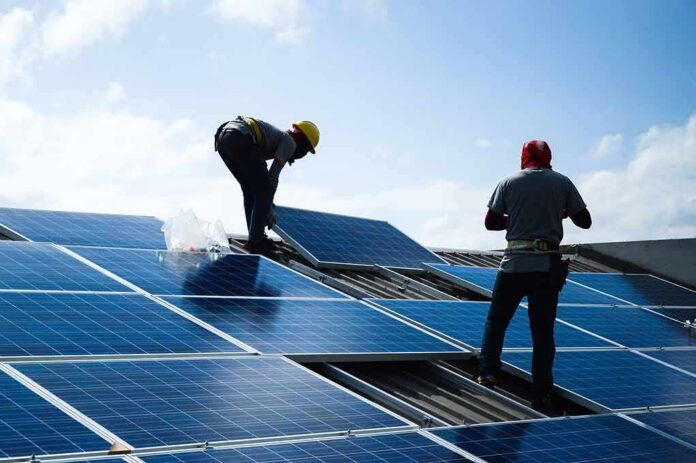
- Belgravia Group is installing SunStyle solar shingles on the clubhouse roof at Atavia, an 88-unit luxury condo community in North Scottsdale, Arizona.
- The solar roof is expected to make 55,000 kilowatt-hours of power a year, which could cover most or nearly all of the clubhouse’s electricity needs.
- This is the first project in Arizona to use SunStyle solar shingles, according to industry reporting.
- More than half of Atavia’s units are already under contract, with first move-ins set for winter 2026.
- The decision came from a private developer chasing practical value, not from a government rule or green mandate.
A Private Company Chooses Solar, Not Washington
Belgravia Group, a Chicago-based real estate firm with more than 75 years in the business, is building Atavia inside the massive One Scottsdale development at Loop 101 and Scottsdale Road. The company is adding SunStyle solar shingles to the clubhouse roof, making Atavia the first project in Arizona to use this technology. Nobody forced this decision. Belgravia made it because it fits the desert climate and makes financial sense for buyers.
That distinction matters. Conservatives have long pushed back against government-forced green energy schemes that raise costs for families and businesses through subsidies, mandates, and red tape. This story is different. A private company is using its own capital to test whether solar shingles work better than a traditional roof in a place that gets sun almost every day of the year.
The Numbers Behind the Solar Roof
The solar shingle system is expected to generate 55,000 kilowatt-hours of electricity each year. That output could cover most, and possibly nearly all, of the clubhouse’s power needs. Instead of paying a power company every month for clubhouse electricity, Atavia’s homeowners association could see much of that cost disappear. That’s a straightforward efficiency play, not a political statement.
Construction on the clubhouse has moved forward steadily. Belgravia announced continued progress on what it calls an “architecturally distinctive” clubhouse rising alongside the rest of the community. The developer topped out phase one of the project in March 2026, with first residents expected to move in that winter. The solar roofing is being built into the project from the start, not added later as an afterthought.
Buyers Are Voting With Their Wallets
Free markets reward good decisions, and buyers appear to be responding. More than half of Atavia’s 88 units were already under contract as the last phase of construction got underway. That kind of demand for a luxury condo project suggests buyers see real value in the community’s design, location, and amenities, solar roof included. Nobody had to convince these buyers with a subsidy check or a tax credit.
Atavia sits in Scottsdale’s “luxury corridor,” a fast-growing area near Loop 101 that has drawn strong investor interest. Belgravia closed on the land for the project and later received public report approval before breaking ground, with an anticipated completion date of late 2027. Every step of this project has moved through normal market and regulatory channels, not a top-down government energy plan.
A Model for Practical Energy Choices
Arizona’s sun-heavy climate makes solar a logical fit for property owners looking to cut long-term energy costs, regardless of politics. Atavia’s solar shingle roof shows that private businesses can adopt new energy technology on their own terms when it actually saves money and improves a product. That’s the kind of innovation conservatives can support: driven by choice, competition, and results, not by federal rules forcing Americans to change how they live.
Some skeptics note that public reporting so far doesn’t include full financial details on installation costs or long-term savings for Atavia’s homeowners association. That’s a fair point worth watching as the clubhouse nears completion. Still, the core facts are clear: a private developer chose solar because it made sense for a desert project, and buyers are already lining up to purchase homes there.
Sources:
greenlivingmag.com, linkedin.com, homes.com, multifamilybiz.com, rooferscoffeeshop.com, belgraviagroup.com, bizjournals.com