

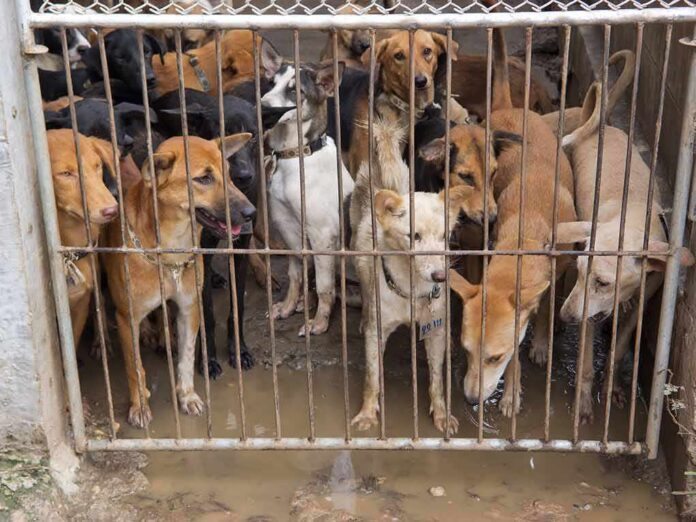
Vietnamese police say organized thieves are snatching family pets for slaughter, exposing a brutal trade that treats loved animals like loot.
Story Snapshot
- Police in Ho Chi Minh City report busting pet-theft networks that fed dog and cat meat businesses.
- State media and international outlets report a ring tied to about 2,700 stolen cats.
- Officers say restaurant buyers were arrested after purchasing over 10 tonnes of meat from a theft ring.
- Vietnamese law treats dogs and cats as private property; theft is the crime, while meat sales remain legal.
Police Raids Expose Organized Pet Theft-for-Meat Rings
Ho Chi Minh City police reported dismantling a coordinated pet-theft ring that moved stolen dogs across provinces to supply meat sellers. Officers said the group used cars and homemade stun devices to seize animals. Searches reportedly uncovered 21 dead dogs, 32 butchered dogs, 57 butchered cats, traps, and slaughter tools at a processing site, painting a picture of planned, repeat crimes rather than one-off thefts. These findings match owners’ accounts of pets vanishing from neighborhoods at night.
Vietnamese state media and global outlets also reported a separate case focused on cats. Police in Ho Chi Minh City arrested 12 suspects and are investigating claims that about 2,700 cats were stolen, then resold for meat. Reporters emphasized that under Vietnamese law, dogs and cats are private property, so police pursue theft charges against alleged snatchers. That framing centers the harm where it begins: families lose property, and often, beloved companions.
Buyers and Restaurants Draw Scrutiny for Fueling the Trade
Police actions did not stop with street thieves. Local reporting said four dog-meat eatery owners were arrested after allegedly buying more than 10 tonnes of meat that police linked to a theft ring. Authorities described a wider probe touching 26 pet-theft cases and 54 suspects since early 2026, suggesting a trade chain from capture to kitchen rather than isolated grabs. This line of enforcement targets demand, not just supply, by pressing charges against buyers who keep the market alive.
Reuters video showed a heartbroken owner searching crowded market cages for his missing cat, underscoring the personal cost when pets become contraband. The footage and reporting captured the reality many families face: long odds, fast-moving traffickers, and few official figures on the market’s true size. That gap in data means the known arrests prove the crime exists, yet do not show what share of the overall trade depends on stolen pets versus other sources.
What Is Legal, What Is Not, and Why That Matters
Reporters explained a key legal split: in Vietnam, eating or selling dog and cat meat is legal, but stealing animals is still theft of property. Police and courts therefore focus on the theft, not the menu. Outlets added that some vendors are supposed to hold papers to show where animals came from, though practical oversight appears thin. This structure can mask criminal supply under a legal product, much like how stolen goods can enter any lawful market.
Authorities and advocates also point to scale and welfare concerns, but national counts remain unclear. Reuters said officials did not provide market-wide numbers, and several cases are still under investigation, not convictions. Still, the seized bodies, tools, and restaurant arrests form a coherent chain of evidence. The facts point to a property-crime problem that crosses provinces, exploits weak documentation, and hits families hardest when a pet never comes home.
Sources:
youtube.com, reuters.com, apnews.com, news.tuoitre.vn, english.ratopati.com, bbc.com