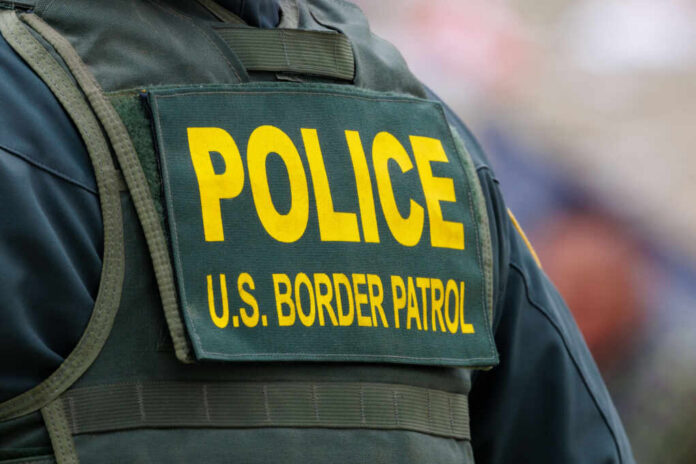
For 10 straight months, the federal government says it stopped the Biden-era practice of releasing illegal migrants into the country—an enforcement shift that is now colliding with a high-stakes Washington funding fight.
Story Snapshot
- DHS reports Border Patrol released zero illegal migrants into the U.S. interior for 10 consecutive months under an “enforcement-first” posture.
- CBP’s February 2026 data shows nationwide encounters at 26,963, while southwest border apprehensions fell to 6,603.
- DHS and CBP leaders credit tighter enforcement and operational changes for the drop in crossings and continued “zero release” results.
- Border security gains are unfolding amid a partisan DHS funding dispute that Republicans warn could weaken enforcement capacity.
DHS claims 10 months of “zero releases” as encounters plunge
DHS says U.S. Border Patrol has gone 10 consecutive months without releasing illegal migrants into the interior, marking a sharp break from prior policies that leaned heavily on parole and mass processing. February 2026 numbers were cited as the latest proof point: 26,963 nationwide encounters, down 22% from January and far below the prior administration’s monthly averages. Southwest border apprehensions were reported at 6,603.
CBP also highlighted just how far the numbers have fallen compared with the late-2023 surge. The reported daily average for February was 236 apprehensions, which DHS-linked messaging described as a 95% drop from the prior administration’s levels. Former DHS Secretary Kristi Noem and CBP Commissioner Rodney Scott framed the zero-release streak as a restored “integrity” standard: if unlawful entrants aren’t admitted into the country, the incentive to exploit loopholes collapses.
What changed after Biden-era policies: enforcement, deterrence, and operational posture
The current DHS narrative draws a direct contrast with the years when border encounters repeatedly hit record territory and releases became routine. The background cited in the reporting points to 10.8 million encounters across FY2021–FY2024 and roughly 2 million “gotaways,” a period many voters experienced as government loss of control over sovereign territory. Since Trump returned to office, DHS messaging has emphasized an “enforcement-first” posture and more aggressive deterrence.
The reported timeline also includes additional tools used to harden the border environment. The research references military-linked deployments and designated zones in New Mexico and Texas, plus task-force style operations and neighborhood investigations tied to immigration enforcement priorities. While not every operational detail is fully described, the common thread is a shift away from “catch-and-release” and toward consequences that reduce repeat attempts and diminish the pull of illegal entry.
Drug seizures and national security remain central to the justification
DHS and CBP framed the crackdown as more than an immigration metric, pointing repeatedly to drug trafficking and national security screening. The reporting cited a February surge exceeding 79,000 pounds of drug seizures, including a reported increase in fentanyl seizures. FY2025 totals were also cited for major narcotics: 170,000 pounds of methamphetamine, 70,000 pounds of cocaine, and 12,000 pounds of fentanyl seized. Those numbers are presented as enforcement outputs, not predictions.
The argument is straightforward: fewer illegal releases and fewer successful crossings reduce opportunities for traffickers and limit the downstream risks communities feel—overdose deaths, cartel-linked crime, and pressure on local law enforcement. The research also references prior terrorist watchlist apprehensions during the Biden years, underscoring why conservatives tend to treat border control as a constitutional duty tied to national sovereignty, rather than a discretionary social program managed through mass parole.
Congressional funding fight threatens continuity, not the headline statistics
The border numbers are arriving during a bitter funding confrontation over DHS operations. Speaker Mike Johnson warned that Democrats’ posture in the dispute prioritizes limiting deportations and constraining enforcement authorities, even as the border mission relies on stable staffing, equipment, and operational flexibility. It describes the dispute as a partial DHS shutdown dynamic, with Republicans arguing that starving the agency of support risks undermining the very deterrence producing today’s low encounter counts.
From a conservative vantage point, the key question is whether Washington will lock in the enforcement baseline—or reopen the policy gaps that made mass releases politically and operationally “normal” under the prior administration. It does not include an independent, nonpartisan audit of every claim, but it consistently attributes the results to CBP data and to a policy choice: stopping routine releases into the interior. If Congress undercuts enforcement capacity, the durability of those gains becomes the next test.
Sources:
DHS touts 10 straight months of zero illegal aliens released at border as crossings plunge
DHS touts 10 straight months of zero illegal aliens released at border as crossings plunge
Speaker Mike Johnson statement on DHS shutdown and border security