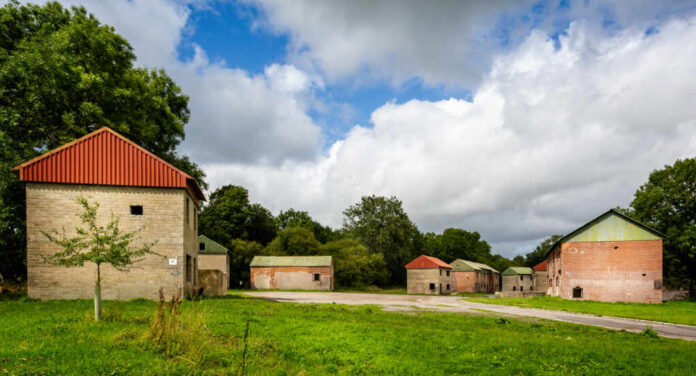
British families lost their homes forever to government overreach in 1943, a stark warning against unchecked military land grabs that echo today’s fights for property rights. This is the story of Imber, a thriving rural village in Wiltshire, England, whose 150 residents were given just 47 days’ notice to evacuate for WWII training and promised a return that never came. Over 80 years later, the Ministry of Defence still controls the site indefinitely as a live-fire zone, allowing public access only 12 days a year, turning Imber into a poignant time capsule and a symbol of lasting injustice.
Story Highlights
- Imber village in Wiltshire, England, evacuated 82 years ago with 150 residents given just 47 days’ notice for WWII training, promised return that never came.
- Ministry of Defence (MoD) controls the site indefinitely as a live-fire zone, allowing public access only 12 days yearly.
- St Giles Church stands preserved amid ruins, drawing 3,000-4,000 visitors on peak open days, raising £15,000-£20,000 annually for upkeep.
- Neil Skelton, 77-year-old volunteer custodian, maintains the church’s heritage since 2008, first visiting in 1964.
- Current open period: December 29, 2025 (8am) to January 2, 2026 (8am), highlighting the site’s ghostly allure and wildlife haven.
WWII Evacuation and Broken Promises
Imber operated as a thriving rural village on Salisbury Plain until December 1943. The British Army ordered evacuation of all 150 residents, providing 47 days’ notice to expand training for D-Day preparations against Nazis. Families packed belongings expecting a postwar return. The government promised restoration, but post-1945, the Ministry of Defence repurposed the area permanently as a live-fire training ground the size of the Isle of Wight. Residents protested yet received no restitution, their thatched cottages crumbling under weather and shelling.
Inside 'ghost' village abandoned 82 years ago to help fight Nazishttps://t.co/2DEKC1AbS6 pic.twitter.com/hKTcJLMa04
— Daily Star (@dailystar) December 30, 2025
MoD’s Iron Grip on the Ghost Village
The MoD retains absolute control over Imber, restricting public access to just 12 days annually: Easter, a summer bus day, a caroling festival, and late December to early January. Durable structures like Grade I-listed St Giles Church and the old pub endure amid mock buildings and military debris. Human absence for 82 years created a time capsule with undisturbed wildlife and sites of special scientific interest. This setup prioritizes training safety over civilian rights, preventing any redevelopment or resident return despite decades of pleas from descendants.
Neil Skelton Preserves Fading Heritage
Neil Skelton, now 77, first bicycled to Imber in 1964 at age 16. After retiring in 2008 from 30 years at the Churches Conservation Trust (CCT), he volunteered as church custodian. Bells reinstalled in 2010 allow him to ring them during open periods. Skelton leads a team selling refreshments and merchandise, fostering visitor loyalty. He describes the site as a “lovely peaceful place” where time stands still, though training shells hollowed surrounding buildings while sparing the church.
Visitor Surge and Limited Access Realities
During open windows, crowds flock to the ghost village. Summer bus days draw 4,000 visitors; bank holidays see 3,000. The church operates 11am-4pm with free entry, relying on donations for CCT maintenance. The current period opened December 29 at 8am GMT, closing January 2 at 8am, boosting local tourism. Yet MoD dictates terms, collaborating minimally with CCT. This model echoes precedents like Tyneham, Dorset, underscoring UK patterns of wartime land seizures without full justice for displaced families.
Economic Boost Amid Lasting Injustice
Annual fundraising hits £15,000-£20,000 through church sales, sustaining preservation efforts. Short-term tourism aids Wiltshire locals and history enthusiasts, who return repeatedly for the eerie tranquility and wildlife. Long-term, Imber symbolizes wartime sacrifice but perpetuates “lost village” status, blocking habitation. Politically, it fuels debates on MoD land dominance and failed compensation. For Americans watching abroad, Imber warns of government power overriding property rights—a core conservative concern under President Trump’s renewed focus on individual liberties.
Watch the report: Inside ‘ghost’ village abandoned 82 years ago to help fight Nazis
Sources:
- Abandoned village evacuated for WWII is open to visitors for just 12 days a year
- Abandoned village evacuated in WWII open to public
- The ‘ghost’ village abandoned 82 years ago to help fight Nazis – Somerset Live
- Inside ‘ghost’ village abandoned 82 years ago to help fight Nazis – Yahoo News UK