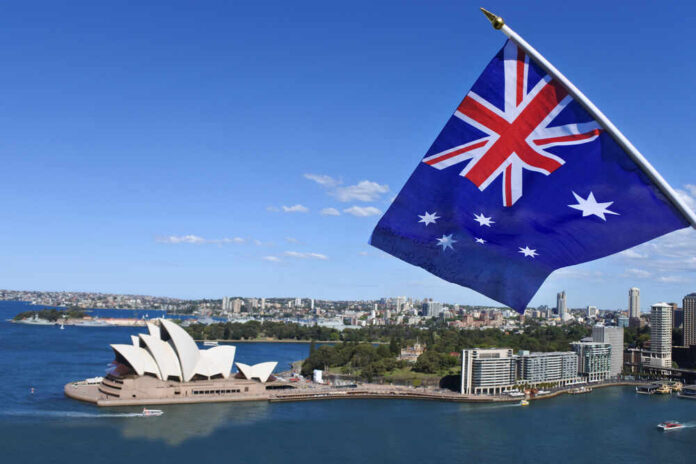
Australia’s fuel system is so dependent on global shipping lanes that a single Middle East chokepoint has the country staring down a one-month clock before shortages turn into a nationwide crisis.
Quick Take
- Iran’s blockade of the Strait of Hormuz has disrupted global oil flows, hitting Australia fast because it relies heavily on imported refined fuel.
- Australia reportedly holds only 26–29 days of fuel reserves, a sharp drop from backup levels that once stretched hundreds of days.
- The government has released hundreds of millions of litres from reserves and temporarily loosened fuel-quality rules to boost supply.
- Prices jumped about 50 cents per litre in major cities, while regional communities saw local outages tied to demand spikes and logistics constraints.
Hormuz Shock Exposes How Fast Modern Life Can Be Squeezed
Conflict that erupted on February 28, 2026 escalated into an Iran blockade of the Strait of Hormuz, a route that carries roughly one-fifth of the world’s seaborne oil. Australia’s vulnerability is not theoretical: the country imports about 90 percent of its petroleum as refined product, leaving it exposed to maritime disruption and foreign refinery capacity. The result has been an official “national crisis” posture and a race to prevent rationing.
Energy Minister Chris Bowen has said ships are still arriving, but regional shortages emerged as demand spiked, including through panic buying. That detail matters because it suggests two problems happening at once: international supply stress and domestic distribution pinch points. Bowen has also indicated the situation could stabilize within roughly 30 days if conditions overseas do not worsen, effectively setting a public timeline for how tight the margin is.
Emergency Measures: Reserve Releases and Lower Standards for 60 Days
Canberra’s response has leaned on two levers: draw down reserves and broaden what counts as acceptable fuel. Bowen announced the release of up to 762 million litres of petrol and diesel from domestic reserves, while other reporting cited a release on the order of 750 million litres. The government also temporarily lowered fuel quality standards for 60 days to permit higher-sulphur fuel, with expectations of adding roughly 100 million litres per month to the market.
These steps are designed to buy time, not fix the underlying structure. Australia’s reserve position has been described as only 26–29 days in storage—an unusually thin buffer for a large, geographically isolated country with long supply lines. Officials have ruled out rationing for now, but the policy actions themselves signal that leaders are treating the situation as serious enough to accept tradeoffs that would normally be politically difficult.
Price Spikes and the Inflationary Squeeze Hit Families and Freight
Between late February and mid-March, average petrol prices across Australia’s five largest capital cities rose from about $1.69 to $2.19 per litre—an increase of nearly 50 cents. That kind of jump lands directly on household budgets, commuters, and small businesses. Trucking and logistics face a double hit: higher input costs and the possibility that unreliable supply in regional areas could ground vehicles and disrupt deliveries of everyday goods.
Farm groups have warned that fuel access is not just a convenience problem—it can become a food-security problem. Agriculture depends on diesel for harvest equipment, irrigation systems, and transport from farm gate to processor and port. Reports described farmers warning of harvest disruptions and the risk of shortages if fuel becomes intermittent. Even if cities stay supplied, patchy availability in rural areas can ripple outward into grocery prices and availability.
Two Refineries Left: A Long Slide From Energy Security to Import Dependence
Australia once supported a far deeper reserve cushion, with backup supplies reported at around 310 days in 2002. Over time, domestic refining capacity shrank from eight refineries to two operational facilities—Viva Energy in Geelong and Ampol Lytton in Brisbane—while refined imports became the cheaper norm, especially from major Asia-Pacific refining hubs. Minimum Stock Obligations introduced after Russia’s invasion of Ukraine slowed the decline, but have not reversed it.
For Australians watching this unfold, the bigger lesson is how quickly essential services become fragile when a nation outsources critical capacity. The current crisis is being driven by a geopolitical shock, but the scale of risk is amplified by policy and market decisions that left limited redundancy at home. The official line remains that rationing is not needed now, yet the thin reserve window means every day of overseas disruption raises the stakes.
Australia Has One Month Before Energy Crisis And Fuel Rationing https://t.co/ycGSSfeOGb
— zerohedge (@zerohedge) March 19, 2026
Bowen’s emphasis on panic buying highlights a practical point: public behavior can accelerate shortages even when supply is still flowing. If motorists “top off” repeatedly, distributors and independent stations can run dry before the next delivery cycle, especially outside major metro corridors. With only a narrow buffer, Australia’s ability to avoid rationing hinges on stable inbound shipping, steady demand, and fast distribution—three variables that are hard to control during an international crisis.
Sources:
Could Australia run out of petrol